Walking the Dragon's Spine: Jeju's Coastal Defense Wall at Byeoldo, Hwabuk
A walk along the Byeoldo Hwanhaejangseong — Jeju's ancient coastal defense wall in Hwabuk-dong — and the layered history behind every stone, from the Goryeo period to the present day.

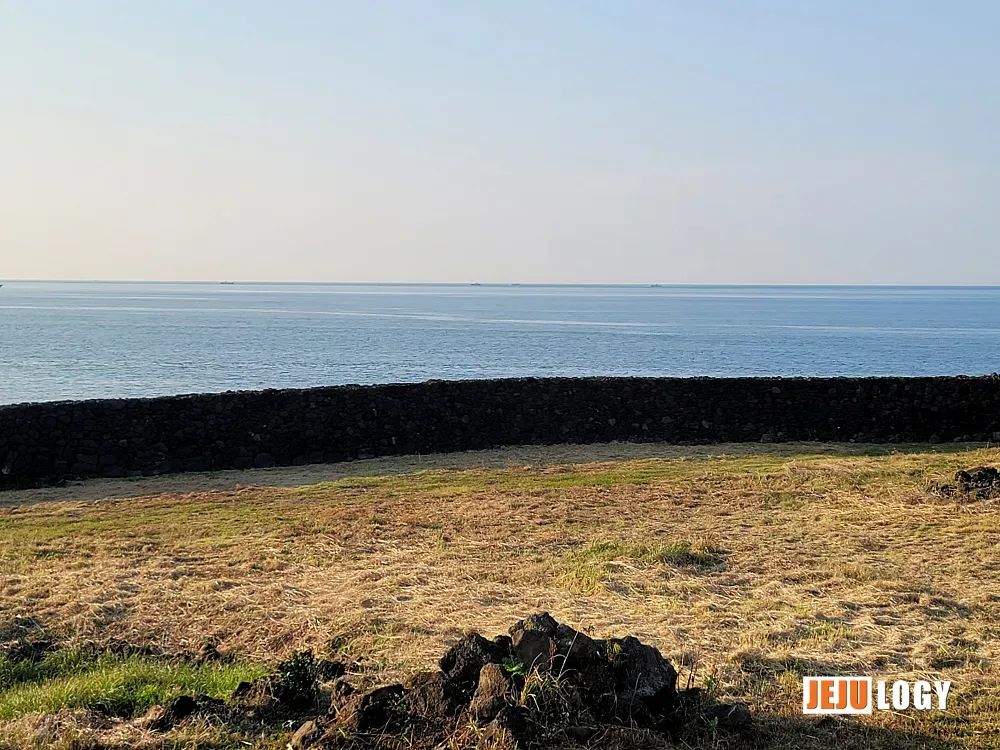
Walking the Dragon's Spine: Jeju's Coastal Defense Wall at Byeoldo, Hwabuk
The hwanhaejangseong — Jeju's ancient coastal stone walls — trace the island's shoreline like a low, rugged spine, older than most people realize and quieter than they deserve. Built during the Goryeo period and maintained well into the Joseon era, these walls once encircled nearly the entire coast of Jeju, serving as the island's first and most enduring line of defense against the sea. They are now protected as monuments of Jeju Special Self-Governing Province, and rightly so.
Today's post is about one particular stretch: the Byeoldo Hwanhaejangseong, located in Hwabuk-dong, Jeju City. Byeoldo is simply the old name for Hwabuk — a detail worth holding onto, as these older place names have a way of anchoring you more honestly to the past.
Where It Sits
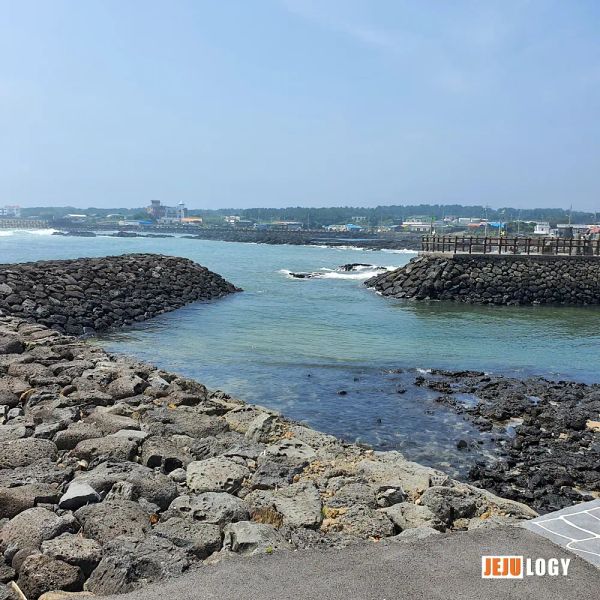
Stand on the wall and look around. To the east, Wondangbong (원당봉) rises beyond the water, with a power plant sitting at its foot — a candid collision of eras.
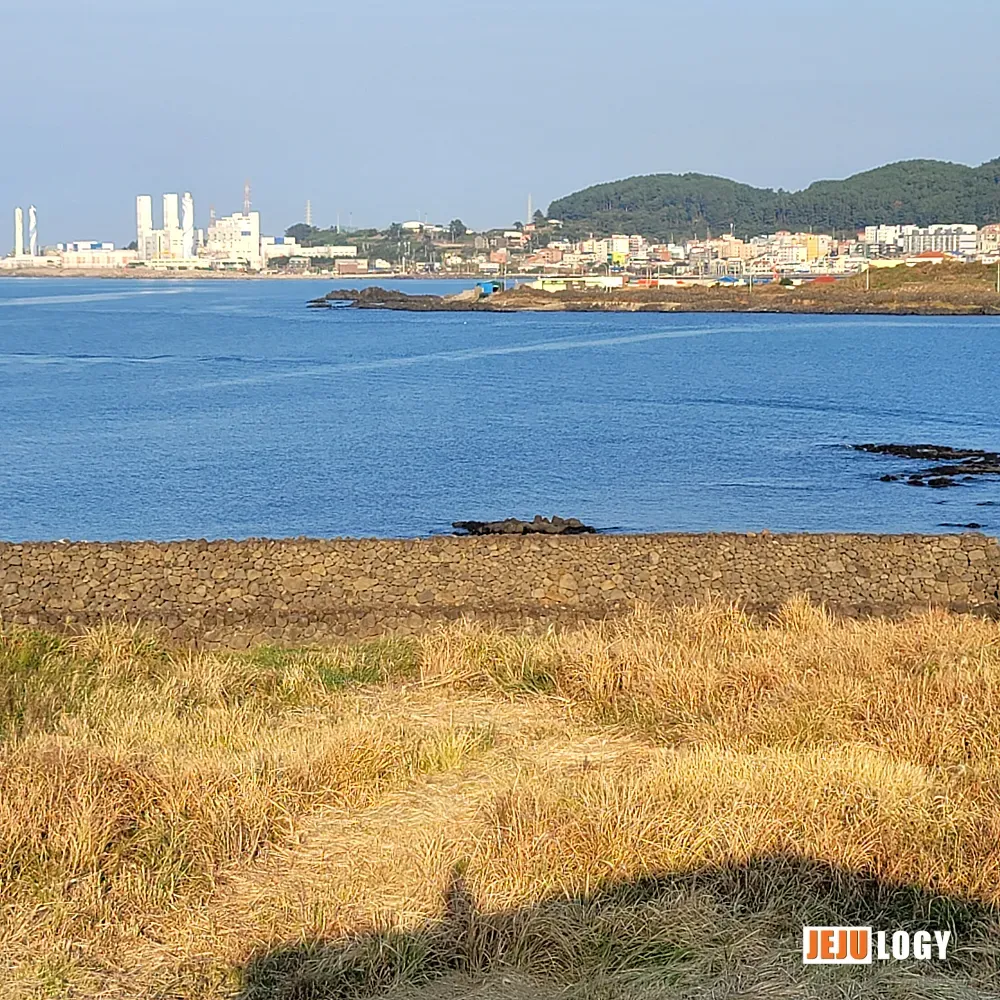
To the west, the Byeoldo Yondae (별도연대, a beacon tower) and Hwabuk Port sit close by, and on a clear day, Jeju Port and the VTS facility come into view further along the coast. It's a view that layers history and the present without apology.
A Wall With More Than One Story
The standard account of the hwanhaejangseong begins with the Sambyeolcho — and that's as good a place to start as any.
In 1270 (the 11th year of King Wonjong of Goryeo), the Sambyeolcho, a formidable military unit that refused to accept the Goryeo-Mongol peace terms, began moving toward Jeju. The Goryeo court, alarmed, dispatched Yeongam magistrate Kim Su and General Go Yeorim with roughly a thousand soldiers to the island. Together with local residents conscripted into the effort, they began hastily constructing stone walls along the coast to prevent a landing. This is generally regarded as the origin of the hwanhaejangseong.
It didn't work. That September, the Sambyeolcho landed anyway and took control of the island.
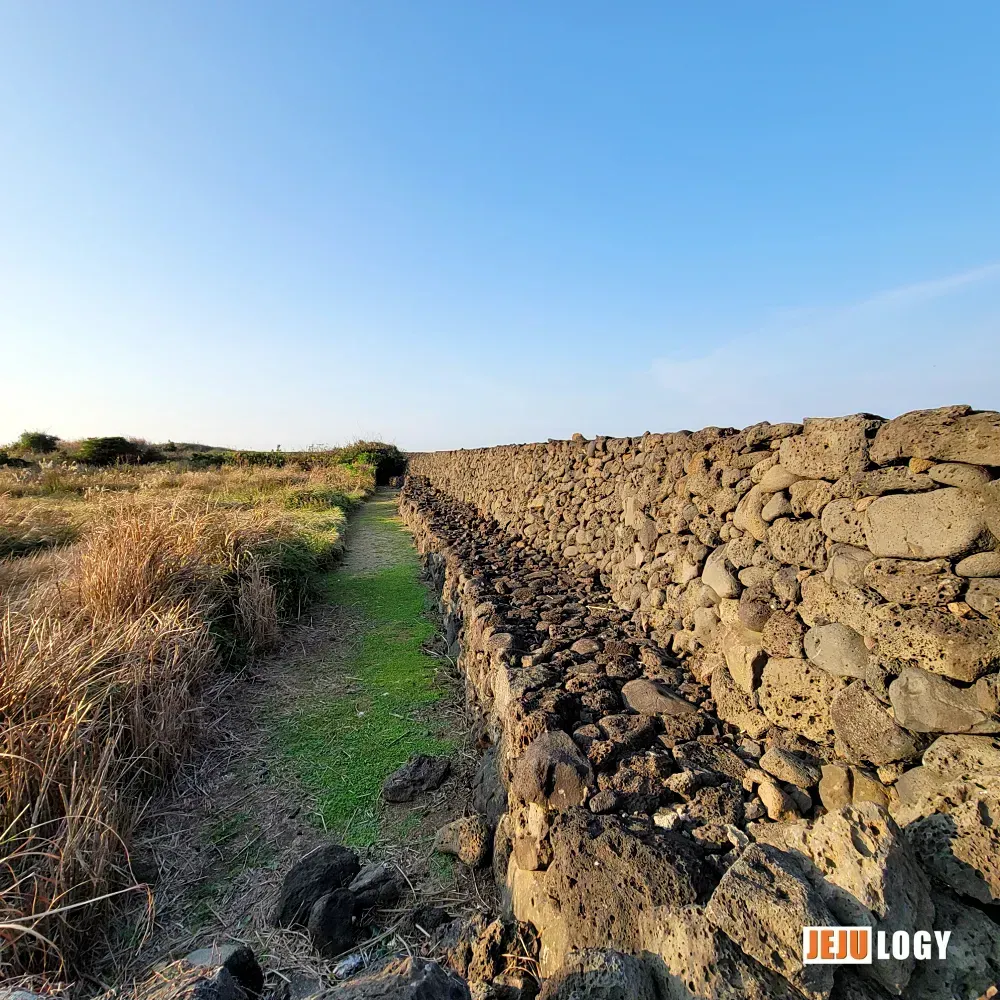
What happened next is, in its own way, rather elegant: the Sambyeolcho simply kept building the wall — for themselves. What had been erected to keep them out now served to keep others out. For over two years, they used Jeju as their base of resistance against the Goryeo-Mongol allied forces, until they were finally suppressed in 1273.
The wall didn't fall into disuse after that. Far from it. Through the late Goryeo period and across the Joseon era, the hwanhaejangseong was maintained as a coastal defense against the frequent raids of Japanese pirates (wako). The enemy changed; the wall remained. By the 18th and 19th centuries, when foreign vessels — including British warships — began appearing off Jeju's shores, the walls were reinforced yet again.
Over those many centuries, the sweat and labor of ordinary Jeju islanders went into every stone. The hwanhaejangseong is not a monument to any single dynasty or conflict. It is a long, slow accumulation of the island's resolve.
Hwabuk and the Byeoldo Port
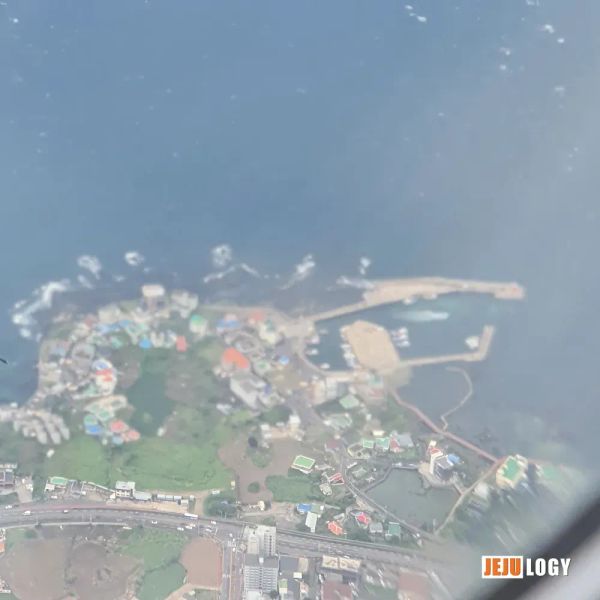
The Hwabuk area was among the most strategically significant points along Jeju's northern coast. Hwabuk Port — historically known as Byeoldopo (別刀浦) — was once the primary maritime gateway between Jeju and the mainland. Goods, official supplies, and even political exiles passed through this port. It was a place of consequence.
The Byeoldo Hwanhaejangseong was built to wrap around this port, running along the nearby coastline to block any hostile forces attempting to land on Jeju's northern shore.
The Wall Today
The Byeoldo Hwanhaejangseong is built from Jeju's characteristic basalt — dark, porous, and stubborn — coursed along the natural contours of the shoreline. Approximately 600 meters of the original wall survives in its original location.
It was designated Jeju Special Self-Governing Province Monument No. 49-2 on January 7, 1998, and a significant restoration was carried out between 2006 and 2007.
I'll say what I always think when I visit restored sections of old walls: yes, they can look a little too clean, a little too composed. But restoration isn't the betrayal it's sometimes made out to be. These walls were never static — they were patched, rebuilt, and reinforced across every dynasty that held the island. The 2006–2007 work is simply one more point along that long continuum. What matters is that the wall is still here, and still readable.
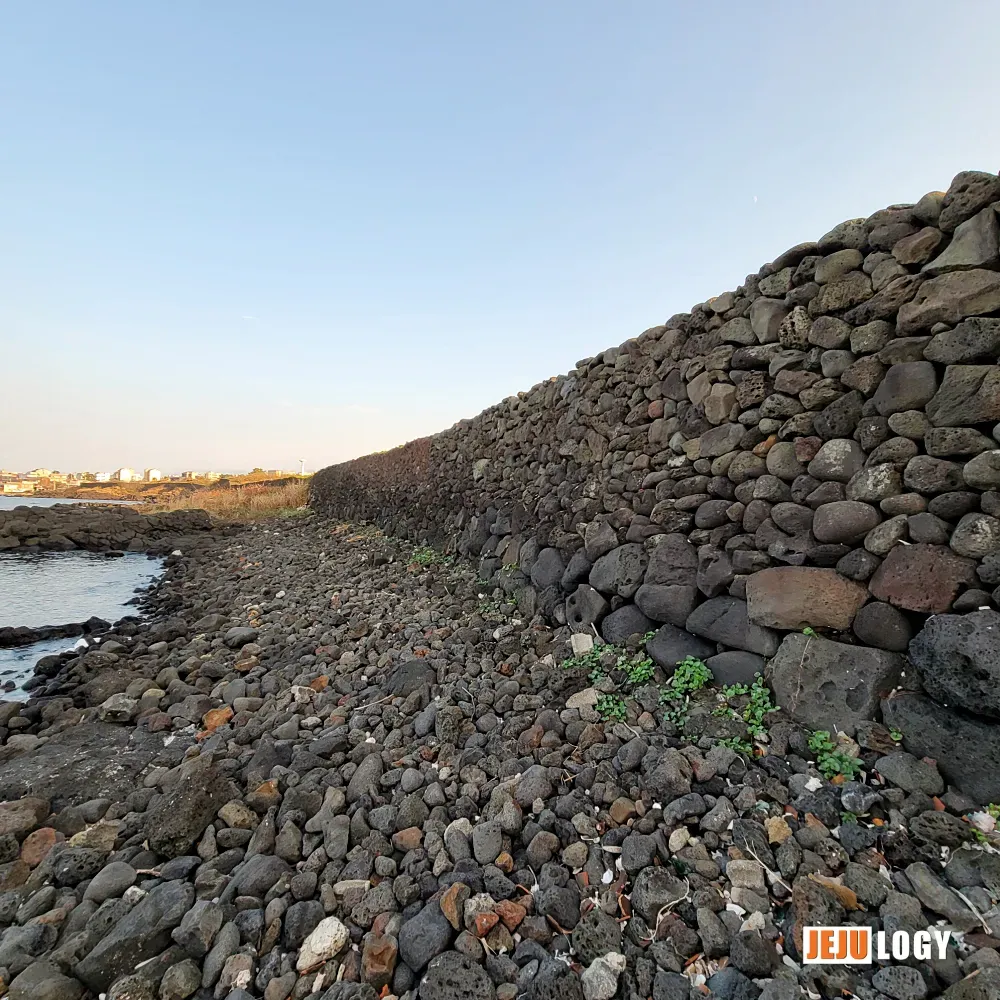
Sitting right on the coast, it's especially exposed to the elements. All the more reason to hope it holds.