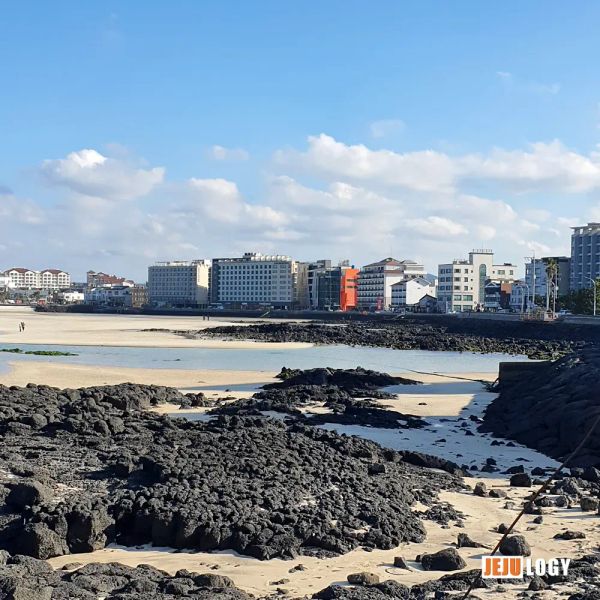
A Day Walking Near Dombenang-gol on Jeju Olle Trail 7
Olle Course 7 is often called the highlight of the Jeju Olle trail system. On a rainy day, I walked a short stretch near Dombenang-gol — past columnar joints, subtropical ravines, and views of Beomseom Island. You don't need the full 17.7 km to feel what makes this trail special.

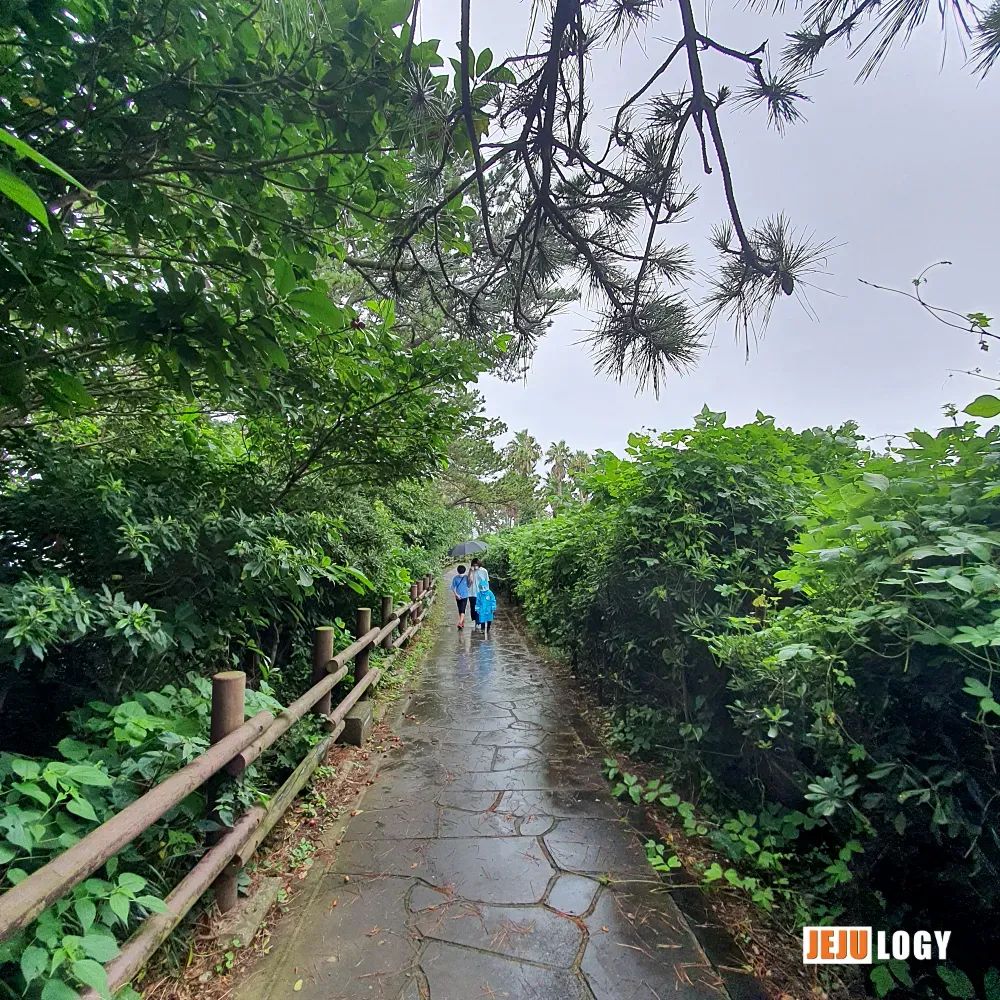
The Day I Walked by Dombenang-gol, Olle Course 7
Olle Course 7 starts at the Jeju Olle Trail Traveler Center in Seogwipo and runs about 17.7 km to Awaenangmok (아왜낭목) in Wolpyeong Village. It is often called the highlight of the entire Jeju Olle trail system, and for good reason.
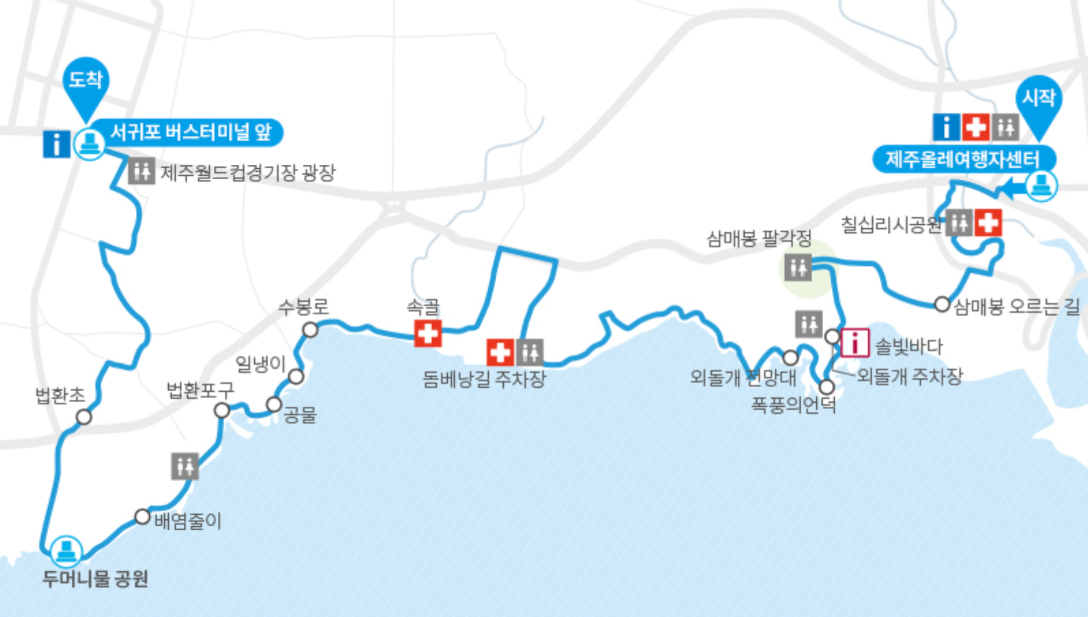
The route follows the southwestern coastline, passing Chilsimni Poetry Park (칠십리 시공원), Sammaebong Peak (삼매봉), Oedolgae Rock (외돌개), Beophwan Port (법환포구), Seogeondo Island (서건도), Gangjeongcheon Stream (강정천), and Wolpyeong Port (월평포구). Walk long enough and you will see ocean, islands, and forest all at once. The full course takes about five to six hours and is rated medium difficulty, with some hills and rocky sections, but the trail is well maintained and the scenery makes it easy to keep going.
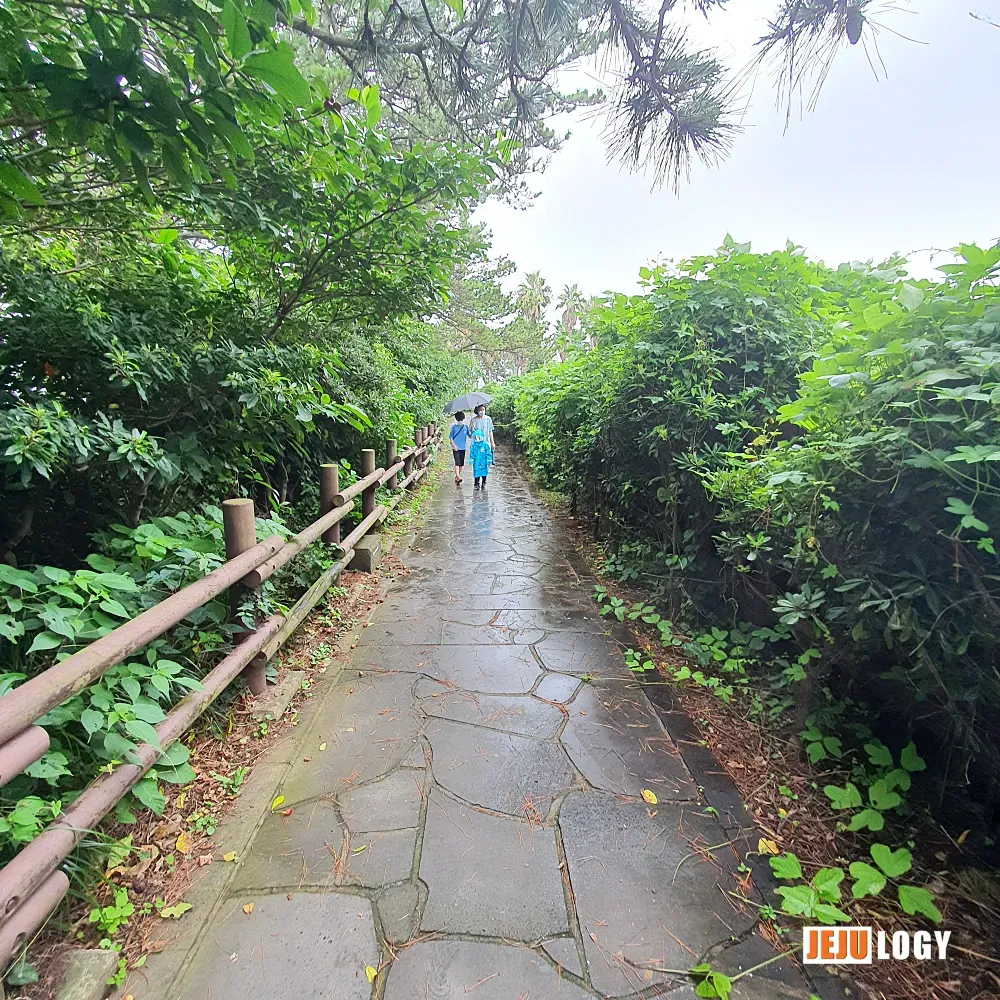
You do not have to walk the entire course. If your travel schedule only allows a short detour, that is fine. Every section has something worth seeing. On this particular day, it was raining heavily. I walked a short stretch along the clifftop trail near Dombenang-gol (돔베낭골).
The stretch between Oedolgae and Dombenang-gol
The section from Oedolgae to Dombenang-gol has long been considered the crown jewel of Course 7. However, the old coastal path between Sokgol (속골) and the Dombenang-gil parking lot used to pass through private land, and that route has since been blocked. Walkers are now rerouted along the clifftop trail above.
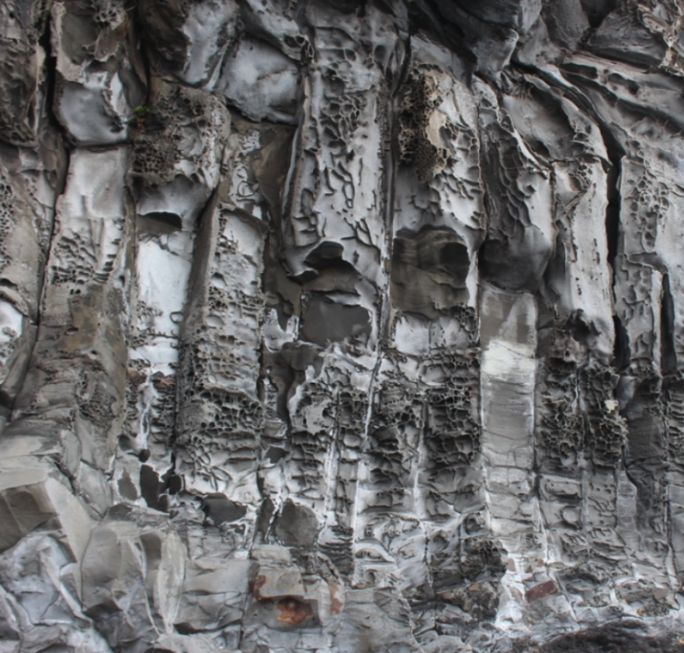
The name Dombenang-gol breaks down into three Jeju-dialect words: dombe (도마, a cutting board), nang (나무, tree), and gol (골, valley). It means "the valley where trees with broad, cutting-board-sized leaves used to grow." The ravine is thick with subtropical evergreens, and the coastline below is lined with columnar joints and dramatic rock formations. Unfortunately, the lower coastal path itself is currently closed off for safety reasons.
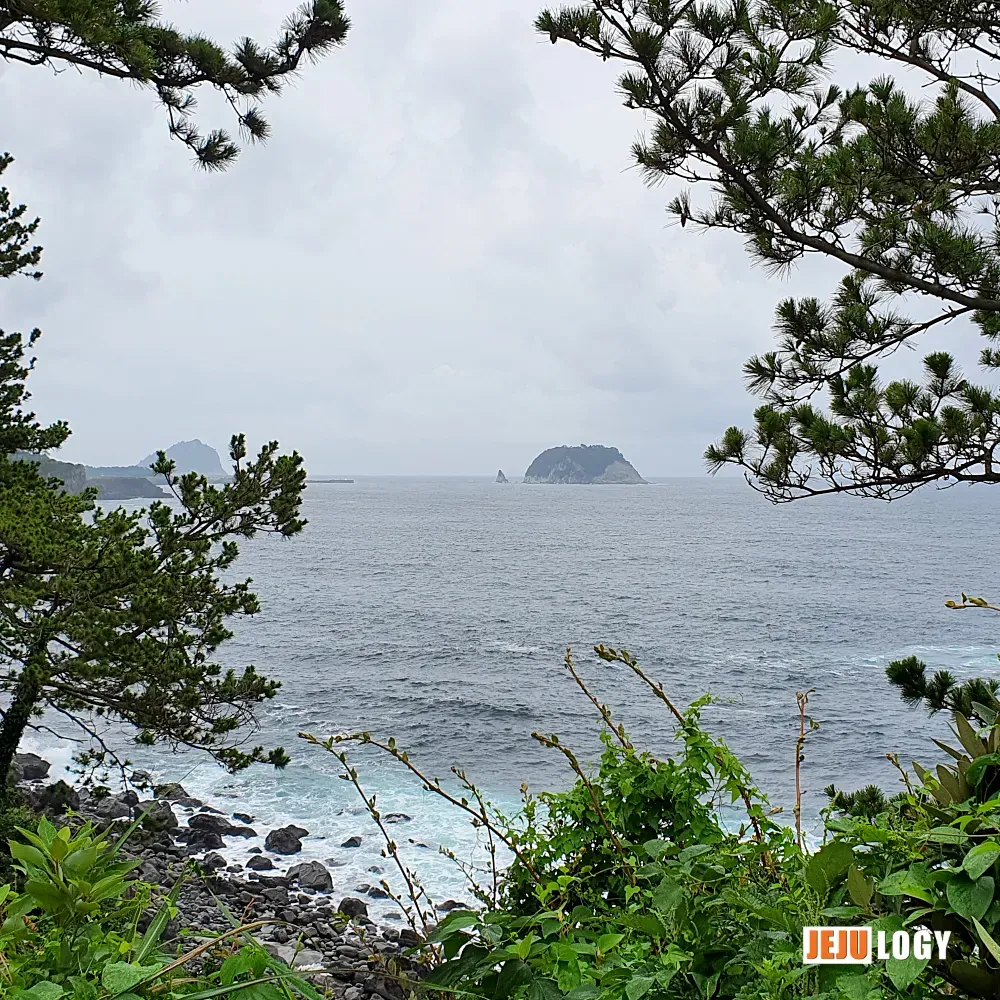
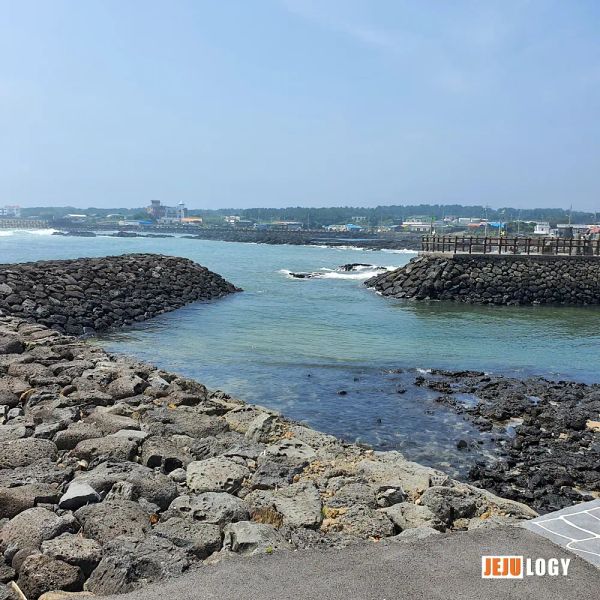
The columnar joints and jagged rocks along the sea cliffs are stunning, as you can see in the photos. It is a shame that you can no longer walk down there, but there is nothing to be done about it. More and more sections like this across Jeju are being closed off for safety or environmental protection. It has been happening for years, and it will keep happening.
Sokgol and its troubled past
Nearby Sokgol (속골) had a different kind of problem. Every summer, illegal seasonal restaurants would set up along the stream, most of them known for baeksuk (백숙, whole chicken soup). The operators essentially privatized the stream, blocking public access for years. Recently, the illegal businesses have finally disappeared, and the valley has returned to its natural state. For locals and visitors alike, it is a welcome change.
Beomseom through the rain
Even on a rainy day, I walked the clifftop trail near Dombenang-gol for a while.
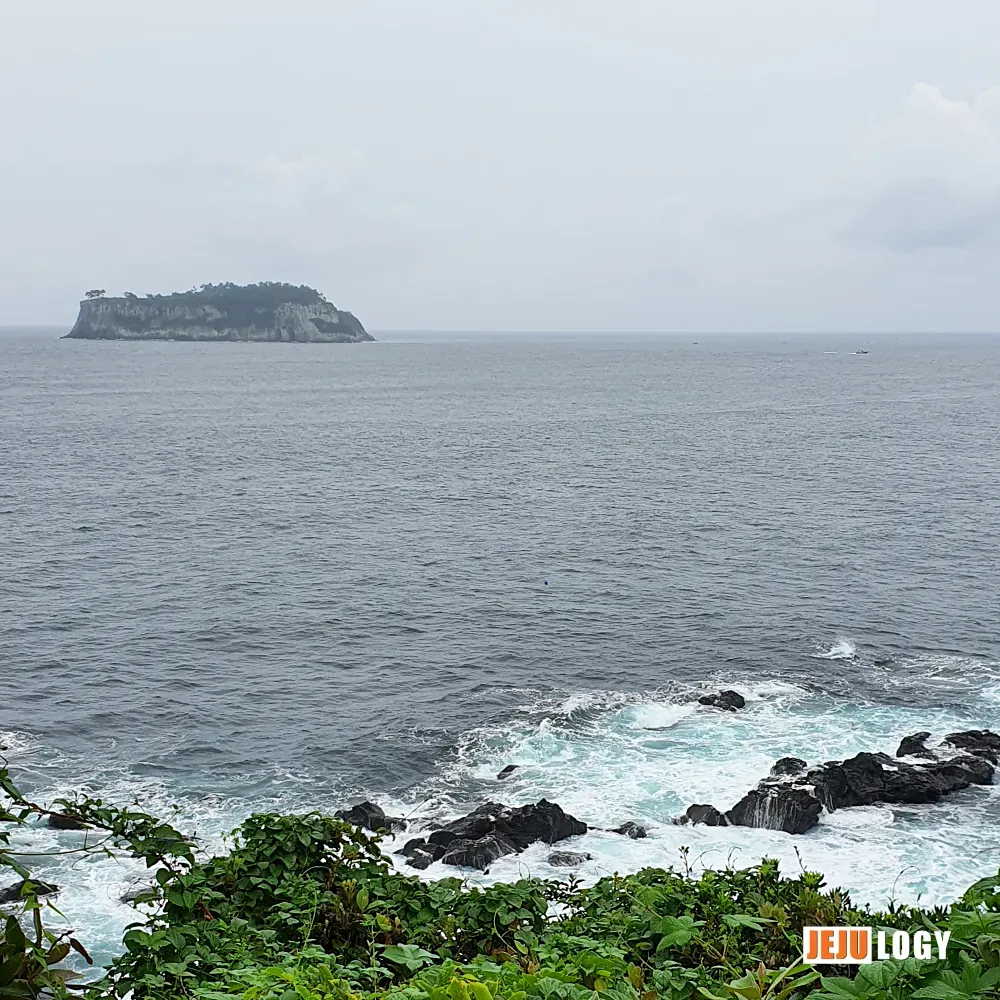
Beomseom Island (범섬) spread out in front of me, looking different from every angle. The sky and water were dull under the rain, which was a shame, but up close, the sheer scale of Beomseom's columnar joints is something else. The cliffs beneath the trail are full of columnar joints too, and Beomseom across the water makes them look even more impressive. Moments like these remind you, viscerally, that all of Jeju is a volcanic island.
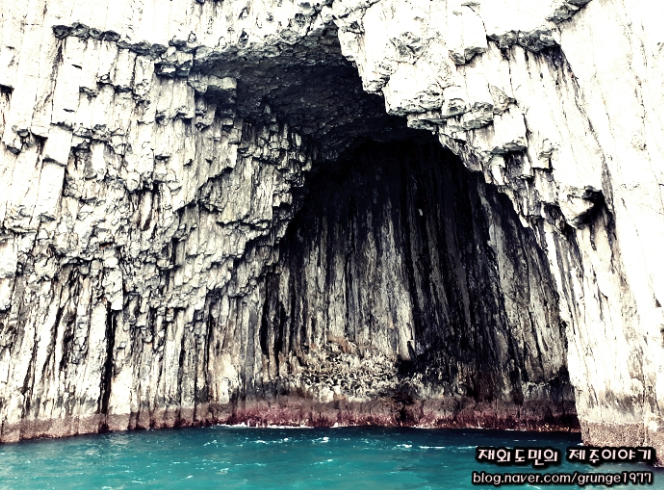
I wrote about Beomseom's columnar joints in detail on my Korean blog. https://blog.naver.com/jejulogy/221642394883
Munseom Island (문섬) came into view. Lean a little further past the trees, and Saepseom Island (섶섬) peeks out too.
The arc of islands off Seogwipo — Saepseom, Munseom, Beomseom — never fails to stir something in me. It is always a mix of longing and awe. This is one of the reasons I want to live in Jeju.
Palm trees that look a little tired
Palm trees swaying in the wind added an almost tropical atmosphere. But in Jeju, they always look a little drained, as if the harsh winters have taken something out of them. Compared to the palms you see in truly tropical places, there is a noticeable difference. The browning at the lower fronds happens because the leaves are vulnerable to cold and wind.
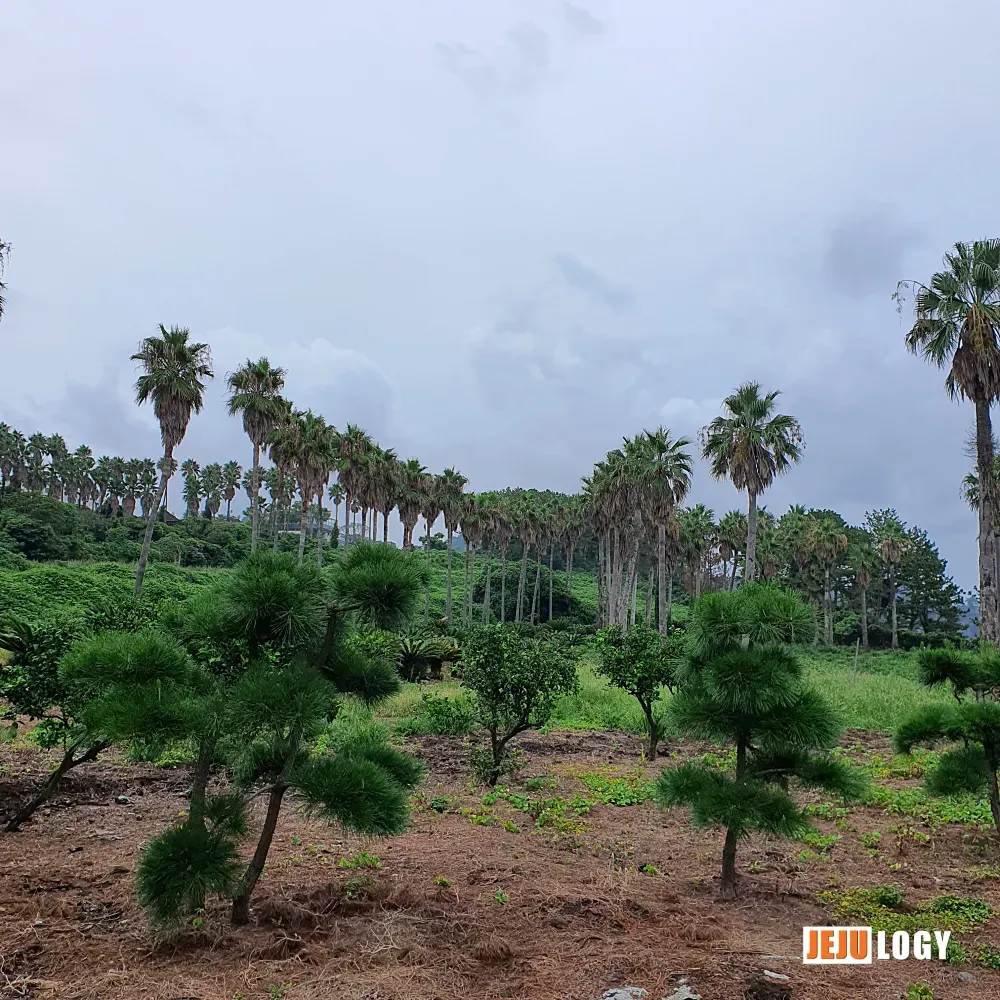
Of course, palm trees in the tropics shed their lower leaves too. But steady warmth keeps them green much longer. And most of the tropical palms we have seen were probably in resorts or tourist spots, regularly trimmed and maintained by gardeners. That helps.
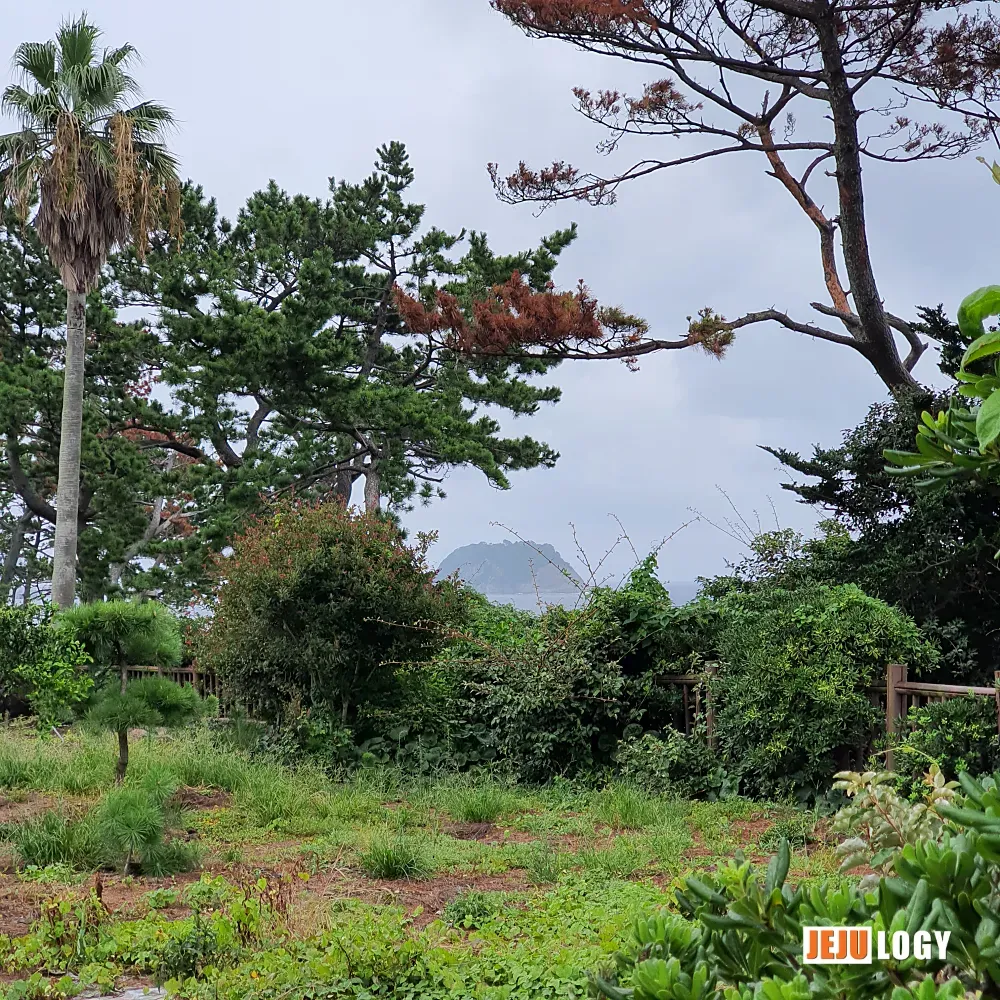
Still, for someone like me who is used to the monotonous street trees of the Seoul metropolitan area, Jeju's palms are special enough. The ones I saw here were planted rather densely — more like a plantation than landscaping. I think palm trees look better with some breathing room between them.
Walk as much or as little as you want
You do not need to walk the full course to feel what makes Olle 7 special. Even a short section will do. It is a trail that rewards you on rainy days, gives you ocean and islands and forest all at once, and reminds you why Course 7 remains the signature trail of the Jeju Olle.