Seogwi jinji, A Joseon Fortress Hidden in Downtown Seogwipo
Just 300 meters from where my grandfather's house once stood, a 16th-century Joseon fortress almost vanished into downtown Seogwipo — torn apart by Japanese rule, the 4·3 upheaval, and decades of urban sprawl. Here is how Seogwijinji came back, and what is left to see today.


Walk down from central Seogwipo toward the harbor, and you will pass through what looks like an ordinary residential area. Hidden inside it is the site of one of Jeju's old coastal defense fortresses. Long-time readers of this blog already know the way Joseon-era Jeju was defended: 3 town walls (3성, eupseong), 9 garrison forts (9진, jinseong), 25 beacon stations (봉수), and 38 signal platforms (연대).
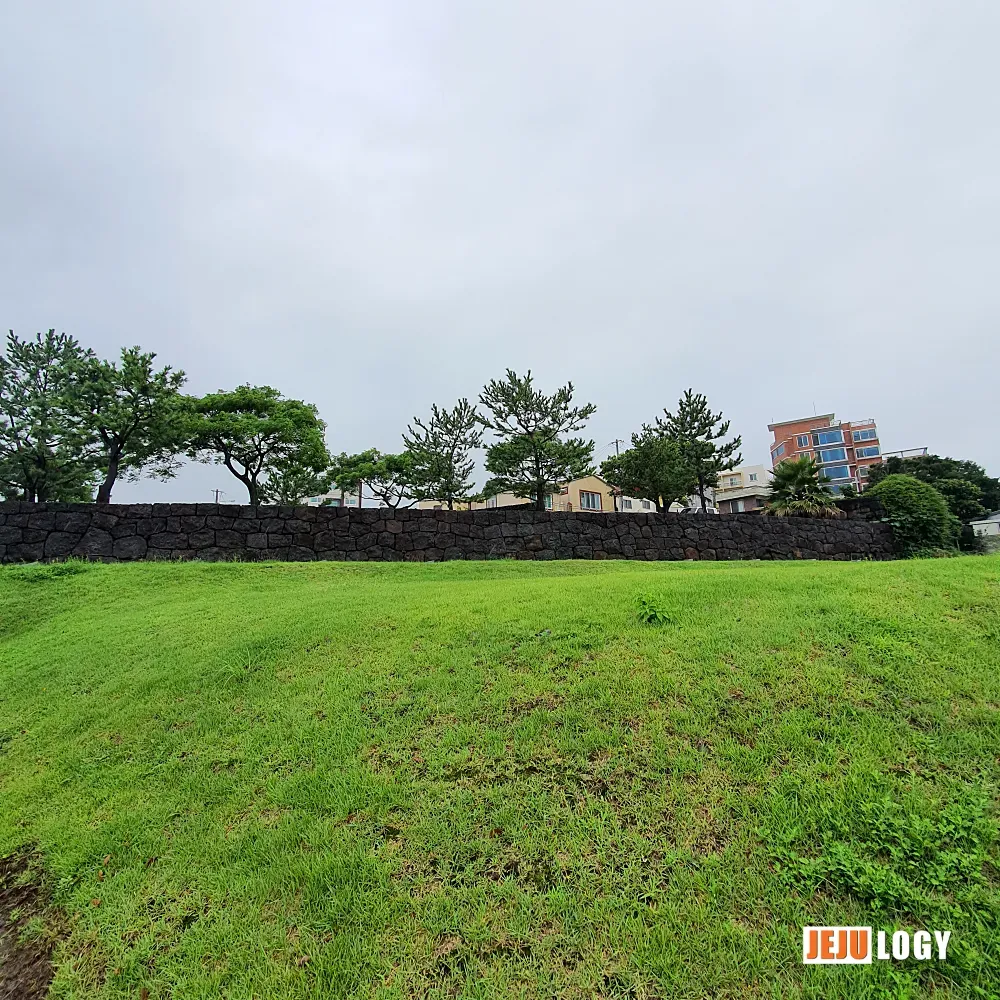
The 3 town walls were Jeju-mok, Jeongui-hyeon, and Daejeong-hyeon. The 9 garrisons stood at Hwabuk, Jocheon, Byeoldo, Aewol, Myeongwol, Susan, Seogwi, Mosul, and Chagwi. The site I am writing about today, Seogwijin (서귀진), was one of those 9.
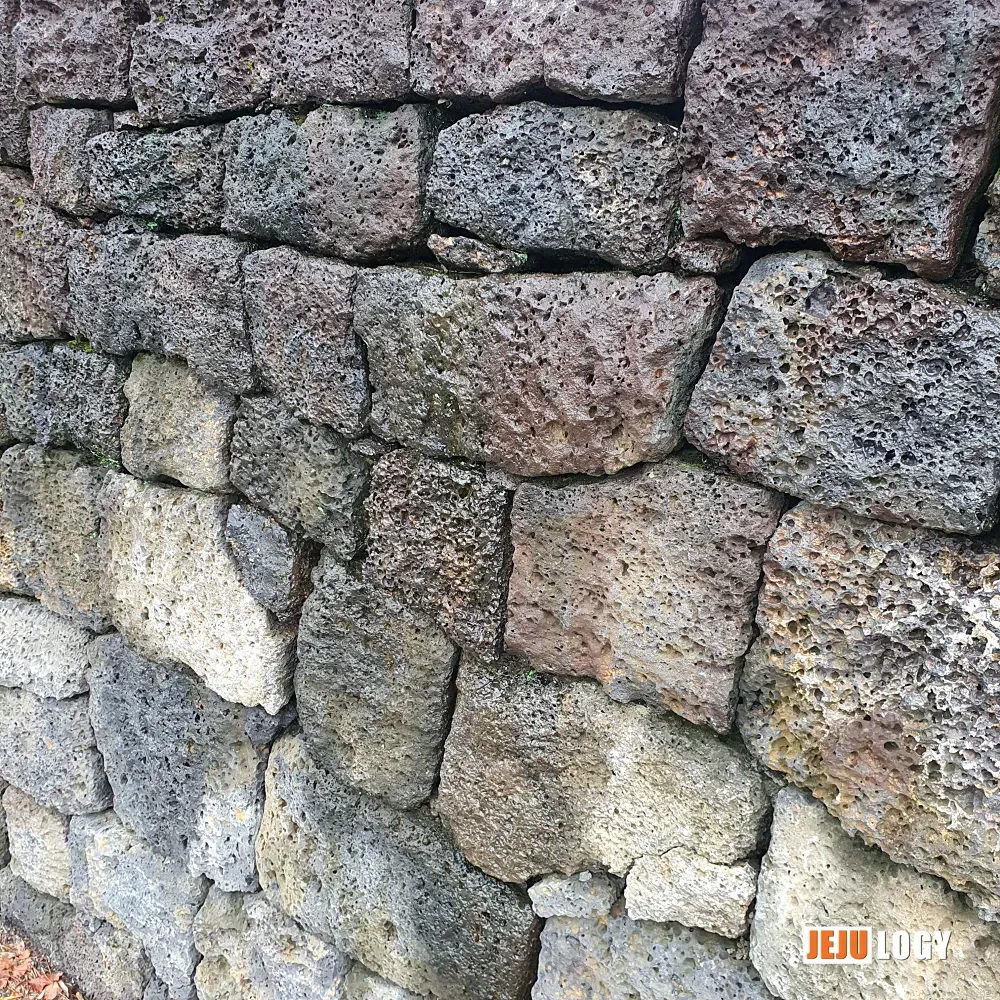
What remains is now called Seogwijinji (서귀진지) — literally "the site of Seogwijin." Some restoration has been done, but in practice only the lot is left. It is the same logic Jeju locals once used for "Mokgwanaji (목관아지)," referring to the empty grounds of the former Jeju-mok provincial office. After that office was rebuilt, people stopped saying Mokgwanaji and started calling it Jeju-mok Gwana (제주 목 관아). Whether Seogwijinji will one day earn back the name Seogwijinseong (서귀진성, "Seogwijin Fortress"), no one knows.
A Personal Walk Through the Site
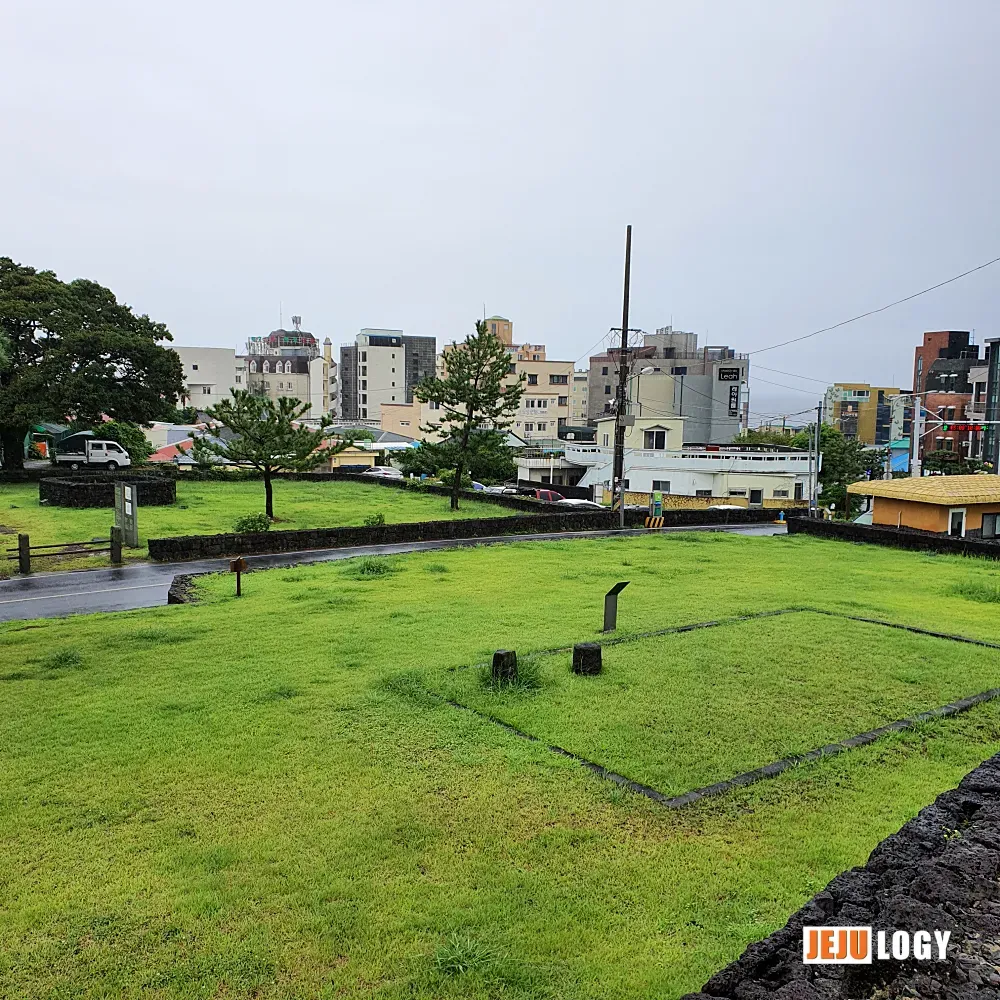
If you keep walking down the road in the photo, you arrive at the harbor. Turn west for a moment and you reach where my late grandfather's house used to stand.
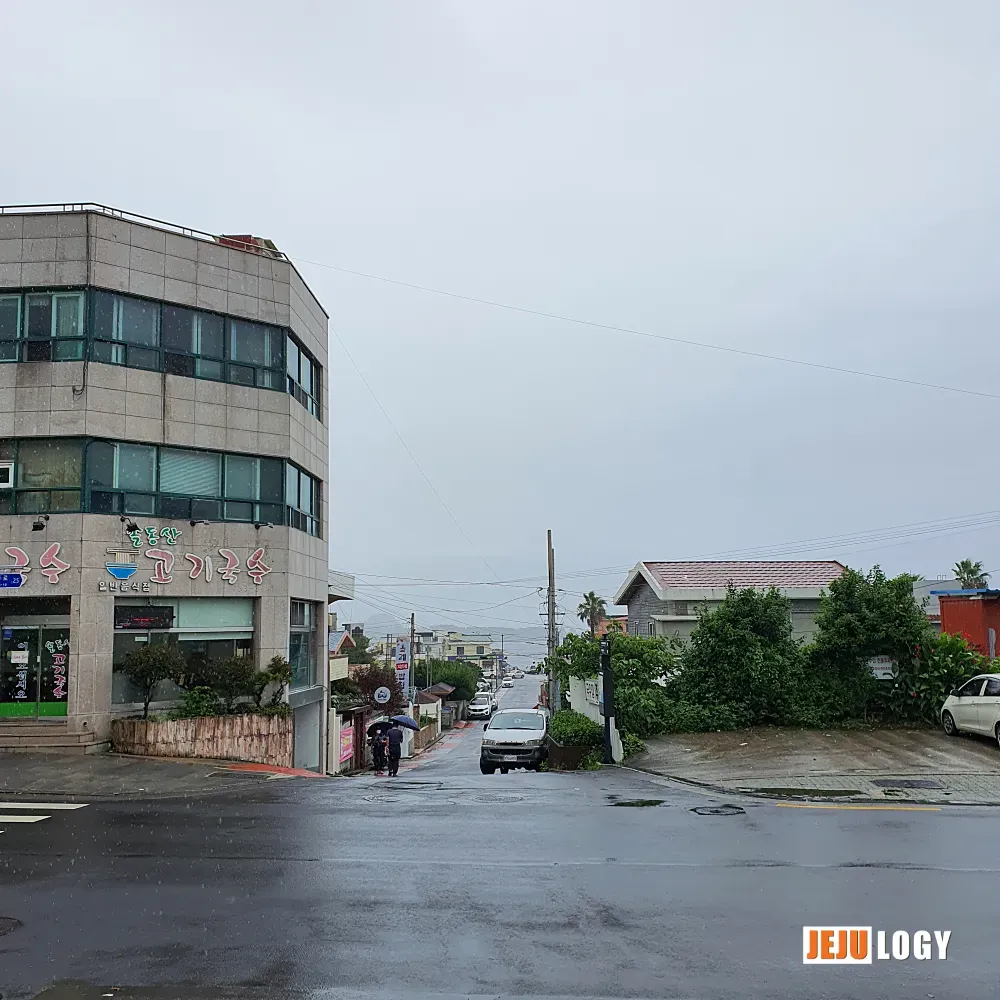
From the fortress site, it is less than 300 meters in a straight line. So Seogwijinseong is not just a heritage site to me. It is part of my family's neighborhood.
But as a child I had no idea what a "defense ruin" was, and certainly no idea that a fortress had once stood here. My father probably did not know either. There was almost nothing left on the ground. Even the lot itself was not properly marked off until very recently.
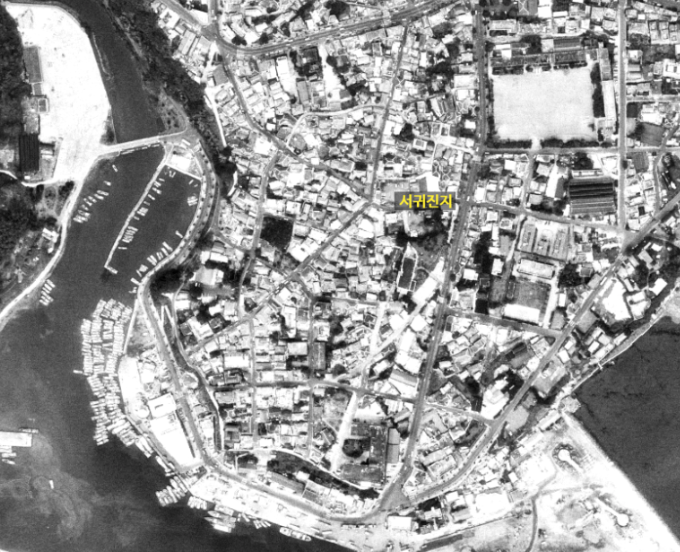
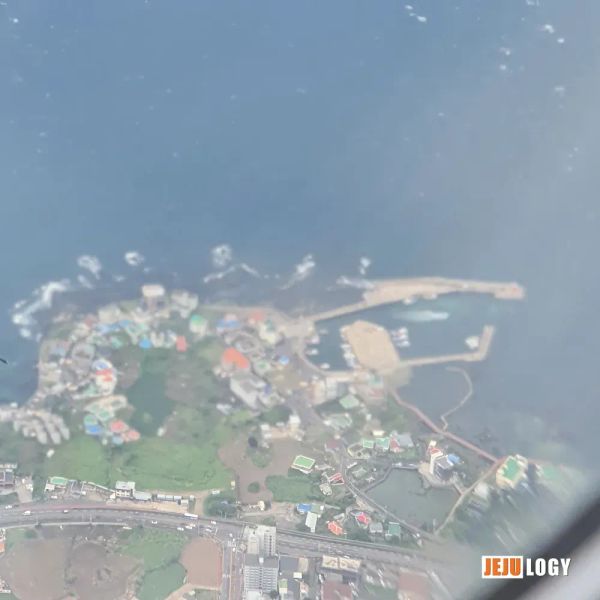
The aerial photo above is from 1995. At that time the Seogwijinseong site was simply built over with regular houses and shops. That continued well into my adult years, so it is no surprise I never noticed.
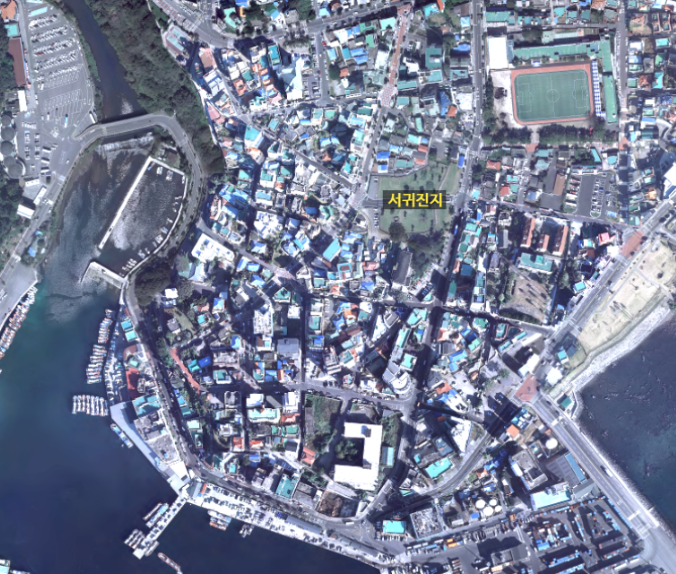
When did the site take its current shape? The city bought the land and demolished the buildings between 2002 and 2009. Excavation surveys ran from 2009 to 2012. The current restoration was completed in 2013. In other words, even this modest version of the site is only about twelve years old.
Even the patch of grass and short stretch of stone wall you see today took years of work. So why did the original disappear so completely in the first place?
How the Fortress Disappeared
Seogwijinseong went through the upheaval of the late 19th and early 20th centuries. Around 1906 (the 43rd year of King Gojong), as Japan extended its control over Jeju, the Seogwijin garrison was officially abolished. A Japanese police substation (순사분파소) was set up on the same ground. Records suggest that the fortress walls and three tile-roofed buildings were still standing at this point.
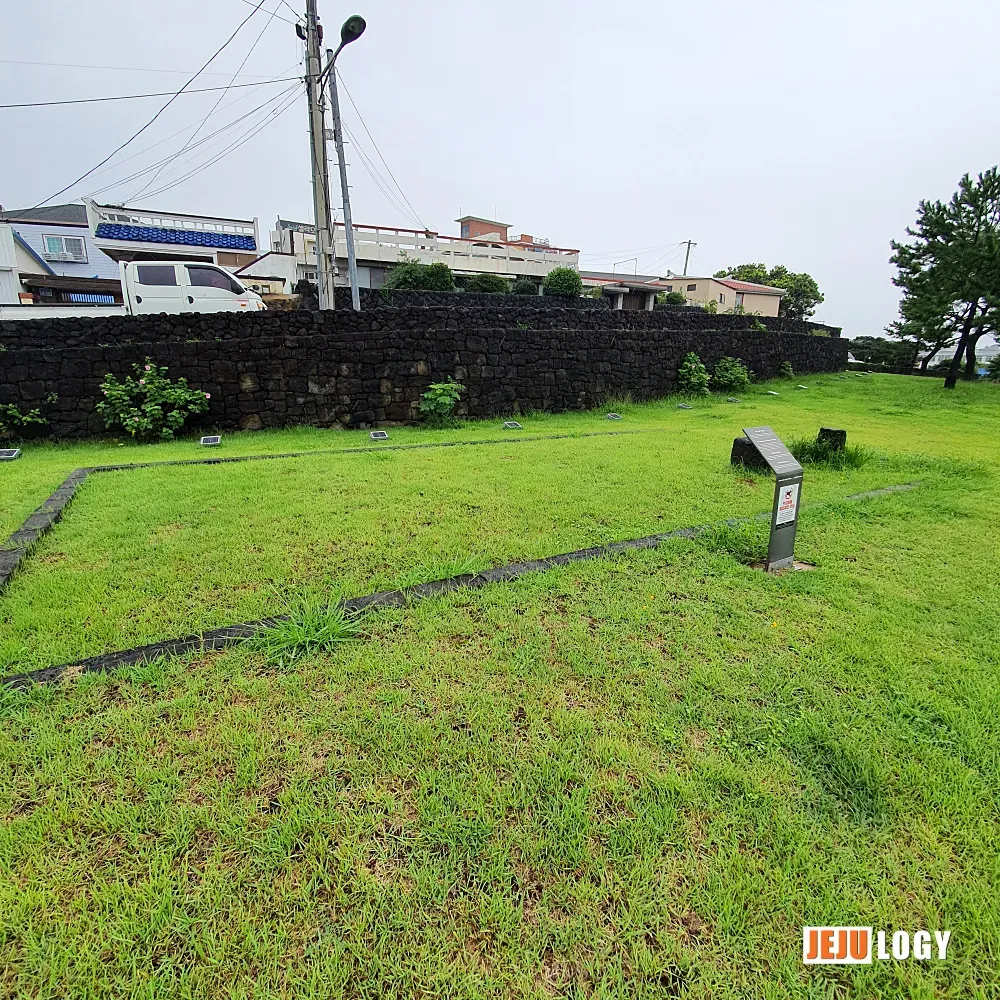
But as more Japanese settlers arrived and Japanese-style schools and facilities went up in Seogwipo, the site was steadily eroded. Around 1917, part of the grounds was converted into the lot of a Japanese elementary school (심상소학교).
Then came the Jeju 4·3 events that swept the island from 1948. Residents in the area, anxious about the conflict, took stones from the Seogwijinseong walls and used them to build defensive walls around their own villages. After that, development accelerated. The remaining stones ended up in house walls and field walls (밭담) around the neighborhood. Even Seogwipo Police Station and the Namjeju County Education Office were built on the site at one point. The fortress, in effect, vanished into the everyday fabric of the town.
Excavation and Partial Restoration
Recognition came slowly. On November 1, 2000, Jeju Province formally designated Seogwijinji as Provincial Monument No. 55. Seogwipo City began acquiring the land in 2002.
Two academic excavations followed, in 2009 and 2010. They turned up Joseon-era building foundations, sections of the original wall, what appears to be an ondol (온돌) heating structure, and roof tiles inscribed with the characters "西歸鎭" — direct physical evidence that this was the right site.
The 2010 excavation produced one finding that drew unusual attention. It was the first wooden cistern (집수정, jipsujeong) of the mid-Joseon period ever confirmed on Jeju. The cistern would have provided drinking water for the soldiers stationed in the fortress. The water itself was channeled in from Jeongmosi (정모시), a spring upstream of Jeongbang Falls (정방폭포).
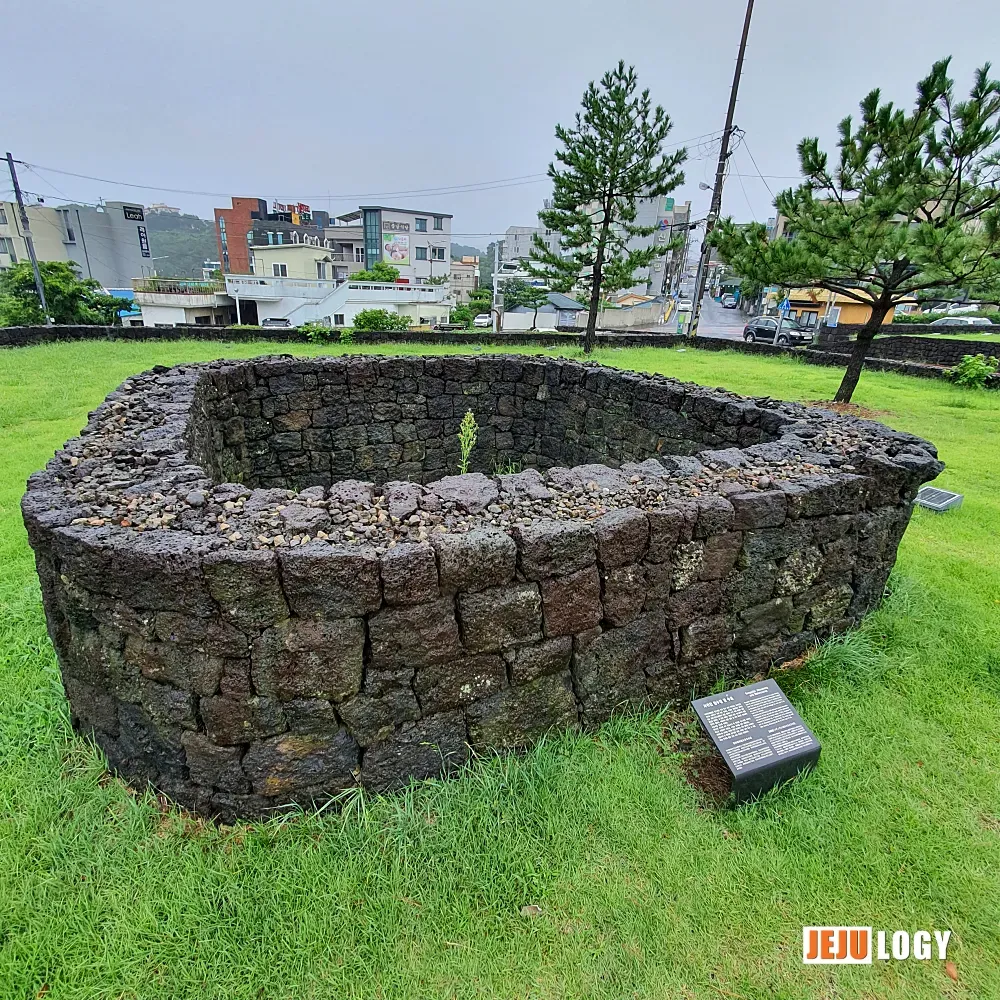
The wooden floor of the original cistern was preserved in place. About 83 cm of soil was laid over it, and a replica was reproduced on top so visitors can see the structure without damaging the original underneath.
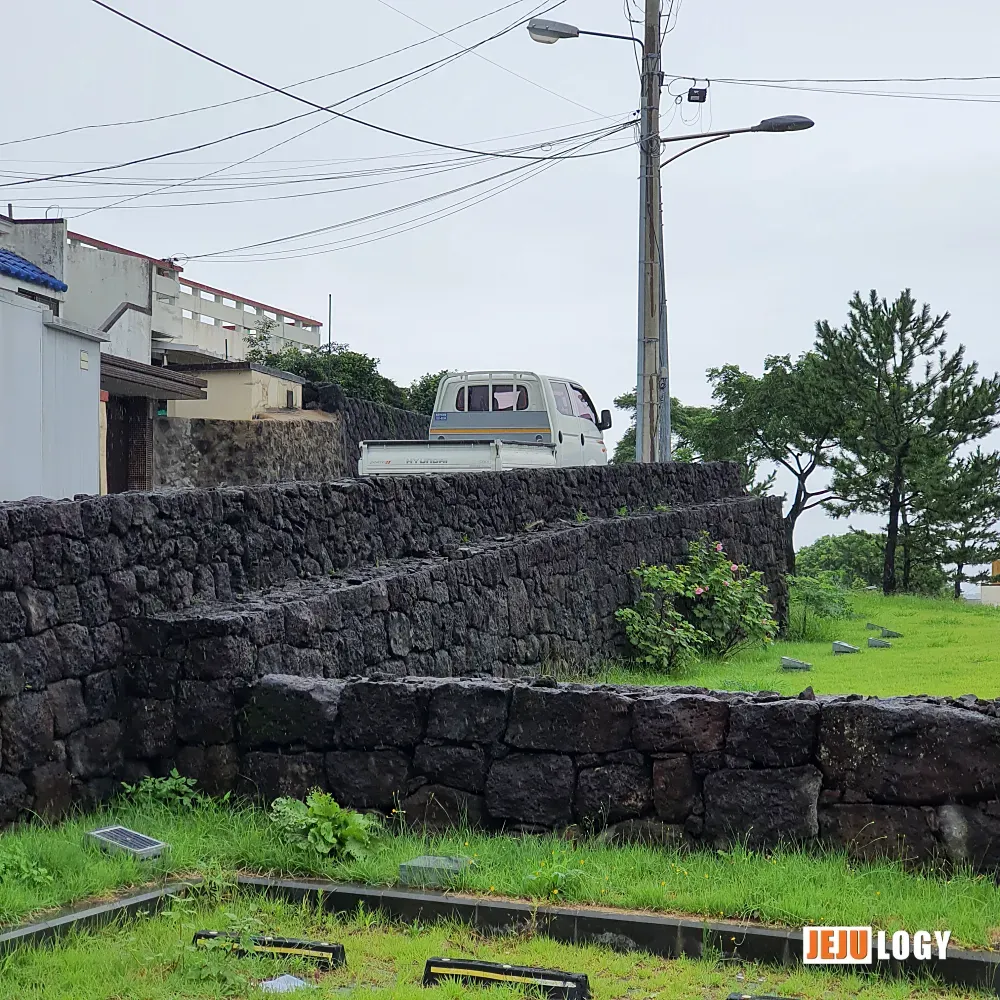
The site today covers 7,835 square meters. Surrounding houses and buildings have been cleared. There has been no full reconstruction of the walls, but signboards and information panels are in place across the grounds.
What Seogwijin Looked Like in Joseon
The first record of construction goes back to 1439, in the Sejong Sillok (《세종실록》, the Annals of King Sejong): "Seogwi Bangoso has no fortress walls, so a request was made to build one, and it was approved." The first version was small. As Japanese pirate (왜구, waegu) raids continued, the fortress was later moved from the banks of the Hongnocheon (홍로천) stream to its current location and rebuilt. The wall came to about 250 meters in circumference and 3.6 meters in height.
The shape of the fortress can also be checked in Tamna Sullyeokdo (탐라순력도), the early-18th-century pictorial record of Jeju inspections. The scene called Seogwijojeom (서귀조점) shows about 100 troops being inspected — 68 garrison soldiers and 39 horse herders and reservists. Inside the walls were a command office (동헌, dongheon), a guesthouse for visiting officials (객사, gaeksa), a weapons storehouse, a grain storehouse, and an archery pavilion (사정, sajeong). In effect, a small military town.
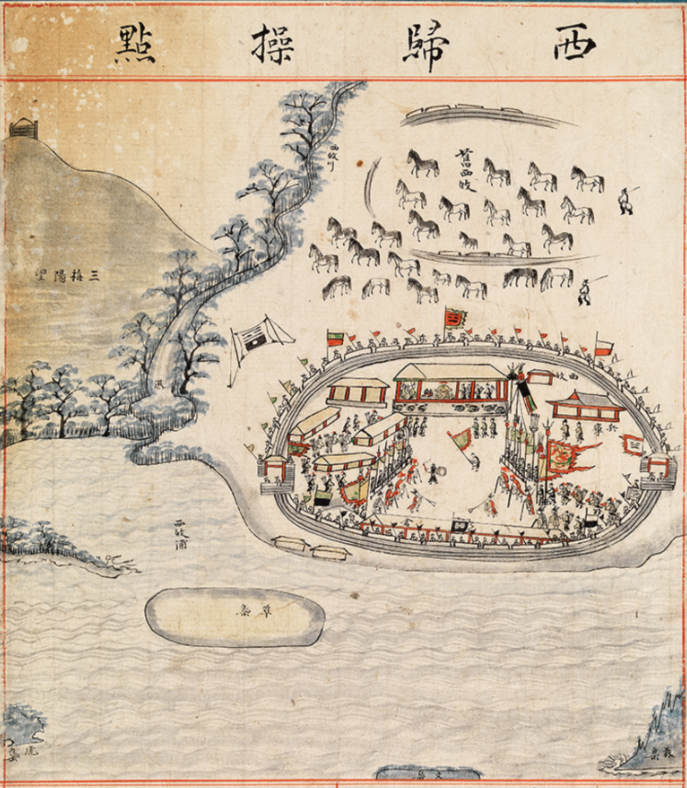
There were two gates, east and west, with parapets along the top of the wall. Administratively, Seogwijin sat under Jeongui-hyeon and served both as a local office and as the main coastal garrison defending the southern waters of Jeju.
The site itself sits on the Soldongsan (솔동산) hill area, looking straight out over the Seogwipo coast. The natural harbor below, sheltered by Saeseom (새섬), Munseom (문섬), and Beomseom (범섬), made the location strategically excellent. In the Joseon period, the waters off Seogwipo were a major approach route for ships coming to Jeju, so military presence here was a priority.
A Star and a Neighborhood
Lee Han-u's Yeongju Sipgyeong (영주십경, "Ten Scenes of Yeongju") is the well-known classical list of Jeju's scenic views. A later expanded version, Yeongju Sipi-gyeong (영주십이경), added two more — including Seojin Noseong (서진노성), which is directly tied to Seogwijin.
The "Noseong" here refers to Noinseong (노인성), the "Old Man Star" — Canopus, the second-brightest star in the night sky. From the Korean peninsula, Canopus can be seen only from Jeju, and only briefly above the southern horizon. Standing on the Seogwijin walls and looking south to catch a glimpse of it was considered one of Jeju's signature scenes.
Beyond the star, the fortress also helped shape modern Seogwipo itself. Cultivated fields and houses spread out around the garrison, a settlement (취락) formed, and that became one of the foundations of today's downtown Seogwipo.
Visiting Today
Seogwijinji sits in the Songsan-maeul (송산마을) area of Seogwi-dong, on Olle Trail Course 6 (올레길 6코스), between Jeongbang Falls and Seogwipo Harbor. So even travelers with no interest in history end up wandering through.
The restoration is modest — a few quiet stretches of stone wall and some signs. But the meaning carries. If you happen to be walking the Olle trail, or just exploring the area, it is worth a short stop to think about how a Joseon coastal fortress once stood here, and how completely it vanished before being pieced partly back together.