Gwonje Oreum: A Tiny Volcano Tucked Inside a University Campus
There's a volcano on campus. Gwonje Oreum has been quietly sitting inside Jeju National University since long before the university even existed.

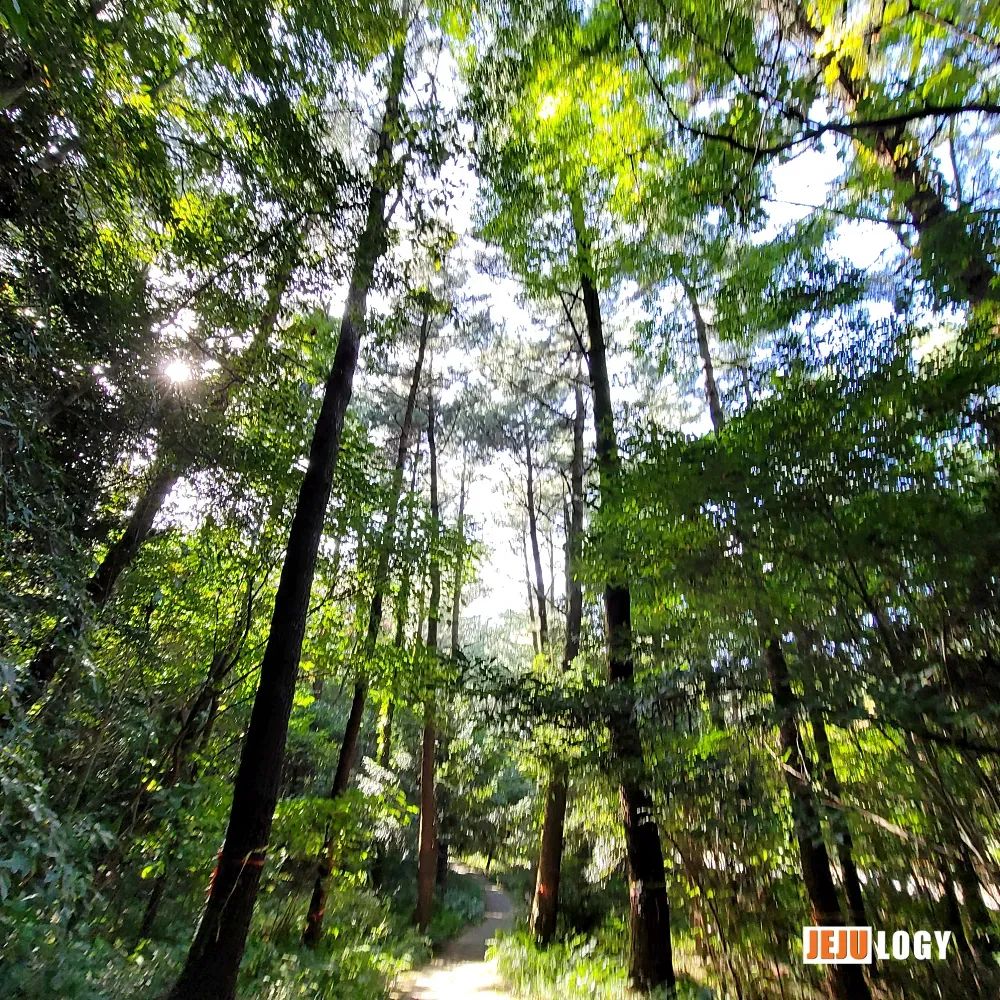
Oreums (오름) close to the city tend to sit right in the middle of everyday life. Gwonje Oreum (권제오름) is no different. You will almost always run into someone out for a walk here — because this small volcanic cone sits inside the campus of Jeju National University (제주대학교).
If you’re new to Jeju, you’ll soon notice these small, rounded hills scattered everywhere. Locals call them "oreums." They are actually tiny volcanoes that formed on the slopes of Hallasan ages ago. With over 360+ of them across the island, they’re practically the soul of the Jeju landscape.
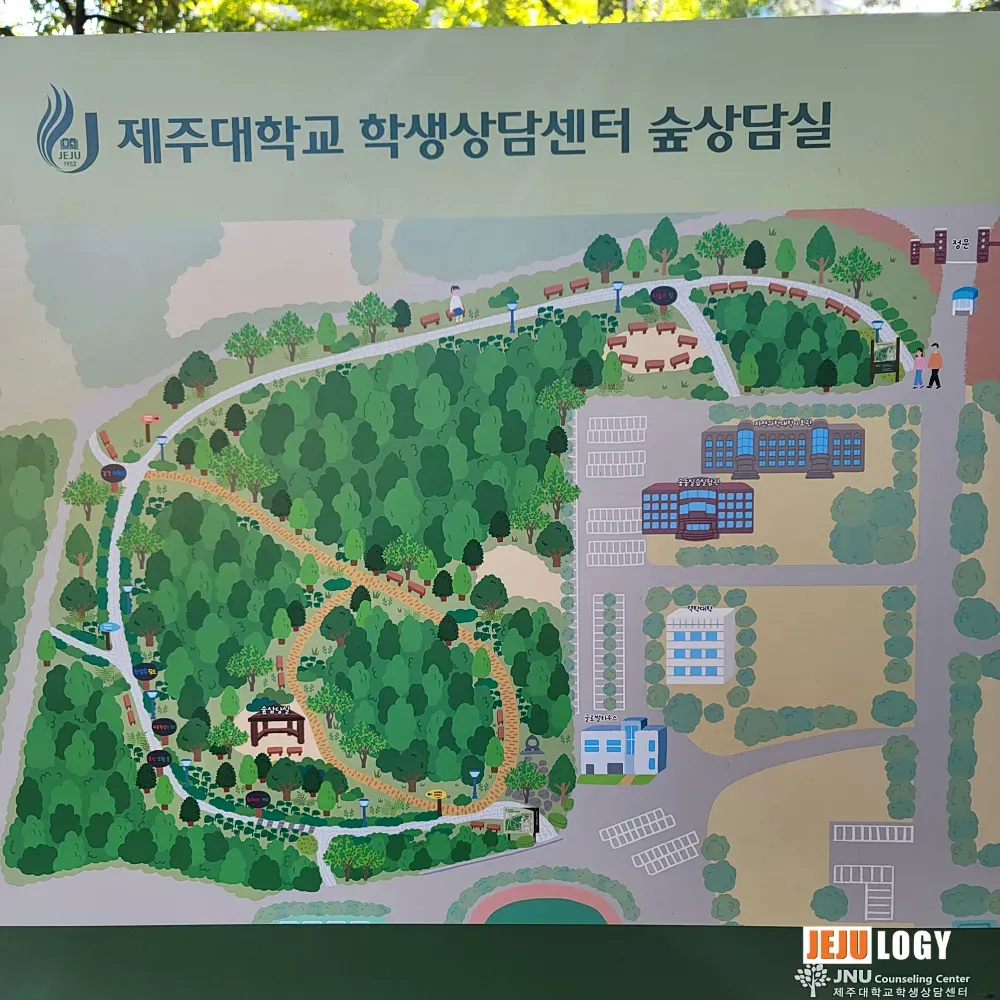
You’ll find Gwonje Oreum right in the Ara-dong area, just a short walk from the university’s main gate. There’s a nice debate to be had here: is the campus built around the oreum, or is the oreum protecting the campus? Sure, the university is much bigger in size, but standing there, it really feels like this ancient little hill is the one holding the entire campus in its arms.
Easy on the Knees, Even Easier to Find
Everyone agrees on one thing: Gwonje Oreum is incredibly easy to walk. While its official elevation is nearly 300 meters, you’re actually only climbing about 28 meters from the base. That’s barely higher than a few flights of stairs! It feels more like a gentle hill than a "volcanic cone," and calling it a hike is honestly a bit of a stretch. It's the kind of place where you don't even need to change into sneakers.
A campus wrapped around a volcano
What truly sets Gwonje Oreum apart is its rare location—a piece of wild nature preserved right in the heart of the city and a university campus.
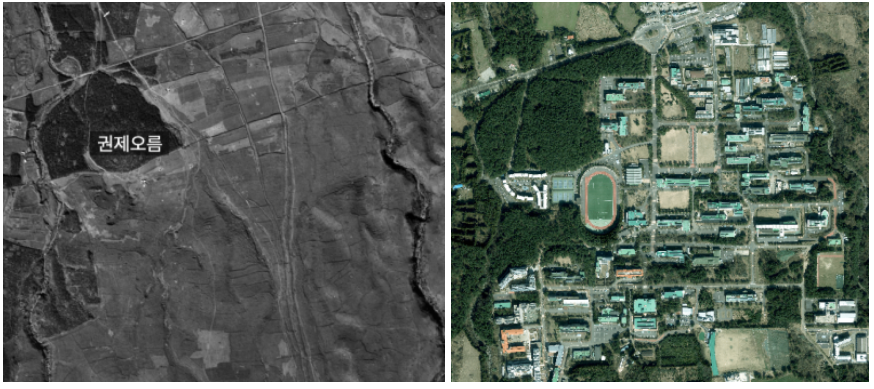
Looking at the photos, the contrast is striking. On one side, you see the oreum standing completely alone before the university moved here in 1980. On the other, you see the modern campus buildings practically hugging the base of the hill. It’s a rare sight to see how the school grew around the volcano without tearing it down.
The landscape shifted dramatically as the campus rose around it, but fortunately, the heart of the oreum survived. Aside from a few edges tucked away behind buildings, the volcanic mound itself remains remarkably intact.
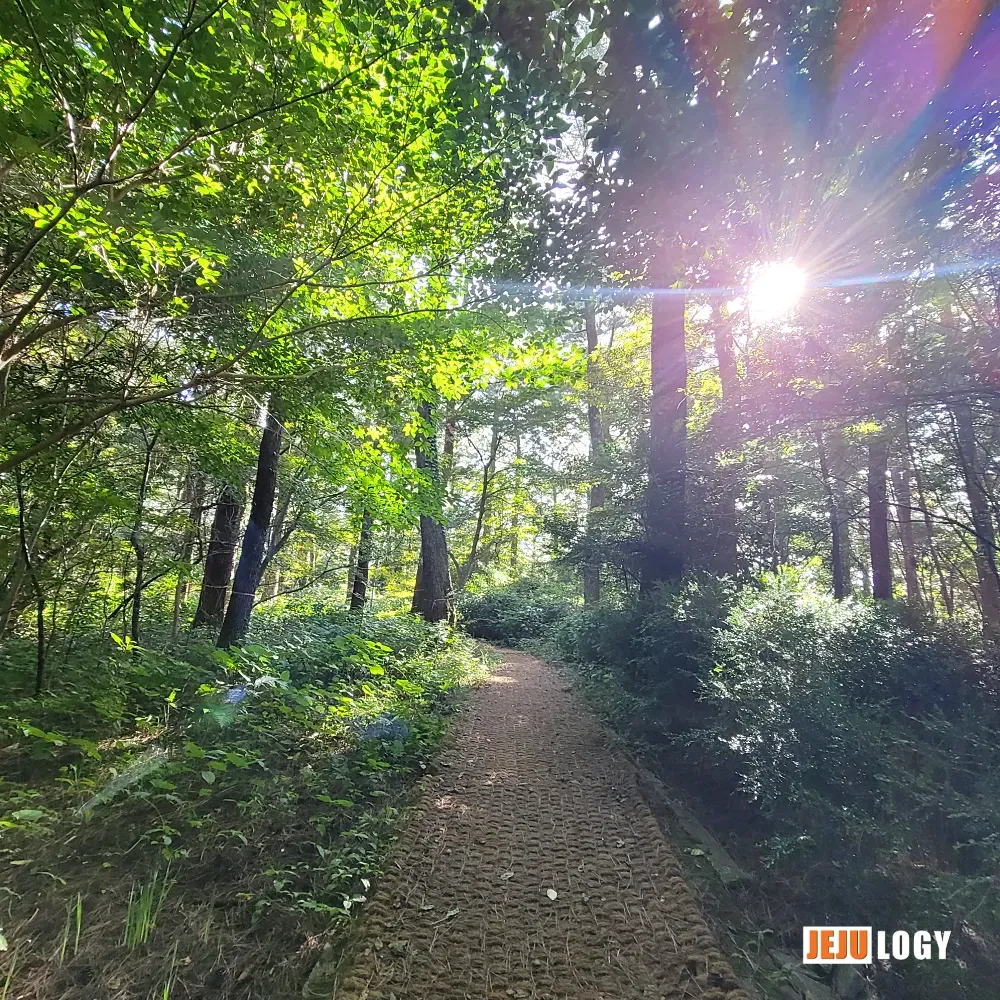
Today, Gwonje Oreum is less about geology and more about the soul of the community. It’s where students catch their breath between classes, faculty find a moment of peace, and neighbors come for a quiet stroll. It has evolved from a simple landmark into a living part of everyday life—a place where the city’s pulse slows down just for a bit.
What's in a name?
Locally, you might hear it called Gwonje or sometimes Geonje. Like many old names on the island, the exact origin has faded over time, leaving us with more questions than answers.
One popular theory links the name to a powerful landowning family (gwonsega) that once ruled the surrounding fields. While it’s a compelling story, nobody can say for sure if it’s true. It remains one of those local mysteries—a name passed down through generations, its true meaning tucked away in the shadows of the past.
Taking a stroll, not a hike
Walk it once, and you’ll see why locals call this a "stroll-type" oreum. With multiple entry points scattered across the campus and perfectly maintained trails, you don’t even need to prepare your mind for a workout. In fact, it’s so gentle that discussing "difficulty levels" feels almost unnecessary—it’s more of a pleasant walk than a climb.
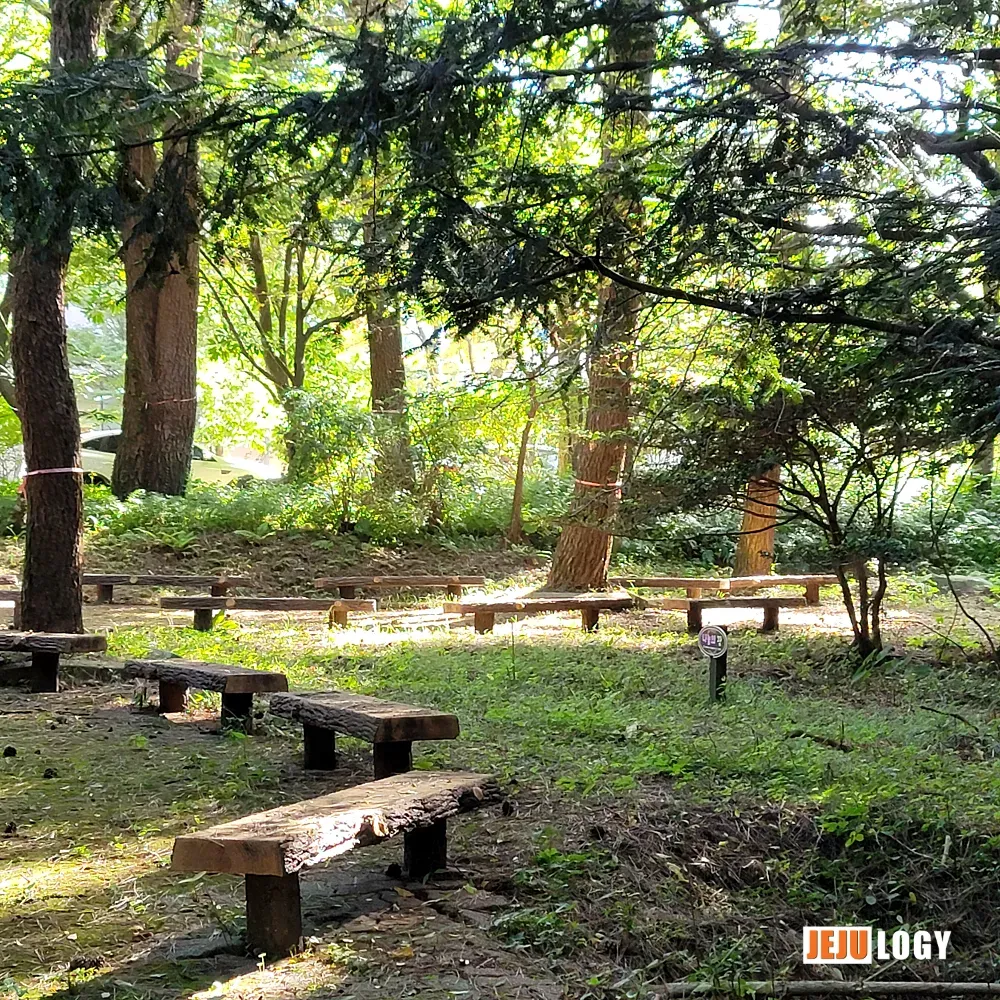
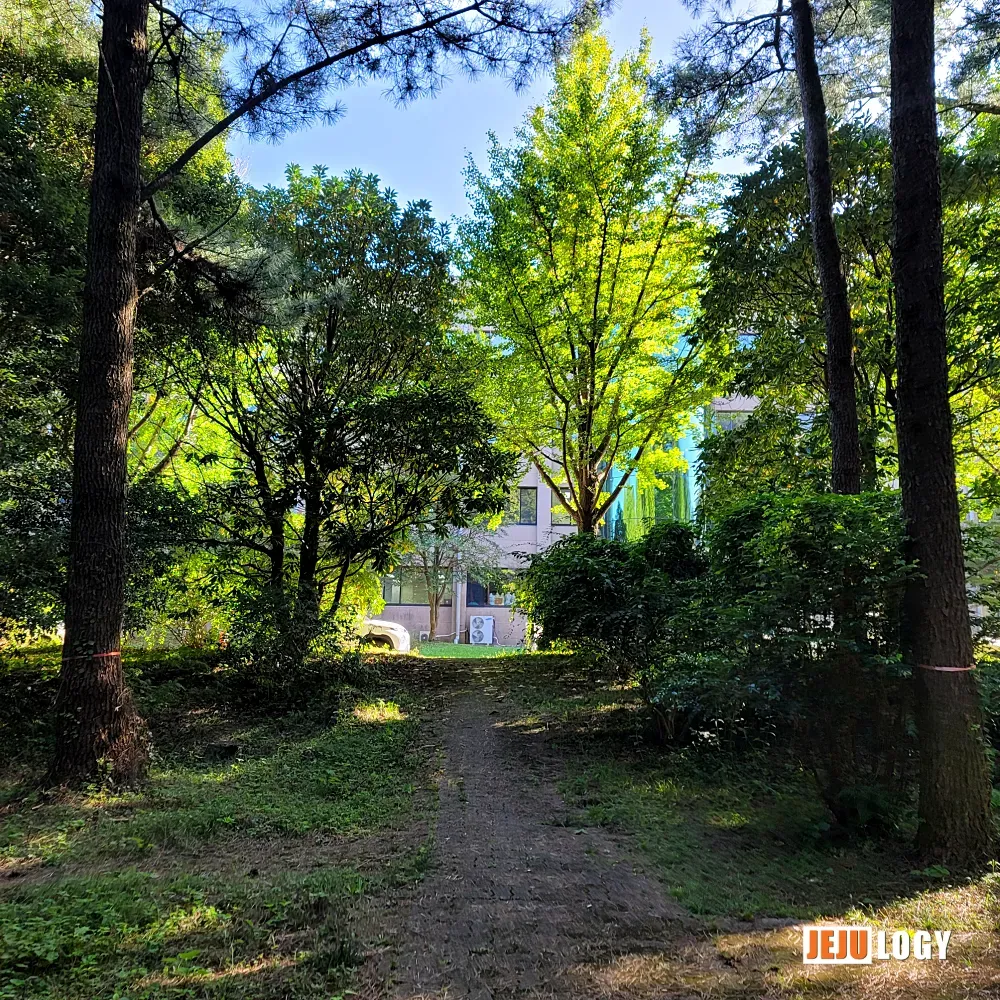
One thing to keep in mind: despite its modest height, the forest here is surprisingly thick. If you’re looking for a sweeping panoramic view at the summit, you might be disappointed. But that’s missing the point. Gwonje’s charm isn't in the vista; it’s in the quiet, wooded path woven into the fabric of daily life.
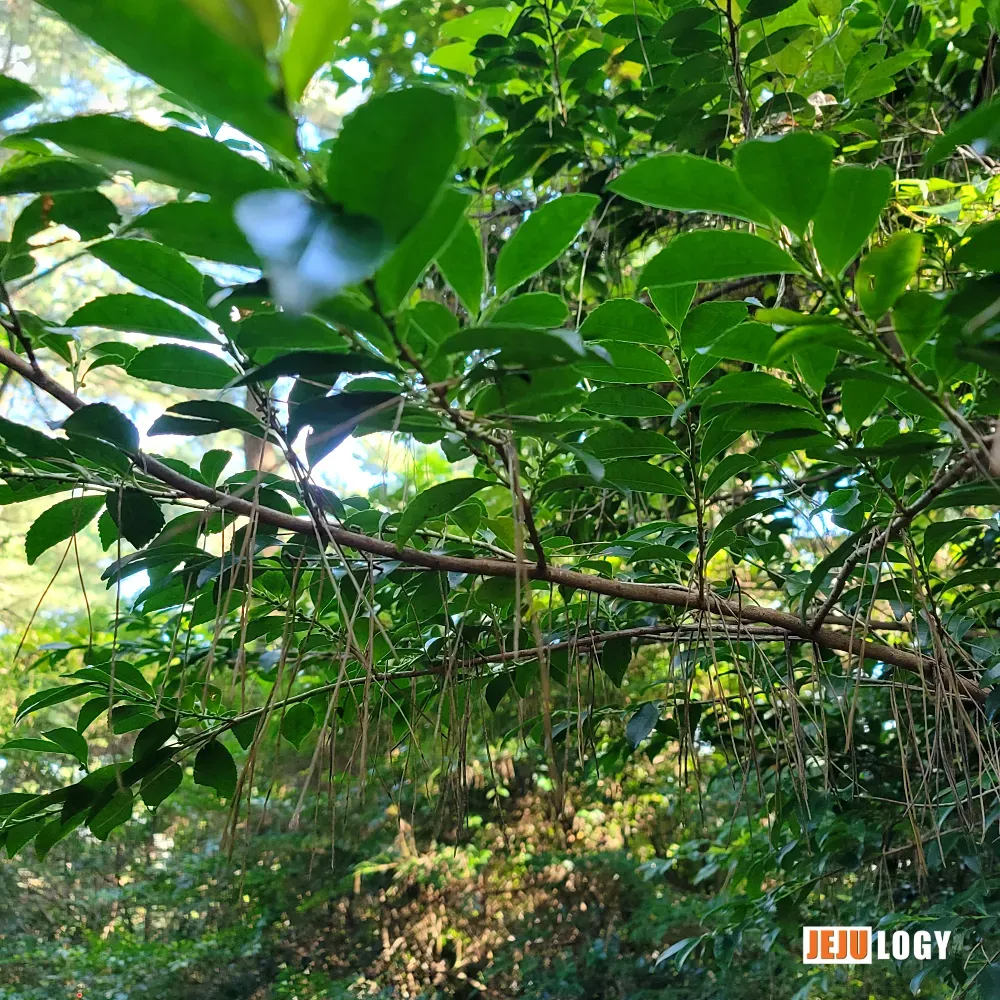
Keep an eye out for the Korean fig trees (Ficus erecta) along the way. If you visit in late summer or early autumn, you’ll see their dark purple fruits ripening among the leaves. Most of the paths are paved with blocks or coconut mats, keeping your shoes clean and tidy. Without the "oreum" label, you’d simply think you’ve stumbled upon a hidden, beautiful park behind the university.
Perfect for a Spontaneous Detour
To be honest, I wouldn’t suggest driving across the island just for Gwonje Oreum. It’s a 20-minute experience, not a full-day hike. But if you find yourself near the university or exploring the Ara-dong neighborhood, it’s a gem that’s too easy to pass up.
Plus, the Jeju National University campus is a destination in its own right. You can spot authentic Dol hareubang (Jeju’s famous "grandfather" stone statues) that aren't modern replicas, or spend an hour at the university museum diving into the island’s rich folklore. When you bundle a quiet forest walk with a bit of local history, it turns a quick side stop into a perfectly spent afternoon.
A Little Jeju Context for You
A few things that might help put this post in context:
If you’re visiting from abroad, here are a few things that make this place uniquely "Jeju":
- What exactly is an Oreum? You’ll hear this word everywhere on the island. While it technically means a "parasitic volcano," we just call them oreums. Think of them as the smaller siblings of Hallasan Mountain. Some have dramatic craters, while others—like Gwonje—are as gentle as a backyard hill.
- The "Jungsangan" Vibe: The university sits in the Jungsangan (mid-mountain) zone, about 400 meters up. It’s famous for being much cooler and foggier than the coast. Don't be surprised if the campus suddenly gets swallowed by thick, mysterious fog—it’s just part of the Ara-dong charm.
- The Real Dol Hareubang: You’ve probably seen these "stone grandfathers" in souvenir shops, but most are modern replicas. The ones at Jeju National University are the real deal—authentic originals with centuries of history. Seeing them in person is a completely different experience.
Good to Know Before You Go
- Access & Fees: While Jeju has over 360 oreums, not all are open to the public. Some are on private land or strictly protected for nature. Gwonje Oreum, however, is one of the easiest to visit—no entrance fees, no registration, and no closing gates. Just walk in whenever you feel like it.
- Exploring the Campus: You might wonder if it’s okay to wander through a university. Since it’s a national university, the campus is open to everyone. Feel free to explore the grounds or visit the museum (which is also free!) without worrying about any restrictions.
- Make a Half-Day of It: Since Gwonje Oreum only takes about 15–20 minutes, it’s best paired with other nearby spots. The Ara-dong area is an "oreum-hopping" hotspot. You can easily combine Gwonje with a few other volcanic cones in the neighborhood for a perfect half-day itinerary.