Jeju's Female Resistance: The Anti-Japanese Movement Memorial Park
The Jeju Haenyeo Anti-Japanese Movement Memorial Park commemorates one of Korea's most remarkable acts of resistance — a women-led uprising born from the sea. Discover the stories of the haenyeo who defied colonial rule and shaped history.
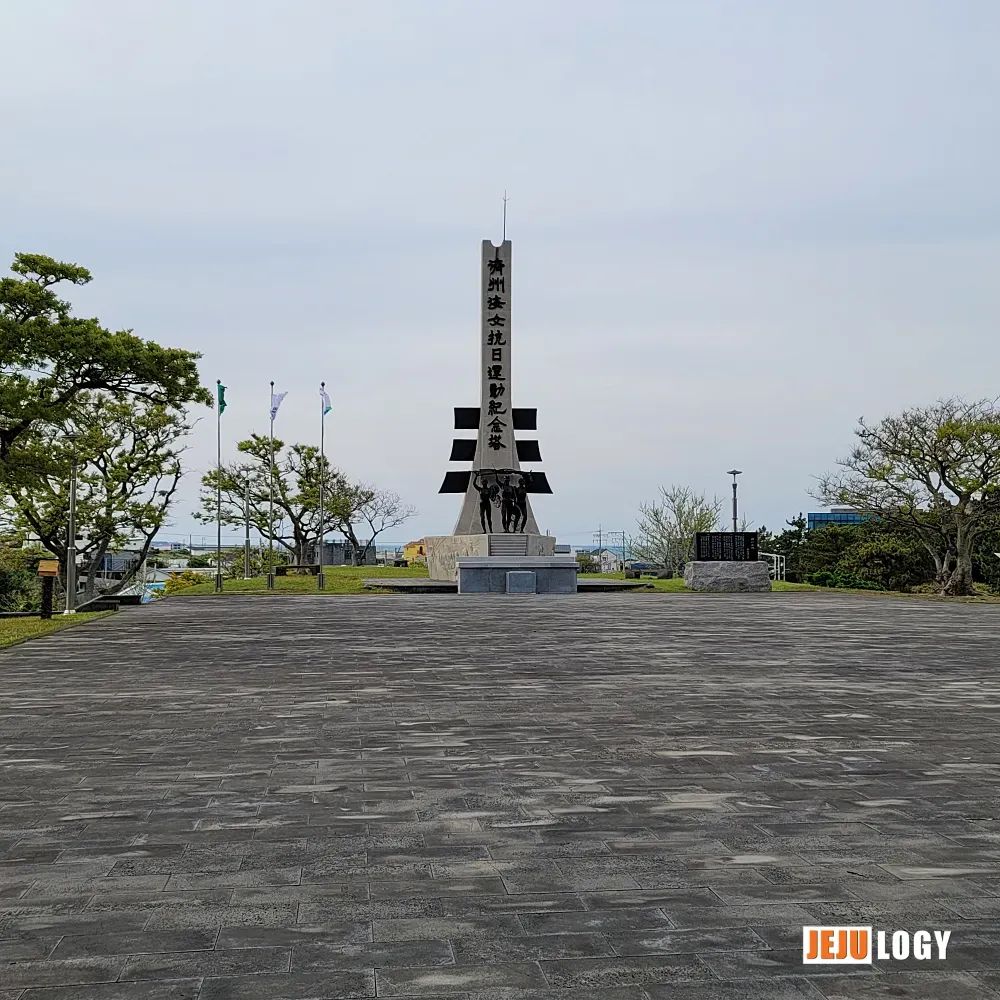
Jeju is home to no small number of traces of anti-Japanese resistance. But among them, the Jeju Haenyeo Anti-Japanese Movement stands apart. It began in the sea, its organizational core was made up of female laborers, and it was a struggle where survival and national identity were inseparably intertwined.
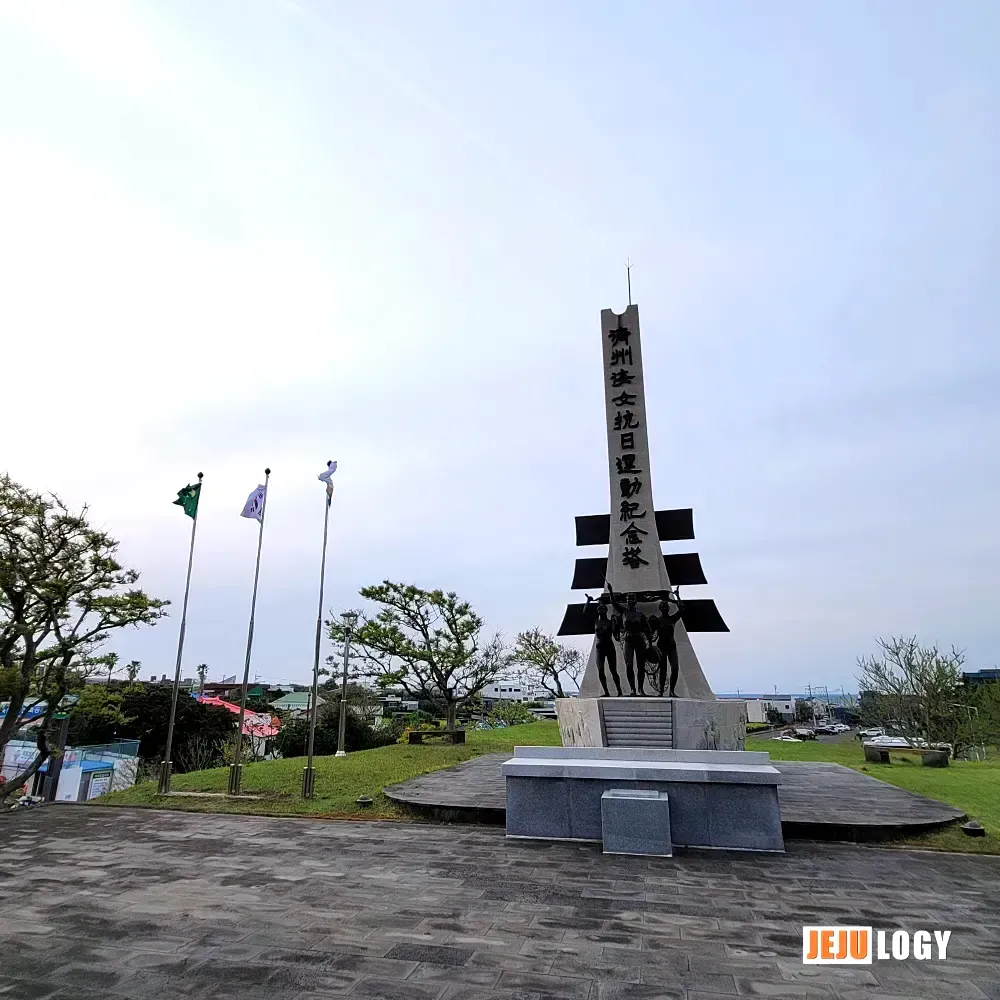
The Jeju Haenyeo Anti-Japanese Movement Memorial Park was created precisely to preserve this unique history. It is not merely a monument, but a place that illuminates one facet of the colonial experience that the island of Jeju endured.
Even before the Japanese colonial period, the haenyeo held a significant economic position in Jeju society. They were among the few who could earn cash directly through diving, which was a rare thing in the rural communities of Jeju at the time. The haenyeo supported their households financially and had a voice within their communities.
With the onset of Japanese colonial rule, this structure began to rapidly unravel. Japanese capital seized control of seafood distribution and fishing rights, and the haenyeo were subjected to systematic exploitation through middlemen and fishing cooperatives. The dangers of diving remained unchanged, yet their compensation steadily diminished. The crisis of survival became the very reason for collective action.
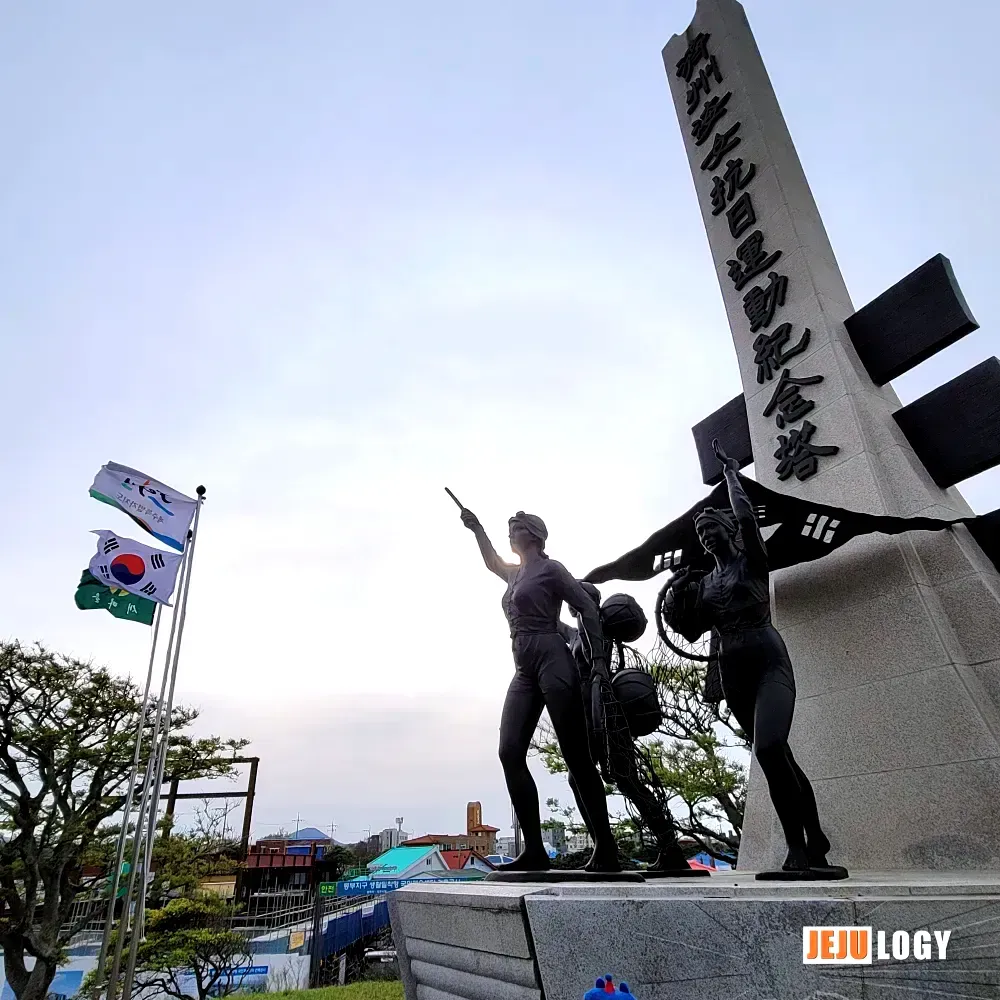
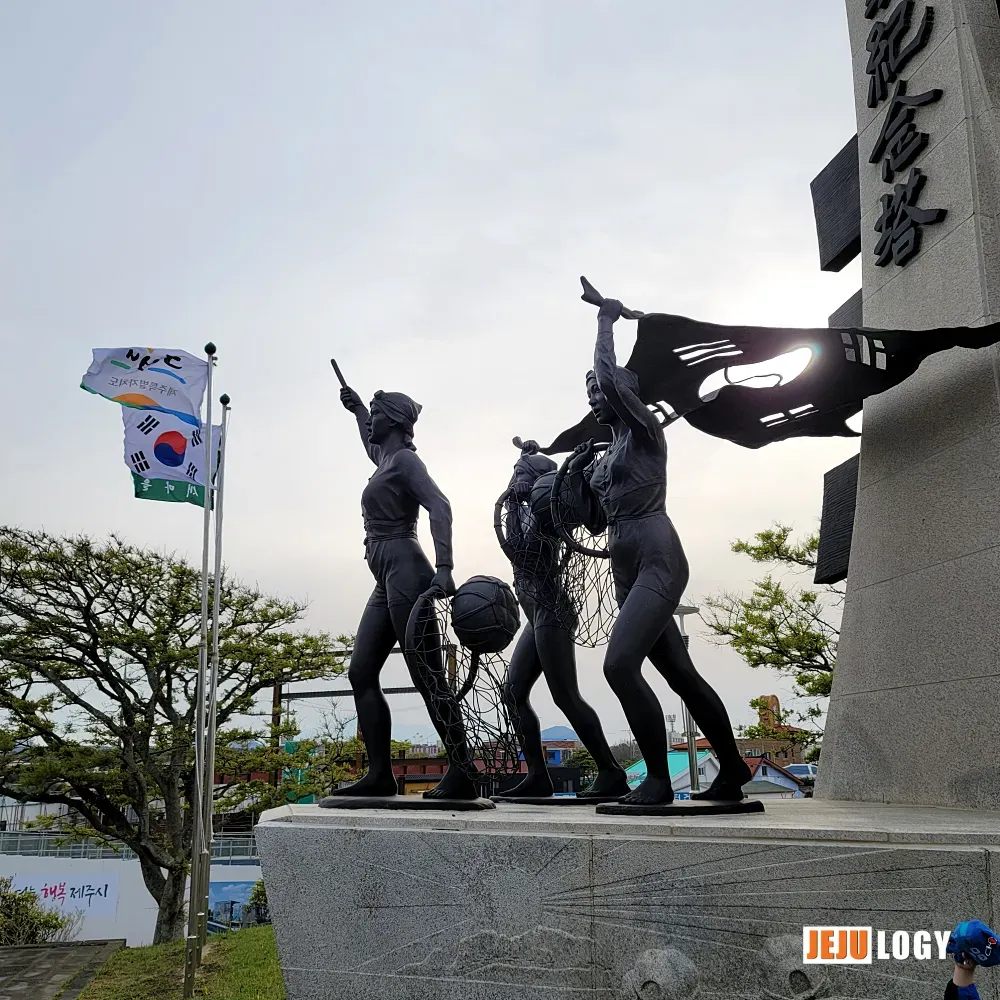
At the center of the park stands the Jeju Haenyeo Anti-Japanese Movement Memorial Tower. Its vertically soaring structure is no mere sculpture. It reads like an axis symbolizing the flow of resistance — from sea to land, from individual to collective.
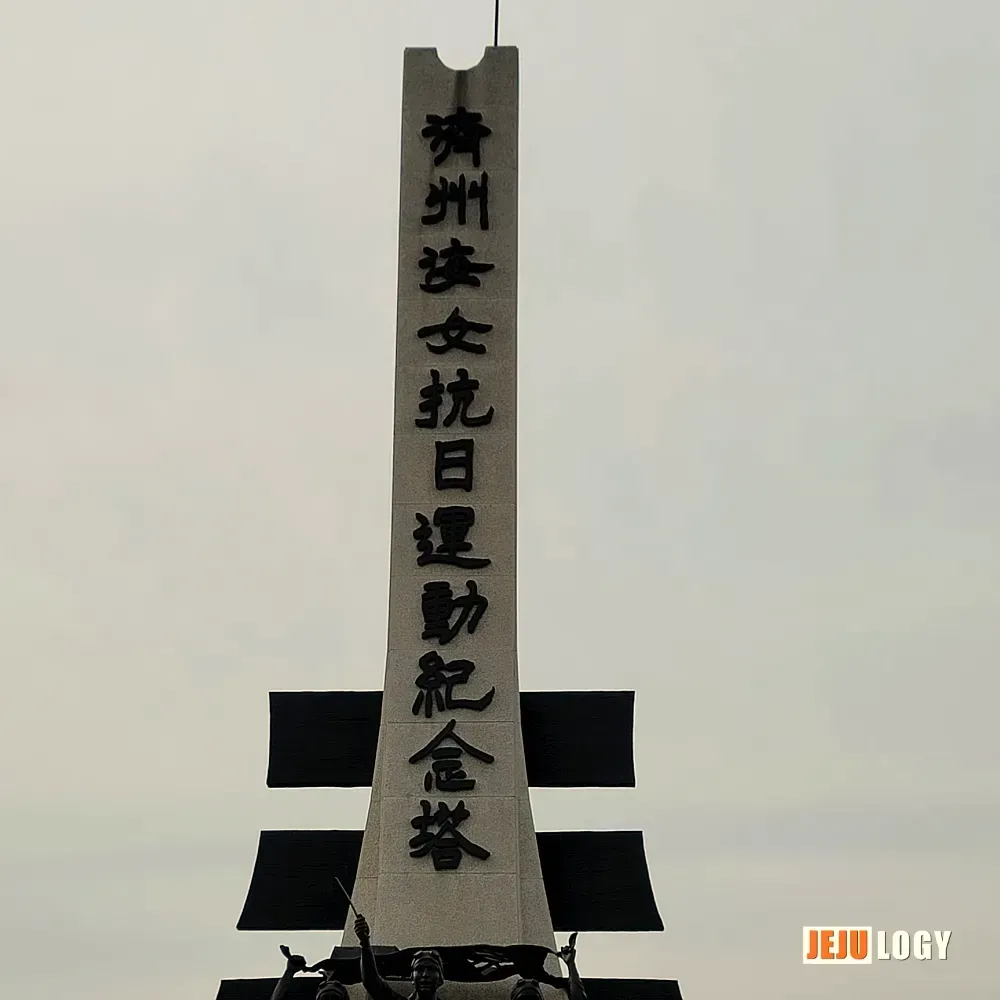
The inscription "運動記念塔" engraved on the front of the tower declares that this was not merely a local disturbance, but a historical "movement." The haenyeo figures arranged below are dynamic yet tense. They are not depicted as victims seeking protection, but as agents moving forward of their own volition.
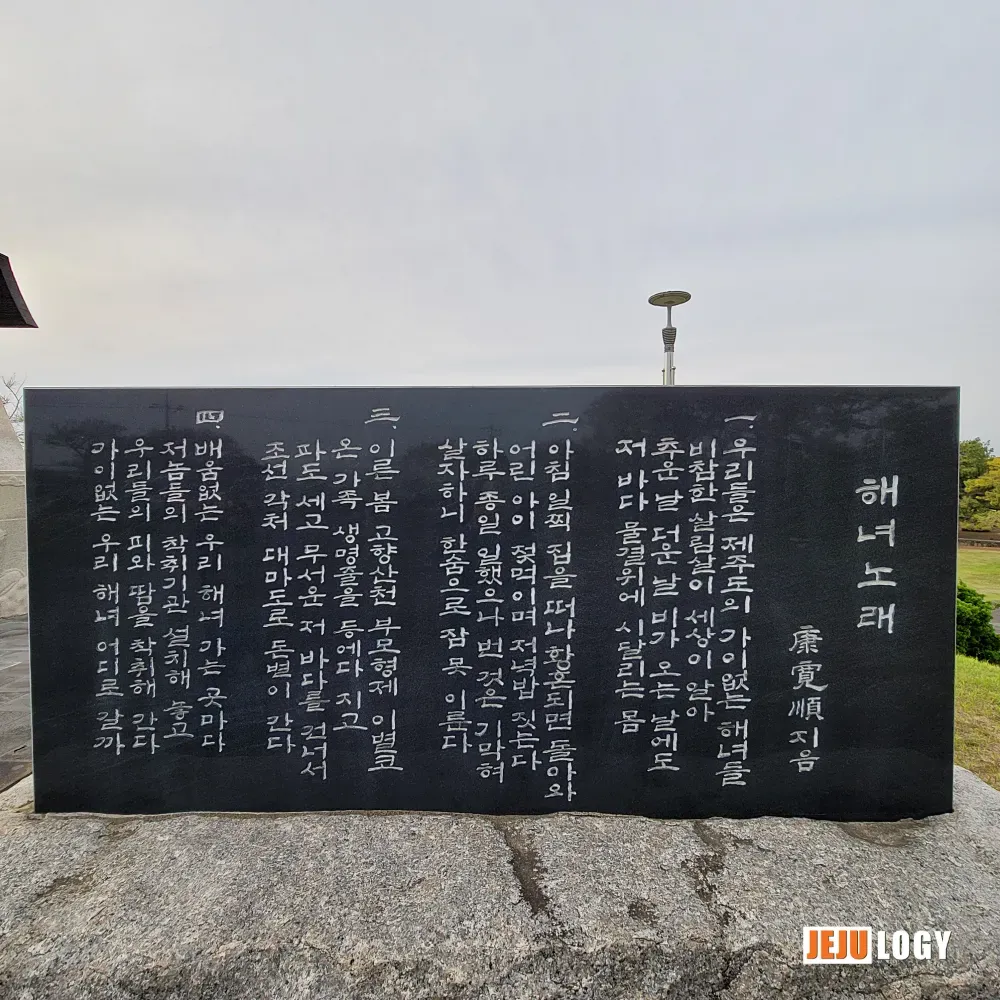
To one side stands a Haenyeo Song monument, which I was glad to come across. About two years ago, I wrote a post about the Haenyeo Song and its lyricist. There is a Haenyeo Song monument erected in Yeonpyeong-ri on Udo Island — that post was about exactly that. The Haenyeo Song was written by the late independence activist Gang Gwan-sun, who was originally from Udo Island, Jeju. His descendants still live in his ancestral home, and the Haenyeo Song monument stands close by.
The Jeju Haenyeo Anti-Japanese Movement was not a one-off protest. Spanning from 1931 to 1932, the movement began in the eastern and northern parts of Jeju and spread across the entire island. The haenyeo demanded higher prices for their seafood, an end to exploitative middlemen structures, and a stop to the abuses of Japanese administrators.
Following the uprising in Hado-ri, Gujwa-eup in the summer of 1931, the largest anti-Japanese uprising in haenyeo history took place in Sewhwa-ri in January 1932. When a police officer named Taguchi (田口鹿藏) appeared on the scene, the haenyeo — who had gathered from multiple villages — met him with a defiance that shook the entire island of Jeju. It was truly a national-level act of resistance.
The Jeju Haenyeo Anti-Japanese Movement holds historical significance as the largest women-led uprising against Japanese colonial rule in Korean history, involving a cumulative total of approximately 17,000 participants.
Also worth noting is that this movement, while spontaneous, was also organized. The haenyeo gathered of their own accord, yet acted with a degree of discipline and division of roles. This was not an emotional outburst, but a collective resistance with clear purpose — one that inevitably came to clash with the Japanese colonial authority. The Japanese colonial regime also recognized this movement not as a mere livelihood struggle, but as a threat to the order of their rule. Suppression followed, and those at the center of the movement were arrested or placed under surveillance.
The most defining characteristic of the Jeju Haenyeo Anti-Japanese Movement is that women were the protagonists. In Korean modern history, women are often recorded merely as participants. But in this movement, the haenyeo were clearly the leaders and the organizers. Women in Jeju have always been particularly independent, strong, and admirable — and that seems to hold true even today.
In the park stand busts of three representative haenyeo figures: Bu Chun-hwa, Kim Ok-ryeon, and Bu Deok-ryang. True to the Jeju tradition of the Go, Yang, and Bu clans, it is notable that two of the three bear the uncommon-on-the-mainland surname Bu.
These three were not simply participants in a protest — they were the central figures who led and coordinated the movement.
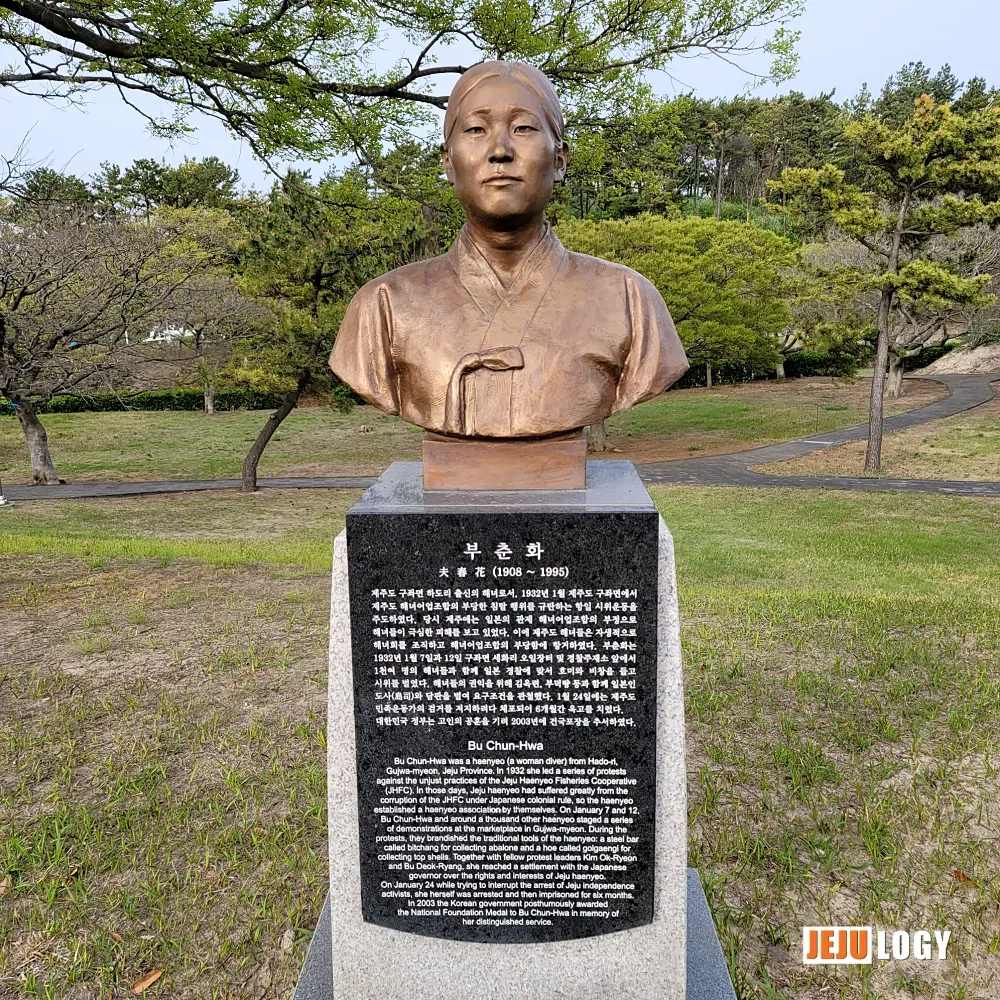
Bu Chun-hwa (1908–1995) is a figure whose very presence in the historical record — as an individual with a name — carries enormous significance. A haenyeo from Hado-ri, she joined the anti-Japanese movement in January 1932 alongside haenyeo from Hado-ri and Jongdal-ri, resisting the abuses of Japanese merchants and the seizure of fishing rights. She served six months in prison.
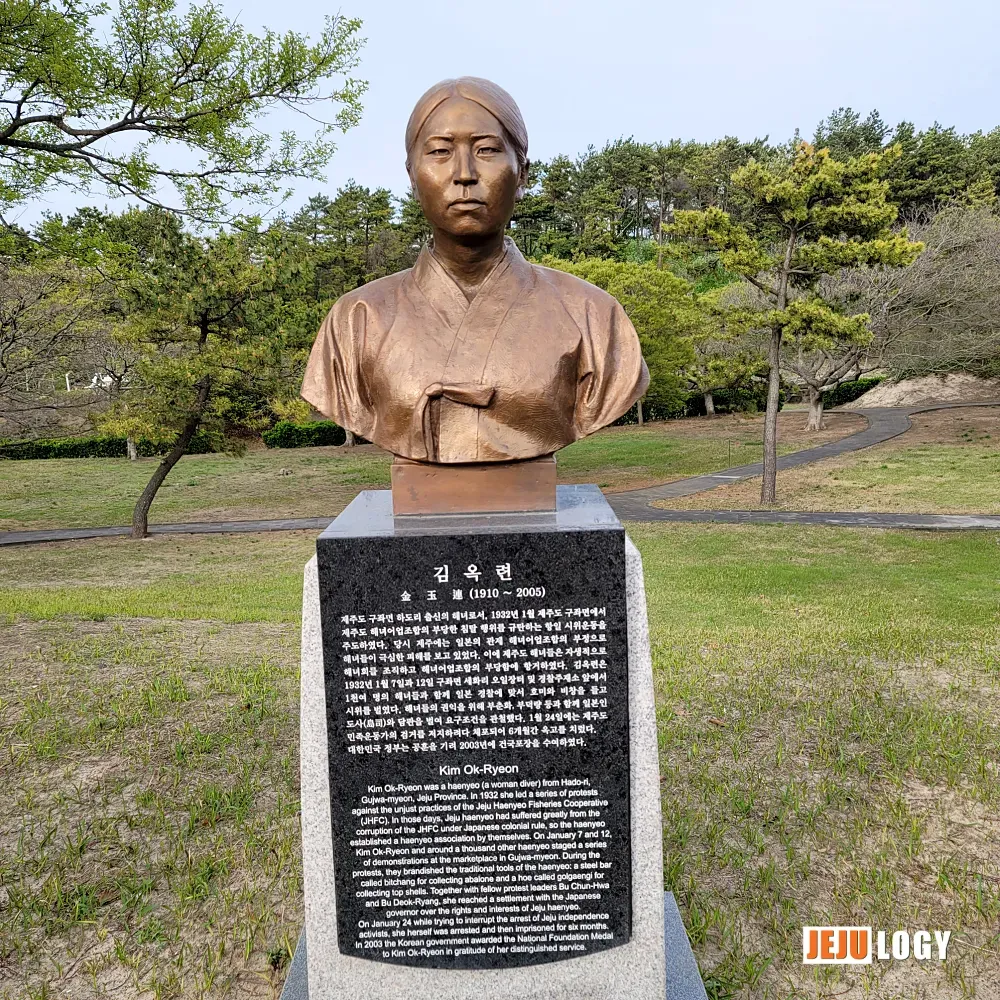
Kim Ok-ryeon was also a haenyeo from Hado-ri, who began diving around the age of nine to support her family amid difficult circumstances. Together with Bu Chun-hwa and Bu Deok-ryang, she took a leading role in organizing the protests and rallying the haenyeo's demands.
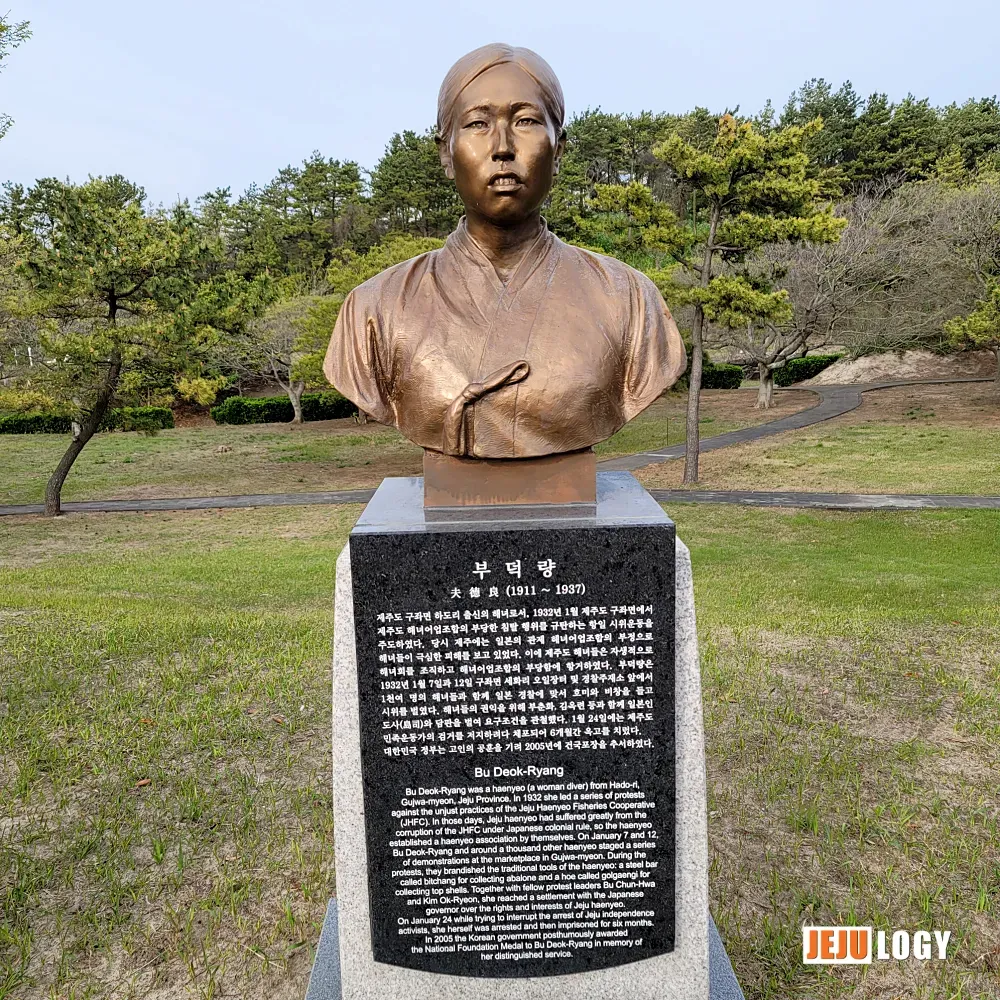
Bu Deok-ryang was born in 1911, younger than the other two, yet sadly passed away earliest — in 1937. Like the others, she was a key figure in organizing the haenyeo anti-Japanese movement.
The descriptions engraved beneath the busts record the specific actions and facts of their lives in measured, restrained language. It is precisely this restraint that makes the weight of what they endured feel all the more present.
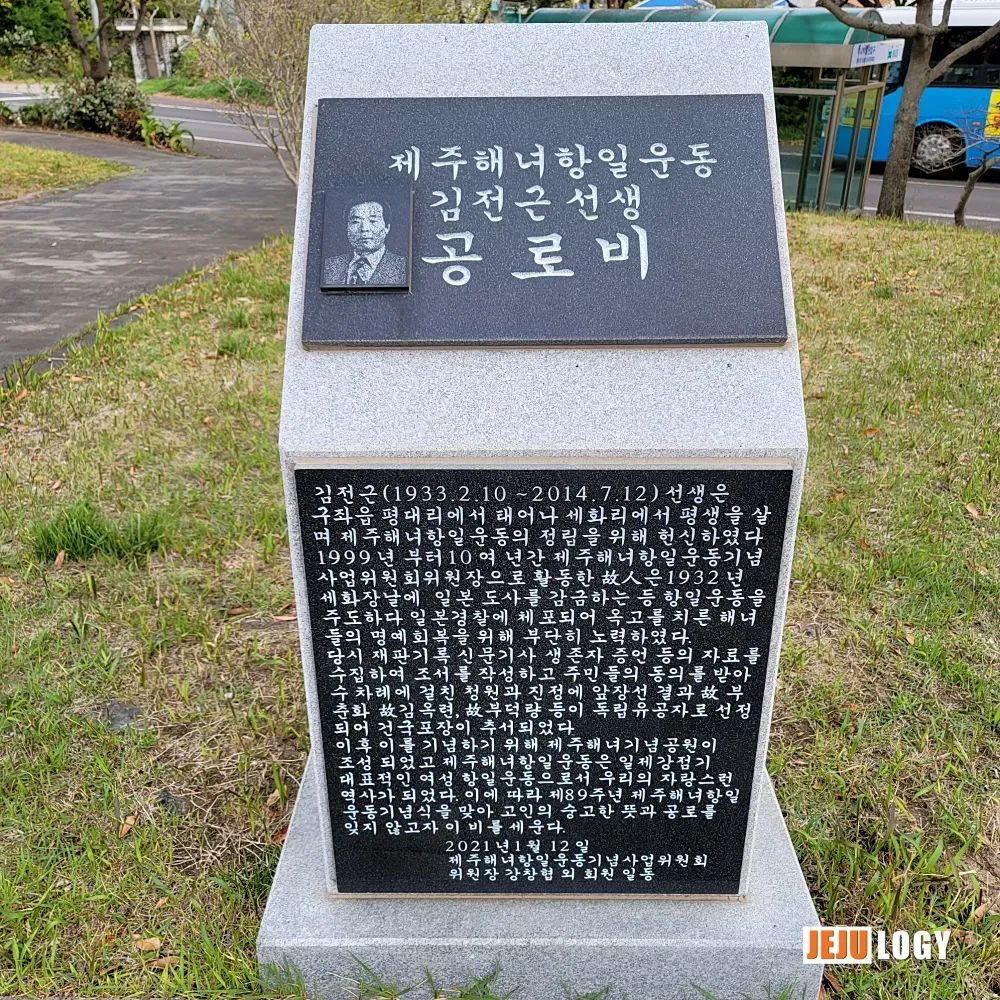
In one corner of the park stands a merit monument dedicated to the late Kim Jeon-geun, who worked tirelessly to restore the honor of the haenyeo arrested and imprisoned for leading the anti-Japanese movement. Drawing on trial records, newspaper articles, and survivor testimonies, he repeatedly petitioned on their behalf — ultimately securing their recognition as independence activists and the posthumous awarding of the Order of National Foundation. It is a monument well deserved.
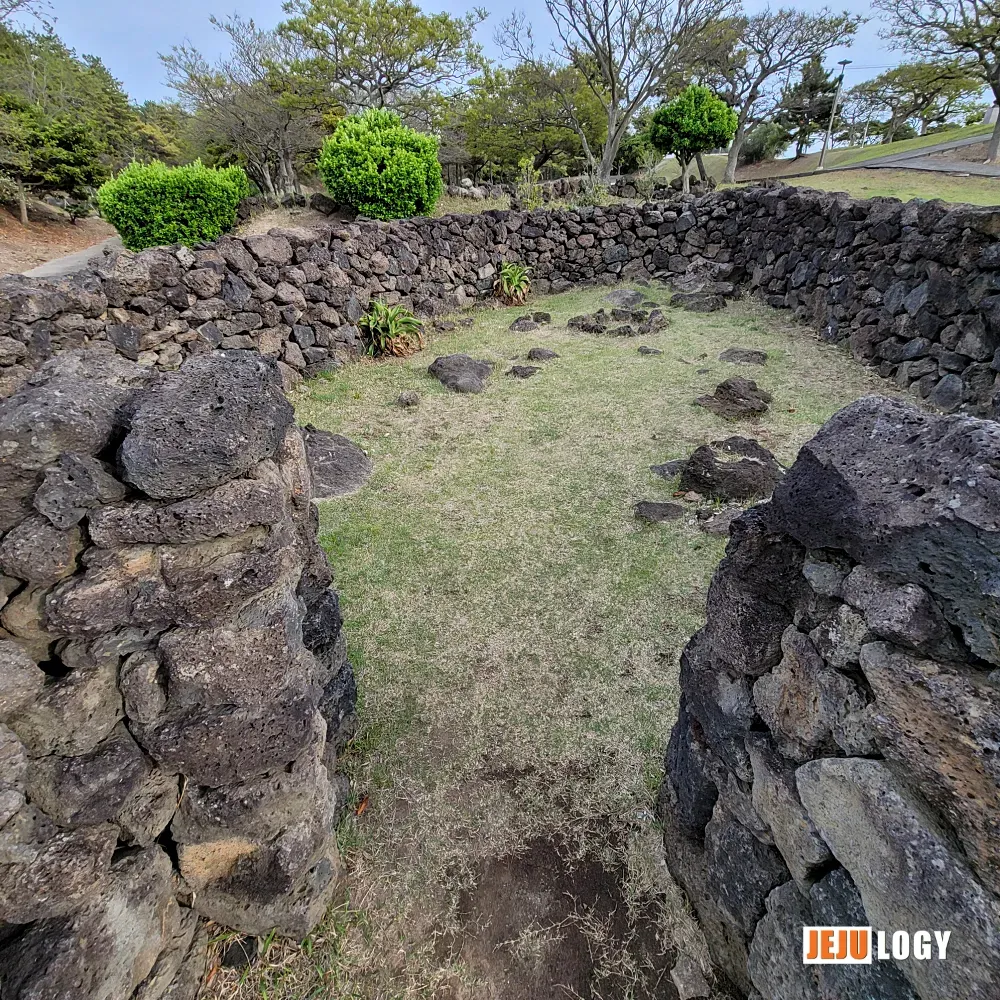
In another part of the park, a bultteok — the traditional stone shelter where haenyeo warmed themselves after diving — has been recreated, and a boat once used for actual fishing activities is on display.
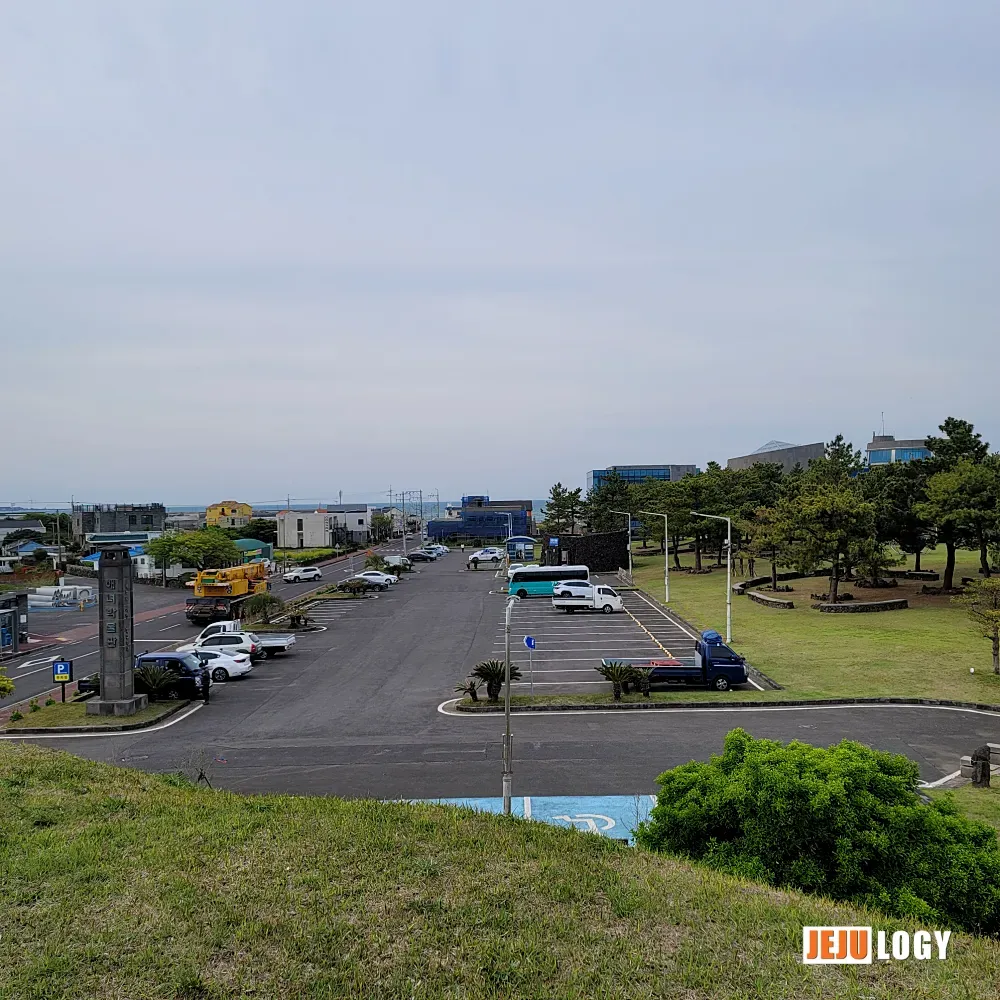
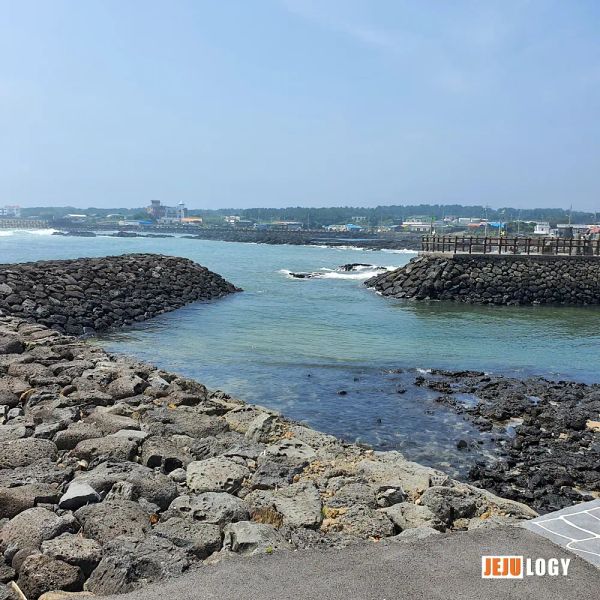
Located in Sangdo-ri, Gujwa-eup, Jeju, the boundaries of the Jeju Haenyeo Anti-Japanese Movement Memorial Park are rather interesting. The area from the sea through the Haenyeo Museum, its parking lot, and up to this memorial park all falls within Sangdo-ri — while just to the west of the parking lot lies Sewhwa-ri, and across the lot to the east is Hado-ri.
26 Haenyeo Bangmulgwan-gil, Gujwa-eup, Jeju-si, Jeju Special Self-Governing Province
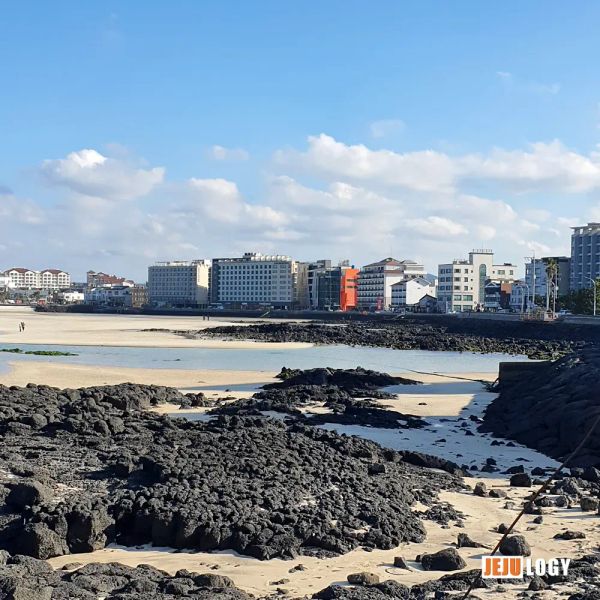
On a clear day, the view of Sewhwa Beach from the Haenyeo Museum is truly beautiful. If you haven't visited yet, I hope you'll make time to stop by.