Ilchulland and Micheongul: a Jeju stop I avoided for twenty years
For twenty years I skipped Ilchulland because the name sounded dated. Walking in this summer, the 1,700-metre Micheongul lava tube and the surprisingly well-kept garden above it forced me to revisit a lot of lazy preconceptions about Jeju's east coast.

Ilchulland's only real weakness might be its name.
It opened to the public in 2002. I never went. For more than two decades I let the name do all the talking — "Ilchulland" sounded like the kind of dated, slightly tacky theme park Jeju picked up too many of in the 1990s and 2000s. As a younger islander I was, if anything, more suspicious of these "lands" and "parks" than I am now. The name carried a whiff of plastic dinosaurs and chipped paint, and I filed it away without ever checking.
When I finally walked in this past summer, I had to sit with a long list of preconceptions I'd been carrying for no good reason. Ilchulland is a large, well-kept botanical park with a 1,700-metre lava tube underneath it. It is nothing like the picture I had in my head.
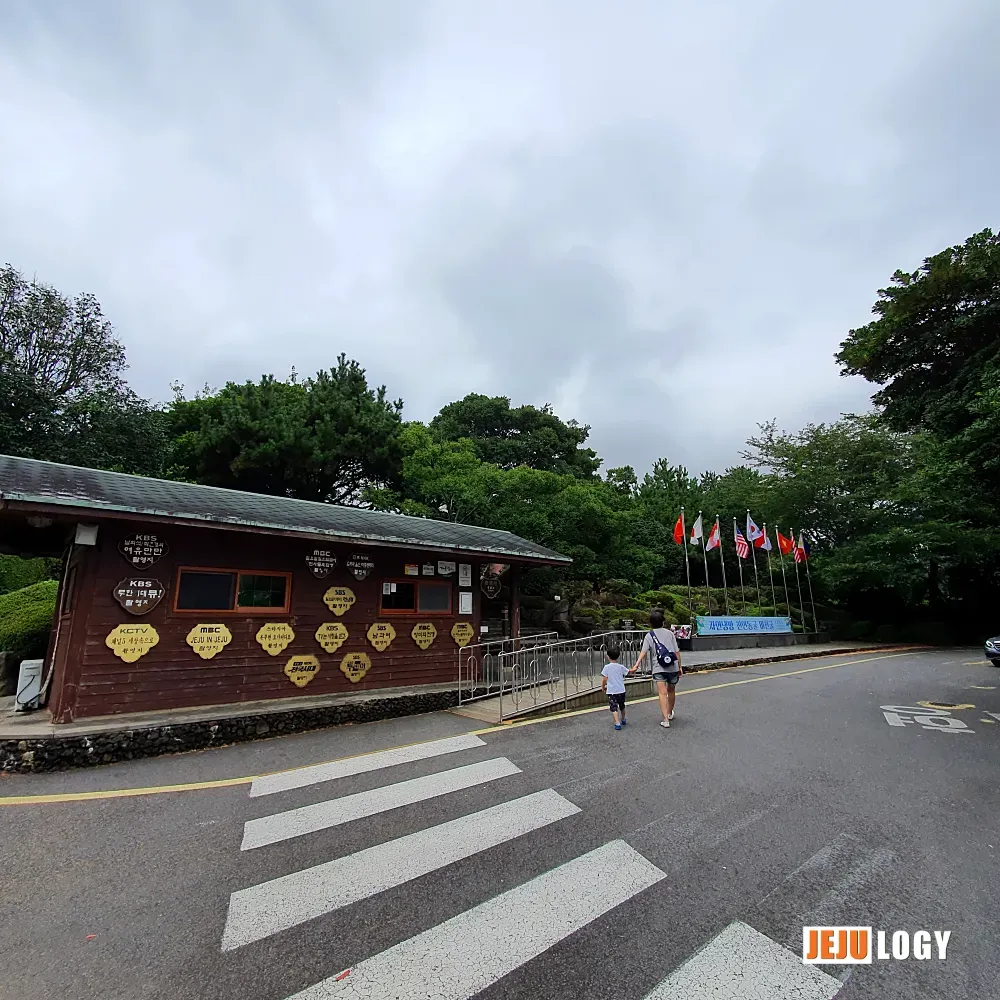
The name kept me away for twenty years
Reading the Ilchulland homepage afterwards, I learned something I should have known earlier. This wasn't a corporate development. Not a resort group, not a chaebol. The park officially opened in 2002, but the work began in 1972, when one person started planting and tending the land. Decades of effort piled on top of effort, until what was originally a single private project grew into the park you walk through today.
The name I'd shrugged off for years had a story behind it I'd never paused to read. That's on me.
Above ground: the garden was the real surprise
What actually pulled me to Ilchulland was the cave — Micheongul (미천굴) sits inside the property. Over the past year or two I've spent serious time in Manjanggul's restricted section, Gimnyeonggul, and Bengdwigul, and my interest in Jeju's lava tubes has risen accordingly. Micheongul was the next one on the list.
Funny thing is, the cave isn't what stayed with me. The garden above it did.
The park is laid out around a blue line painted on the walking path. Follow it and you'll loop through the entire grounds without needing a map. Nothing forces you to follow it — but with two kids in tow, switching off our brains and walking was the right move.
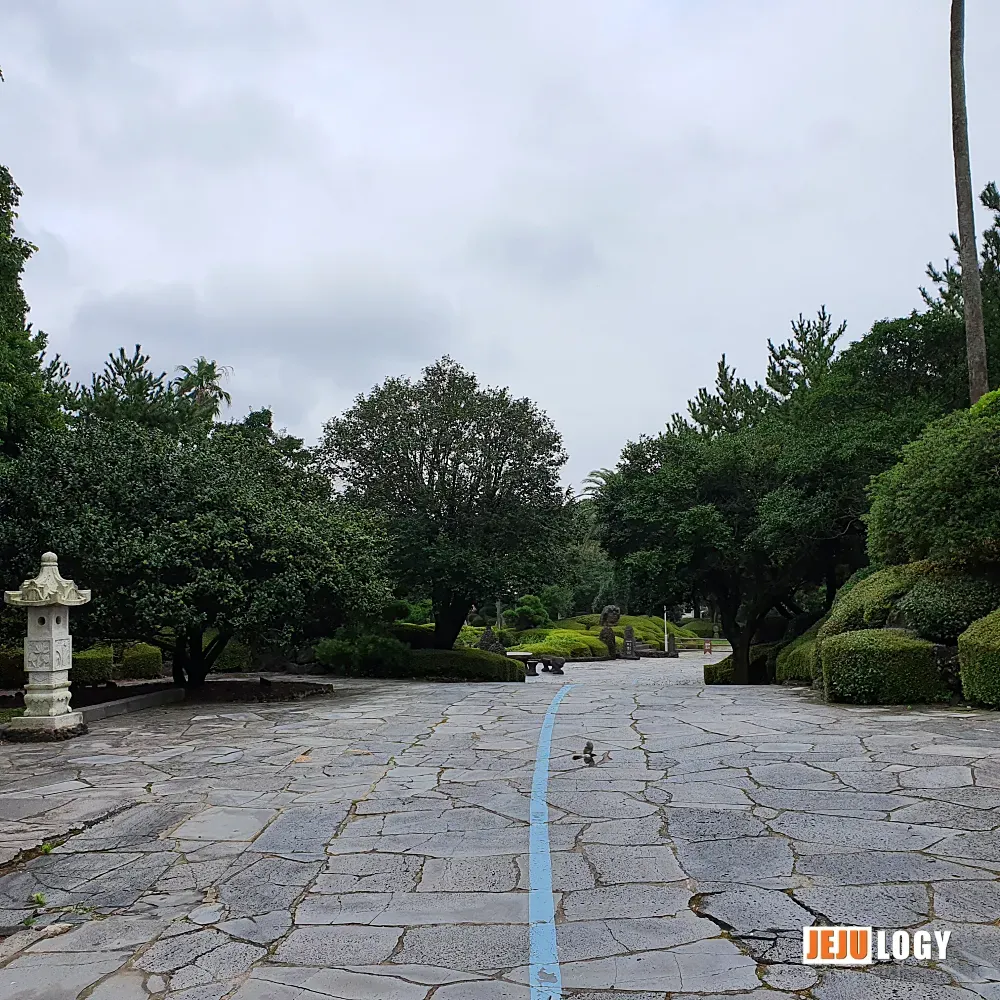
The garden was much bigger than I'd expected, and the variety of things to look at was a quiet surprise. Sculptures, plants, folk artifacts, well-maintained walking paths. The paths were the best part. I hadn't put them on any pre-visit checklist.
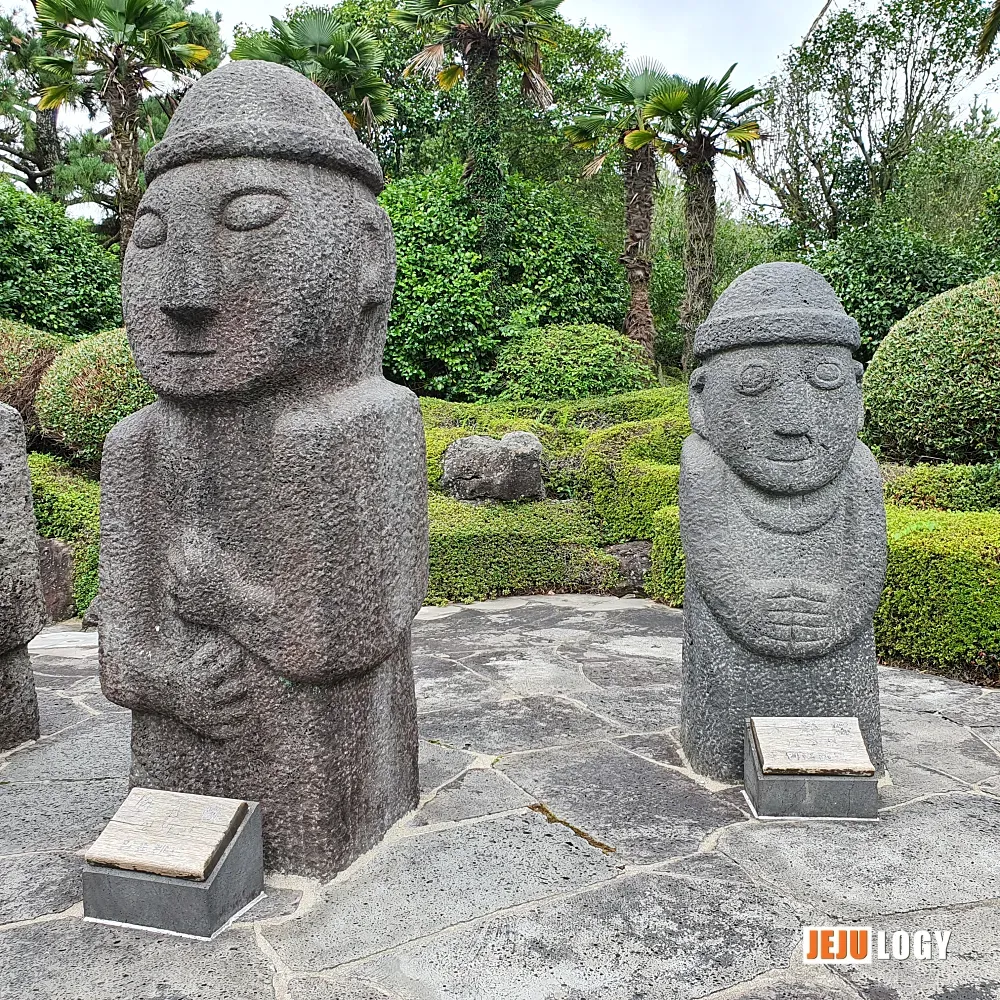
The dolharubang (돌하르방) on display include the common Jeju-mok (제주목) type, but also the Jeongui-hyeon (정의현) and Daejeong-hyeon (대정현) variants from Jeju's two historical magistracies in the south and west. Seeing all three lineages side by side was satisfying. Most places only show you one.
There's a yeonja-bangah (연자방아) out in the open — the rotary millstone that an ox or a horse used to turn for grinding grain. A museum object now. A century ago, it was the loud heart of any village. A few steps further, a laurel tree (월계수, Laurus nobilis) is showing off its presence. Yes — the same laurel whose wreath crowns the Olympic marathon winner. I always picture it as a Greek tree, but here it is on a quiet path in Seongsan.
The grounds are properly maintained. Green in every direction. The youngest only needs grass and open space to be entertained, and the open lawn does a lot of work here. If the name had been slightly more contemporary, I think more people would have found this place a lot sooner.
Into Micheongul
A short flight of stairs takes you down to the cave entrance. Micheongul is the representative cave of the Samdal-ri (삼달리) cave group, with a total length of around 1,700 metres, of which 365 metres is open to the public.
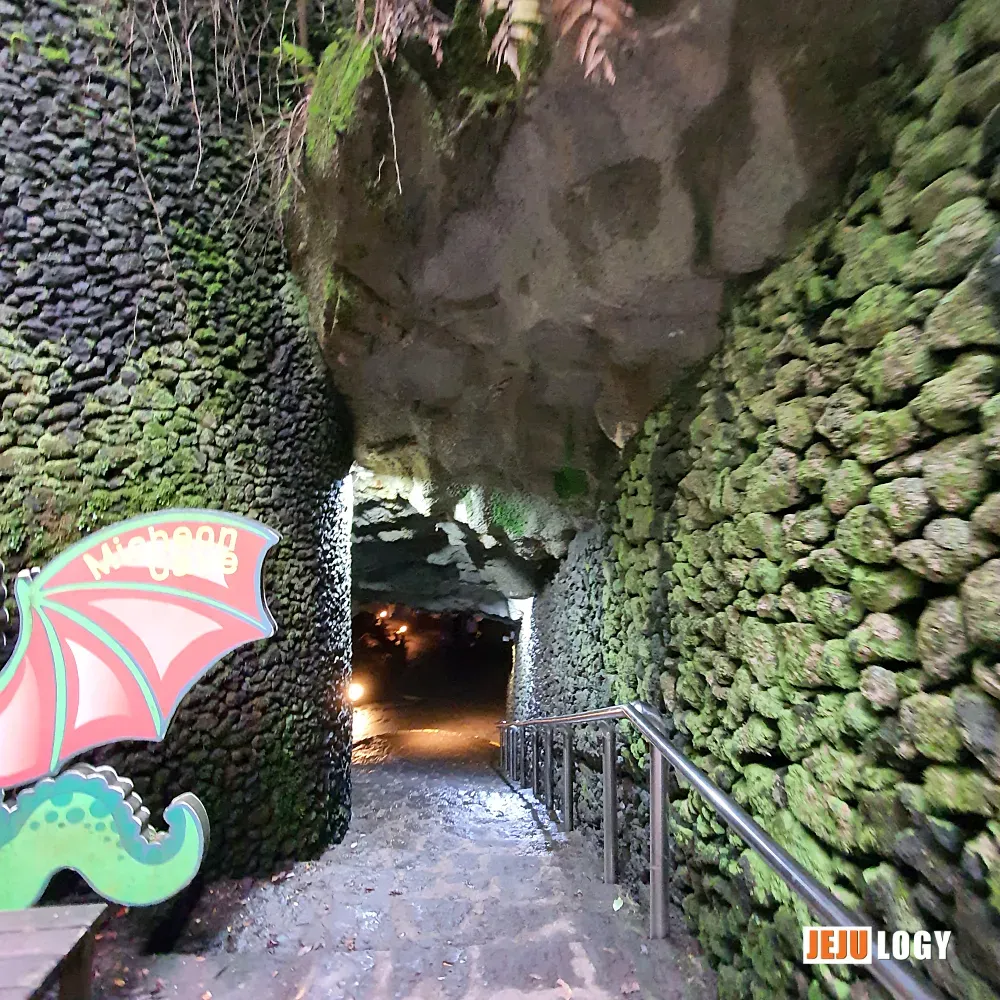
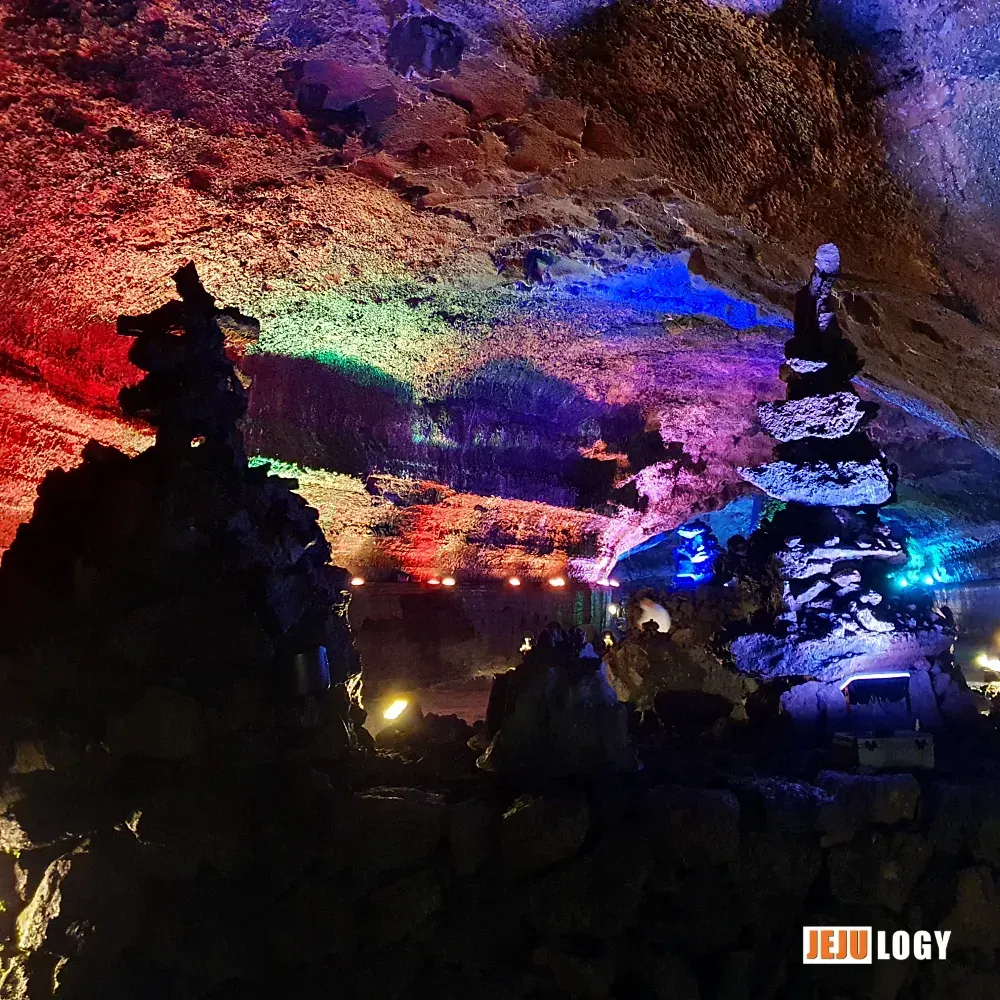
I'll be honest. The cave wasn't quite what I'd hoped for. I came in expecting something closer to the raw, unlit experience of Bengdwigul or the restricted parts of Manjanggul — a cave allowed to speak for itself. Micheongul, instead, leans hard into media art. Colour-saturated LED lighting, themed installations, photo zones. If you've been to Gwangmyeong Cave on the mainland, this is the same idea.
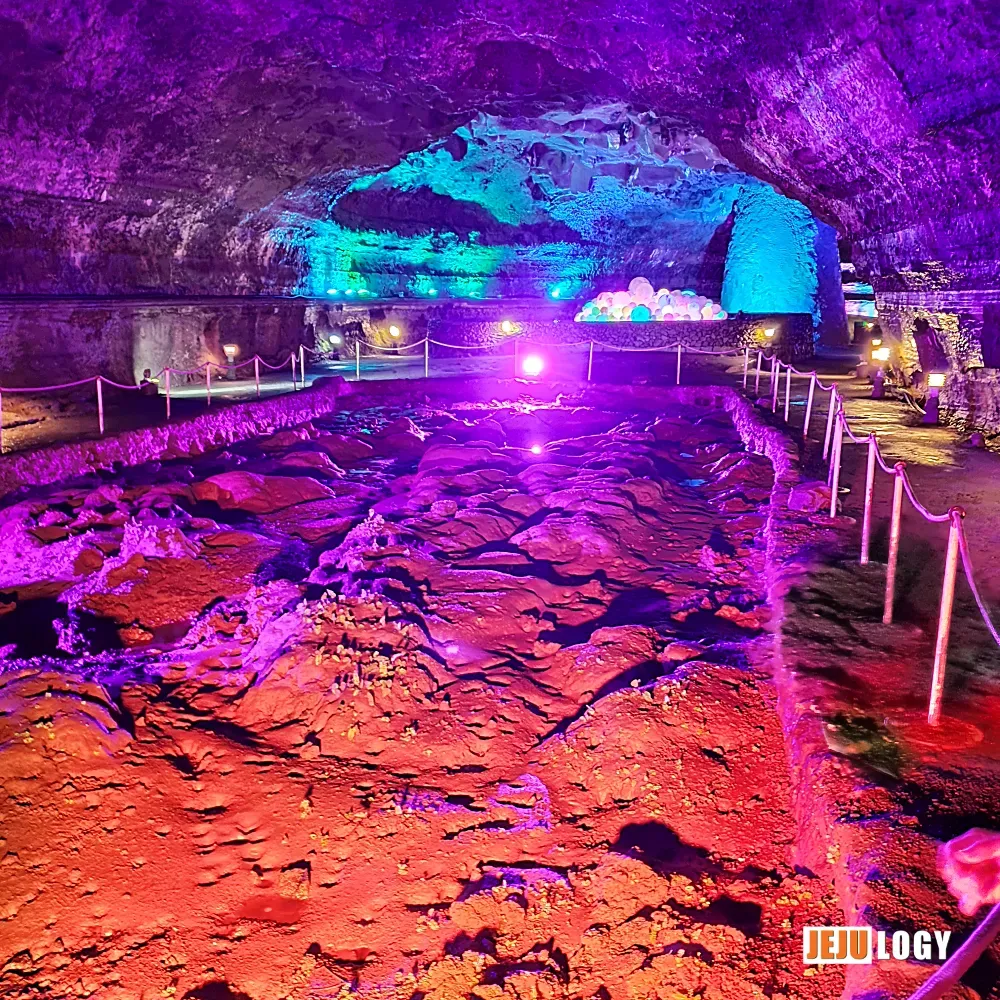
That's fine, in a way. The unmediated cave is somewhere else — I've already walked the closed sections of Manjanggul end to end; Bengdwigul and Gimnyeonggul are still out there. Different caves, different reasons to visit. Micheongul has chosen to be a stage, and on its own terms it's done well.
I'd been taught that artificial lighting is bad for cave environments — algae, microbial change, the whole list. Inside Micheongul, that ecology has clearly already been written off. The cave is treated as a venue. Every now and then, though, a single plant root drops through the ceiling — a small reminder that you're underground and not inside a building. Those were the moments I held onto.
Each installation has a sign with Korean, English, Chinese, and Japanese text. Some I appreciated more than others, but the operators are clearly thinking about international visitors. There are photo zones throughout — glowing hearts, lit tunnels — that will land with families.
Micheongul left me wanting more of the cave and less of the décor. But I don't regret it. On a hot summer day, the cave was blissfully cool, and the park above made up for the rest.
Back above ground
The weather-telling stone turned out to be a small delight. Gimmicky in the best sense — you tap the stone against the metal plate underneath and listen. The plate is dented and scarred from years of visitors doing exactly that, with the deepest dent right at the bottom. No idea why.
The information sign is written in Jeju-eo (제주어), the local dialect, which I always love seeing in the wild. Roughly:
"If you only read it in text, you won't really get it. You have to hear it with your own ears."
That line lands better in Jeju-eo than any rendering I can manage in English.
The mulpang (물팡) is the small stone platform where the heobeok — Jeju's traditional ceramic water jug carried on a woman's back — was set down. Before piped water reached Jeju, women hauled water in heobeoks and stored it here. Sounds like ancient history, but my parents' generation lived through it. Running water only reached the island properly in the 1960s and 70s.
There's the inevitable tuho (투호) station — the traditional arrow-toss game. Harder than it looks. And in a corner, a small hands-on area lets you try traditional Korean percussion — the jing (large gong) and kkwaenggwari (small gong) used in pungmul performance. Loud and satisfying.
The tongsi (통시) takes some explaining for a foreign visitor. It's the traditional Jeju toilet, which doubled as a pigsty. The pig below received human waste and trampled it into the straw underfoot; the result fermented into compost. In an era before chemical fertiliser, this was the village's nutrient cycle. Practical, low-waste, and — fairly — not something most modern visitors want to think about for very long.
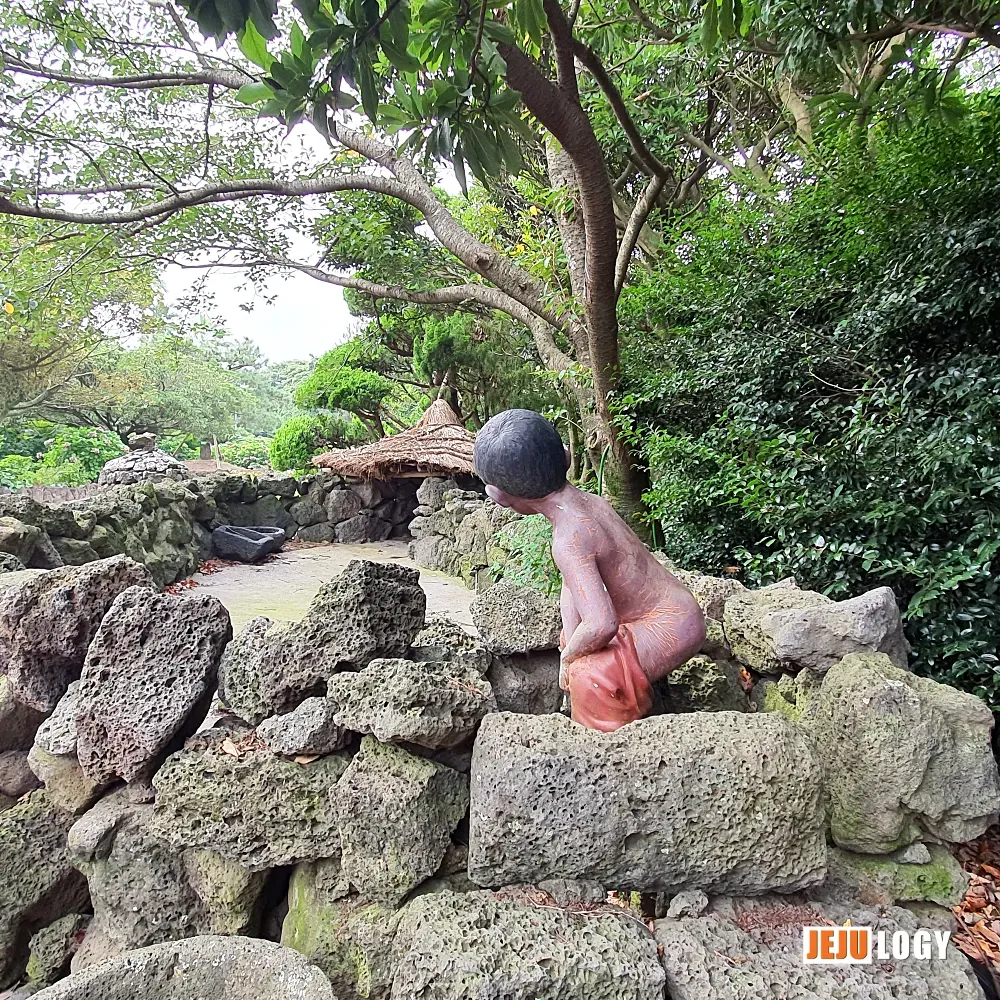
Sculptures line the walking paths. Modern dolharubang are deep into the gift-shop caricature phase — whatever solemnity the gate-guarding originals carried is long gone. Funny on its own terms. On the way out there's a small animal enclosure — dog, rabbit, chickens, ducks. Calling it a zoo feels generous; it's more of an incidental side stop.
The greenhouse and the palms
There's a small greenhouse near the back of the park. The cacti were the highlight for me.
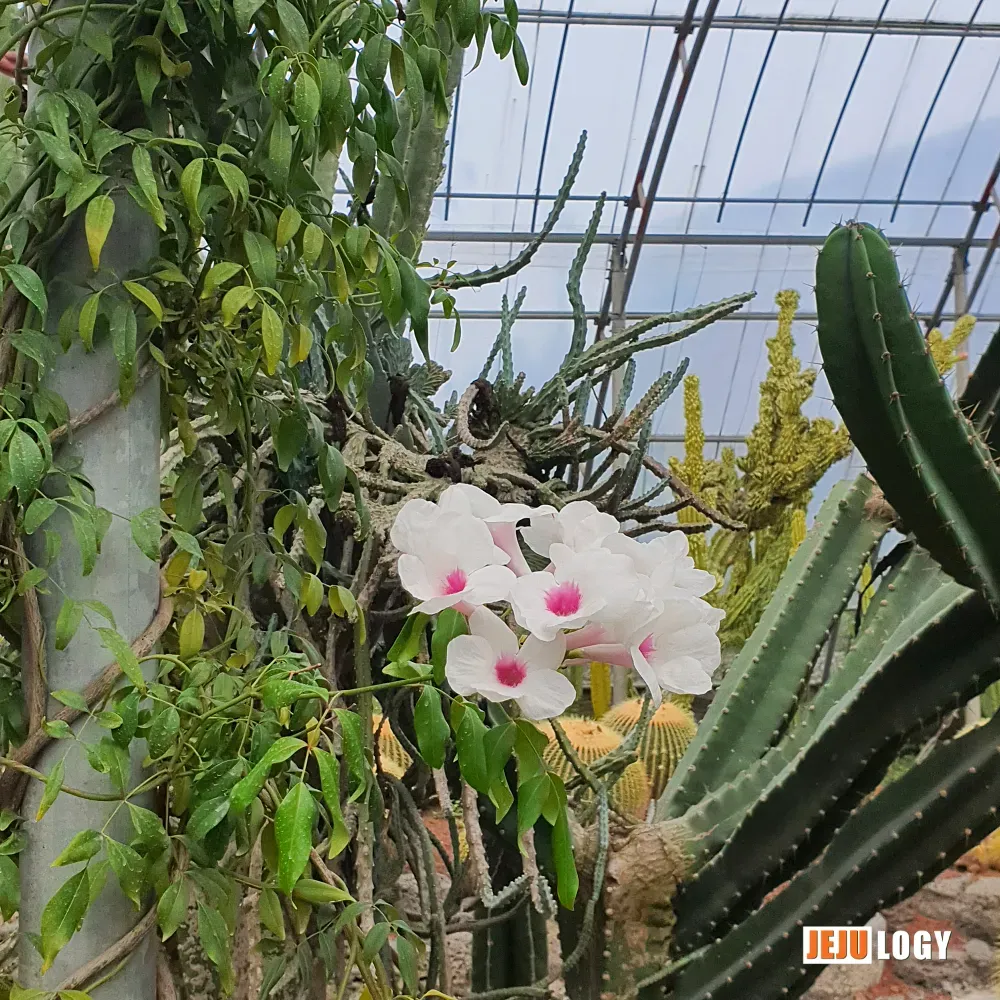
Cactus flowers feel oddly exotic — you don't think of cacti as flowering plants until you stand in front of one in bloom. Several varieties were out, all of them pretty in different ways.
Outside the greenhouse, the palm collection runs through species you don't always see together. The Washingtonias (Washingtonia robusta) are the tall, slim ones you'd expect somewhere in southern California. The Butia palm (Butia capitata, also called the Brazilian palm) is unusual in Jeju gardens. There's also a Canary Island date palm tucked into the back — the same one you'll occasionally spot on the grounds of a few resort hotels.
Worth your time?
Micheongul itself wasn't aligned with what I personally look for in a Jeju cave. But it was blissfully cool inside on a summer afternoon, which counts for a lot in August.
The Ilchulland park caught me off guard. I had no expectations going in, and it turned out to be a quietly well-maintained garden full of things worth looking at — sculptures, folk objects, palms, paths, plus the cave underneath. If your itinerary has you in the mid-mountain area of Seongsan-eup, an hour or two here is a confident recommendation.
💡 Foreign readers might also want to know:Why is there a cave here at all? Jeju is a volcanic island. Caves like Micheongul are lava tubes — hollow channels formed when molten lava drained out from underneath a still-cooling surface flow. The neighbouring Geomunoreum Lava Tube System was inscribed by UNESCO as a World Natural Heritage site in 2007.What's the deal with all the "media art" inside Korean caves? Korea has built up a sub-genre of "decorated caves" — natural caves retrofitted with coloured lighting and themed installations. Gwangmyeong Cave near Seoul is the best-known. Micheongul is the Jeju version. The original cave ecology in these places is essentially gone; what's offered now is a visual / photo experience, not a geology lesson.The 재외제주인 (overseas-Jeju-native) angle. I'm a Jeju native from Hahyo-ri (하효리, Seogwipo) who's lived off the island for years. A lot of what I write here is the perspective of someone returning — places I dismissed as a younger islander, and what they look like with twenty years of distance.
Address :
4150-30 Jungsangandong-ro, Seongsan-eup, Seogwipo-si, Jeju-do
(제주특별자치도 서귀포시 성산읍 중산간동로 4150-30)