A Quiet Morning East of Jeongju Port: Hamdeok and Seoubong from a Side Angle
A quiet shoreline just east of Jeongju Port in Hamdeok — clear tide pools, mossy volcanic rock, and a wide-open view of Seoubong across the water. The calmer side of Jeju's most popular beach.
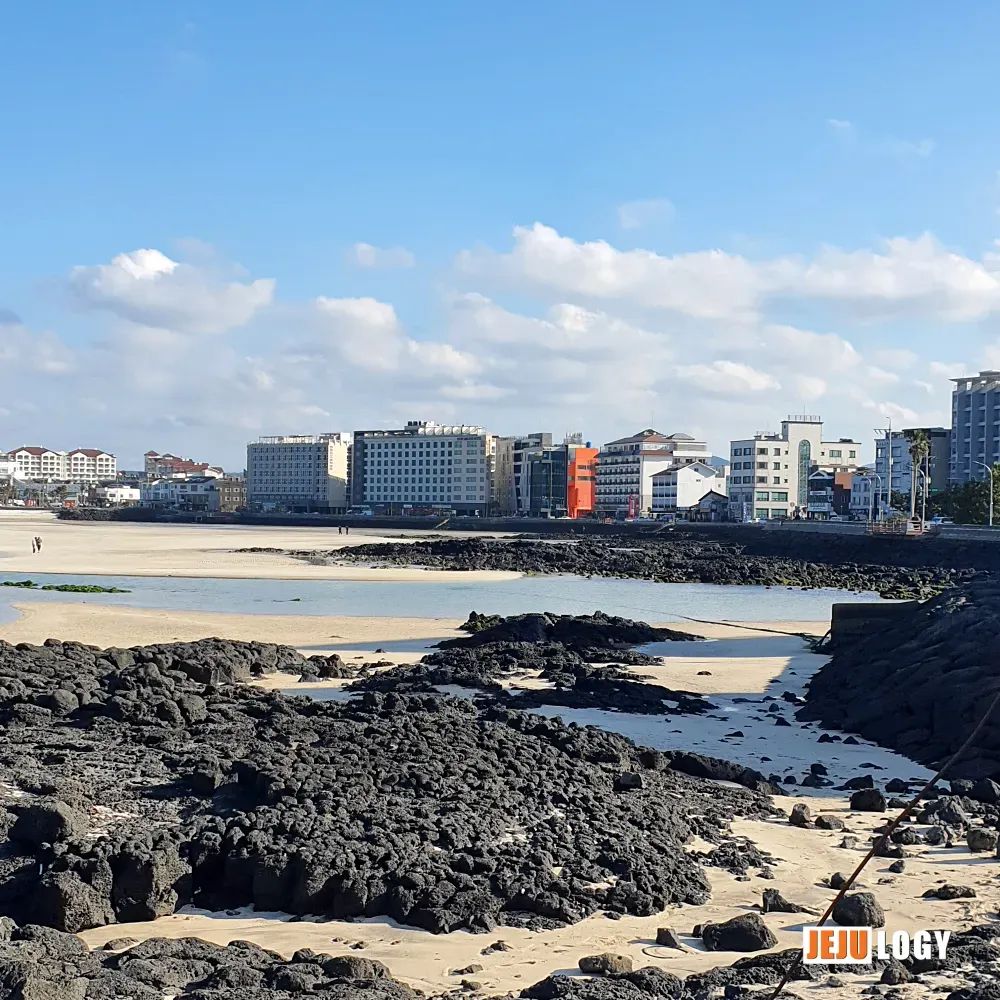
Hamdeok (함덕) is one of the most loved corners of Jeju, full stop. Mention the name and most people picture Hamdeok Beach (함덕해수욕장) and the long, gentle slope of Seoubong (서우봉) rising at the eastern end. There is also Doreumot (도르못), the small wetland pond, and Hamdeok Yeondae (함덕연대), an old Joseon-era beacon station. To the west the village faces Jocheon (조천); to the east, Bukchon (북촌). On a personal note, Hamdeok was the first beach I ever swam at, way back in elementary school. So the place sits a little deeper than just "another nice spot in Jeju."
But this post is not really about the beach itself, and not exactly about Jeongju Port (정주항) either. It is about the stretch of coast just east of the port — a quieter shoreline that most visitors walk right past on their way to the main beach. The photos below were taken there on a clear, low-tide afternoon, with the sun starting to sit a little lower in the sky. If the mainstream Hamdeok Beach feels too crowded, this is the side worth wandering.
The Eastern Shore of Jeongju Port
This eastern shore is good for a slow walk. Three reasons. It is not packed with people. You can frame both Seoubong and Hamdeok Beach in the same view. And the smell of the sea is unmistakably Jeju — that part sounds obvious until you have spent time landlocked.
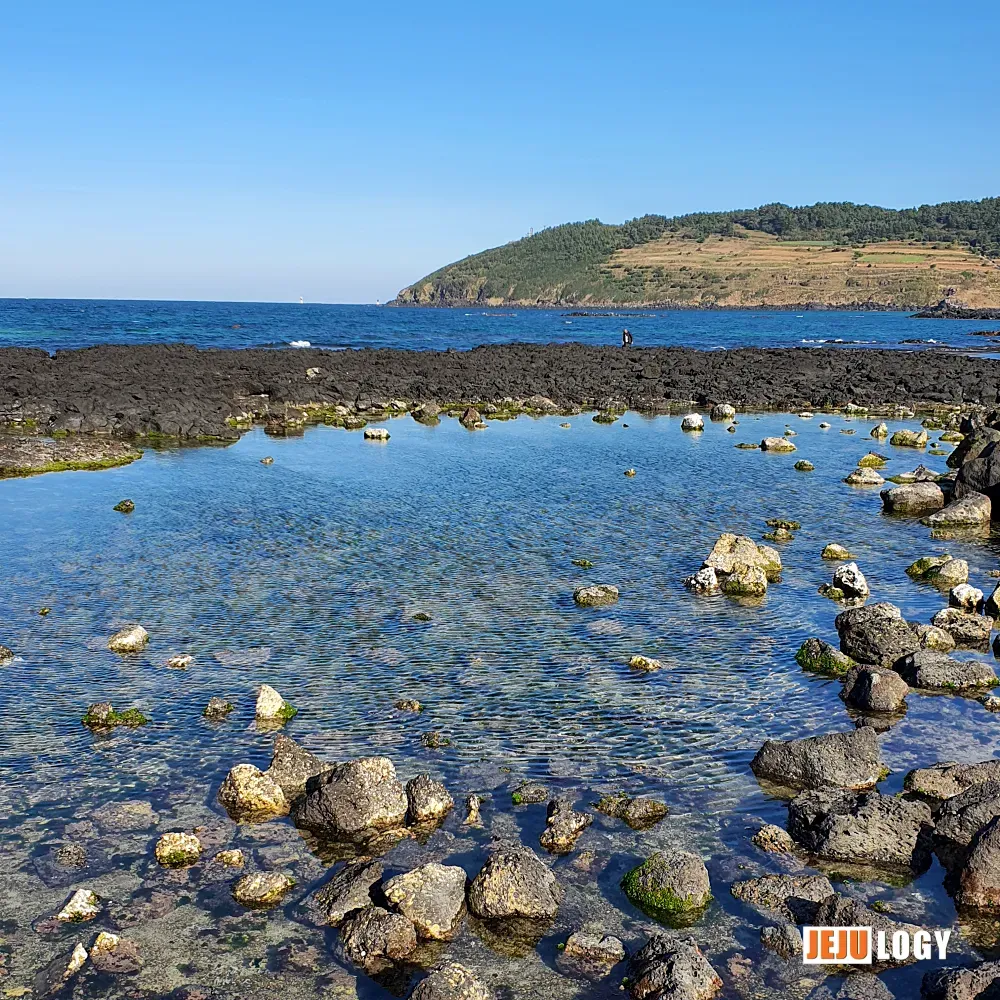
Across the water, Seoubong feels familiar. The face you see in these photos is the western side, which administratively belongs to Hamdeok-ri. The hidden eastern side belongs to Bukchon-ri. A small geographic curiosity, although calling Seoubong "curious" feels off. The oreum still carries the scars of Japanese military positions from the colonial period, and that history deserves its own post. I will get to it another time.
Today is not about that history. Today is just a string of quiet seaside snapshots. Read it lightly and move on.
Letting the Mind Empty
When the water is this transparent — clear enough that you can see straight to the bottom — something happens. You go blank for a while. The mind empties. I think we need that kind of time, both in everyday life and on a trip. Not every minute has to do something.
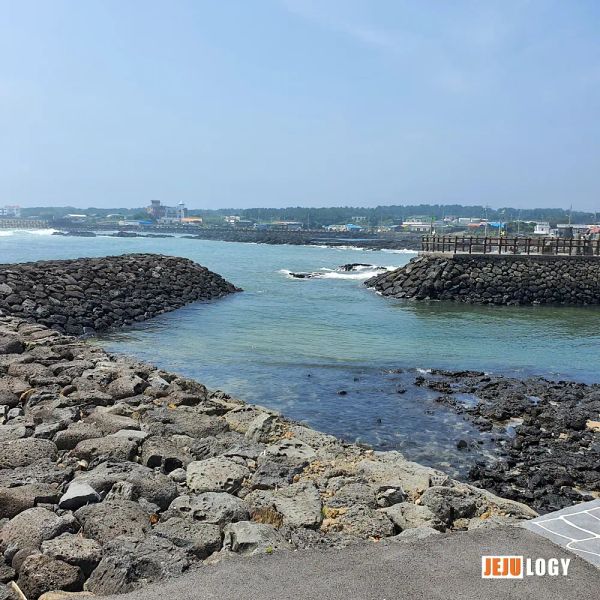
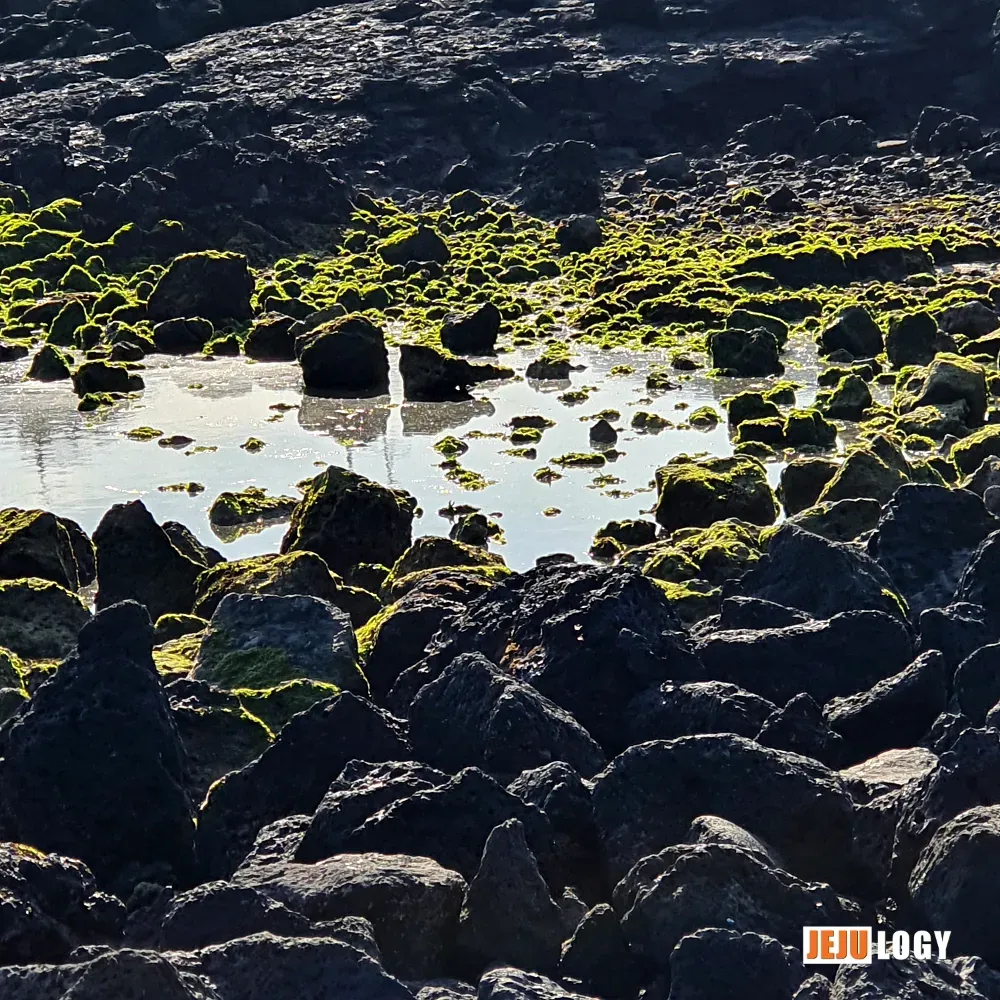
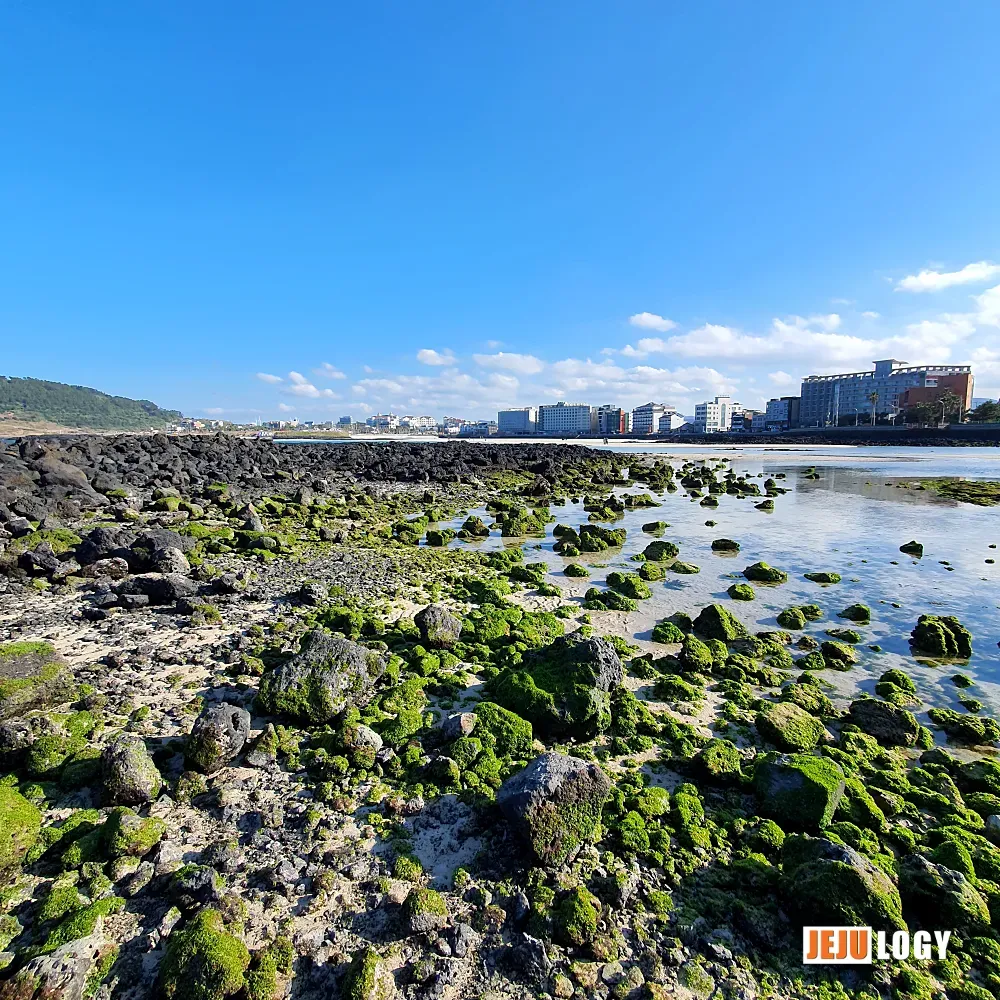
The sea here meets clusters of dark volcanic rock, and the rocks are streaked with moss and seaweed. Add sunlight on top, and it gets surprisingly beautiful. Strangely, it reminded me of the wetlands at 1100 Highland (1100고지 습지) up on Hallasan — though one is sea and the other is mountain.
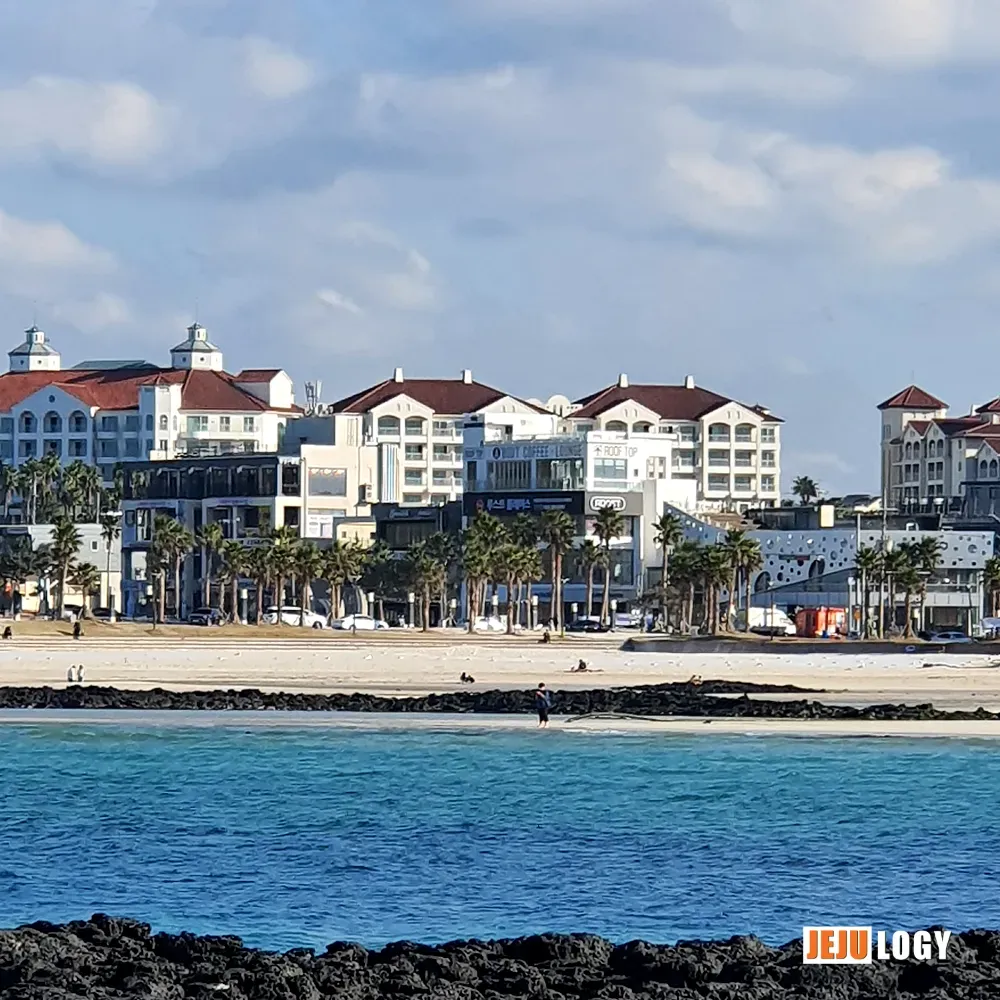
The one thing that doesn't quite fit: the row of square buildings lining the beach behind. From this angle, the wall of hotels and pensions feels foreign to the natural quiet in front of you. Jeju has been negotiating that contrast for a long time now.
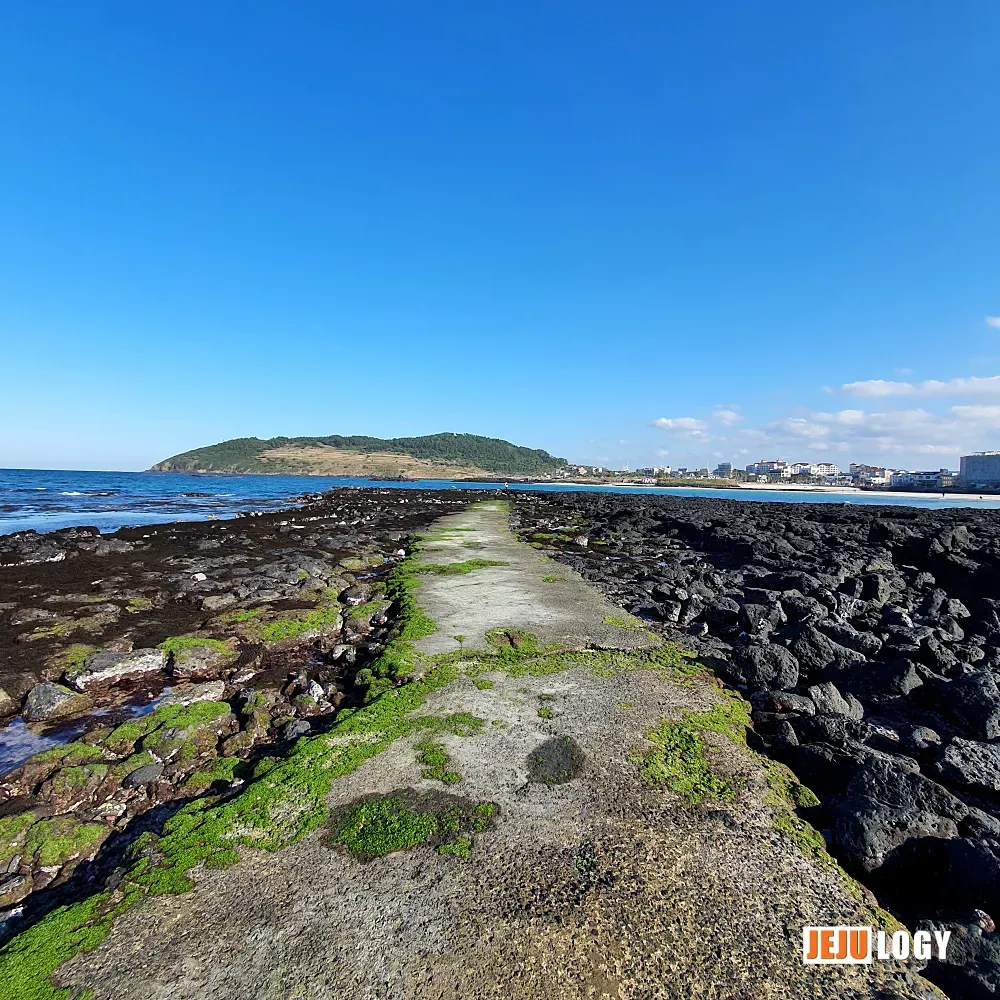
A narrow sea path leads in the direction of Seoubong, like an invitation. It gives the place its own atmosphere — not dramatic, not famous, just self-contained. Good for taking a few minutes alone, even on a family trip. Even when traveling with people you love, a little solitude near the water does something useful.
A few steps further and the scene changes again. Tangled seaweed, different rock formations, light hitting the surface from a new angle. You don't have to walk far to keep finding new compositions.
The Lighthouses and a Small Confusion
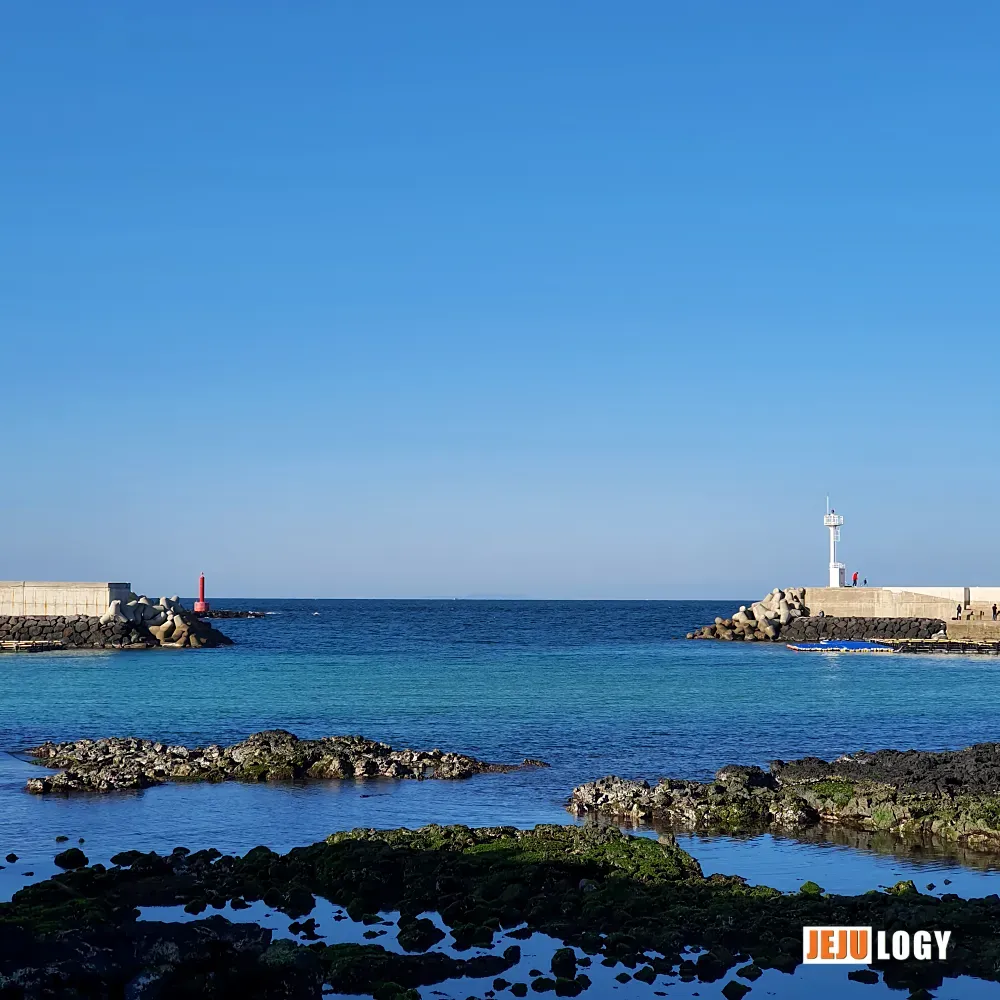
The breakwater of Jeongju Port and its lighthouses make a clean composition, helped along by clear weather and the cool blue of the water. There is one detail that nags at me, though. The placement of the red and the white lighthouses looks reversed from the IALA standard, at least at first glance. South Korea is in IALA Region B, where the starboard side returning from sea is red — and from where I was standing, that is not quite what I was reading.
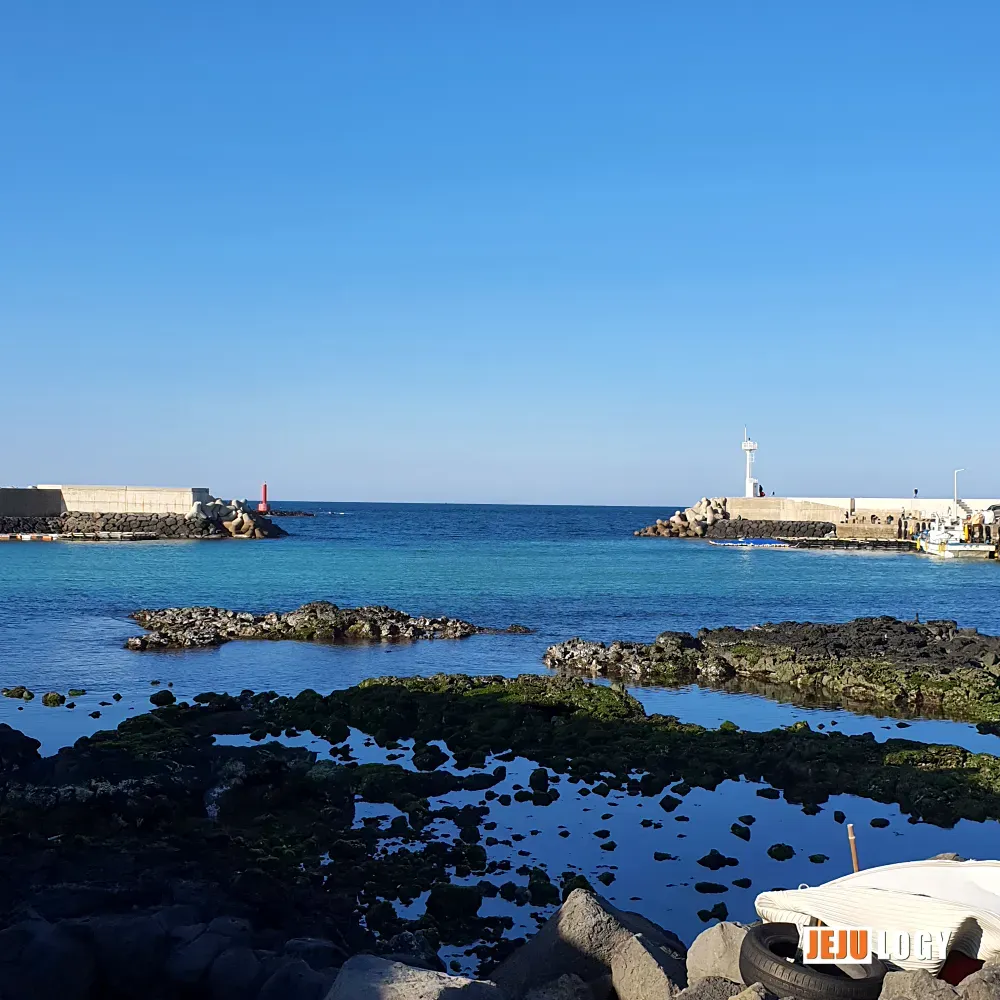
I am not fully sure. Looking again, the red lighthouse isn't actually sitting on the left breakwater — it is further out, on a different structure across the water. Maybe my eyes were tricked by the angle. Either way, the color-and-side relationship doesn't quite read the way I expected.
In one of the wider shots, the Yutop Ubless Hotel (유탑 유블레스 호텔) is on the right, and the Ebenezer Hotel (에벤에셀 호텔) on the left. I stayed at Yutop Ubless once, on a different trip — that deserves its own post too.
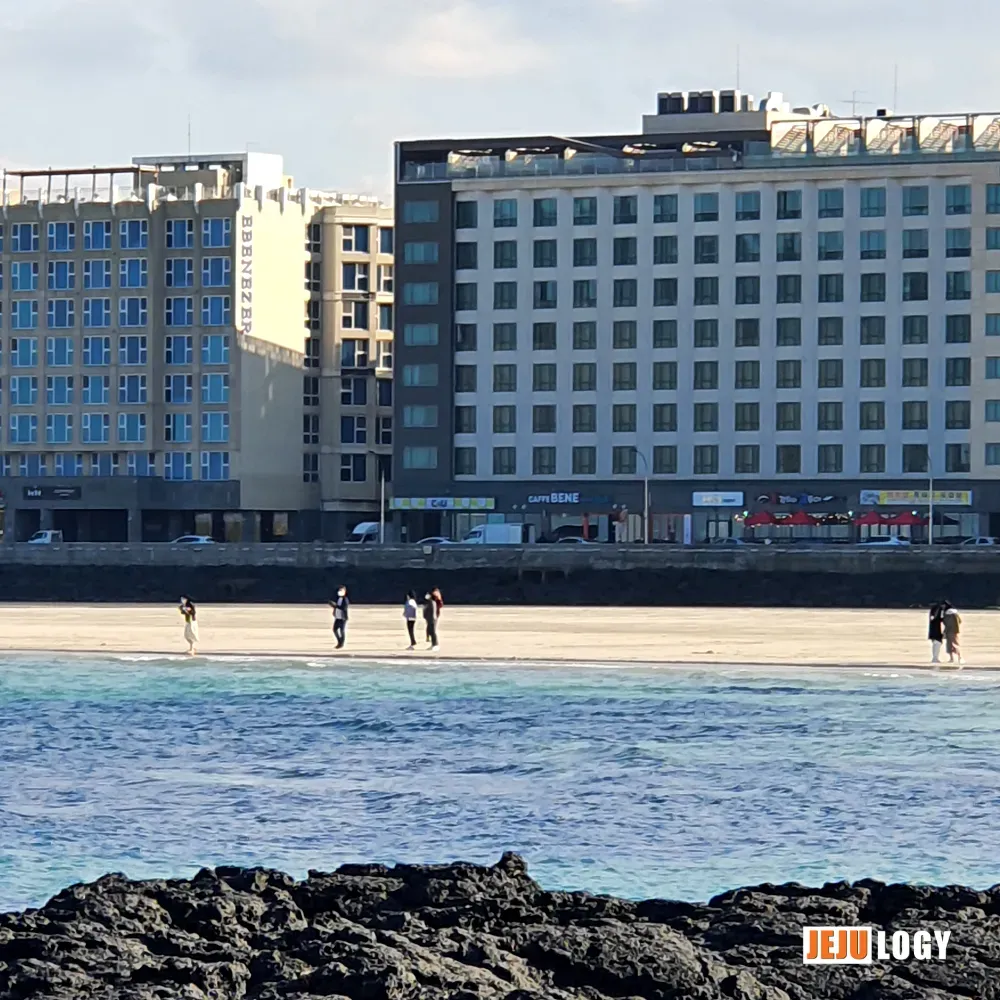
Hamdeok has plenty of accommodations, but Sonobel Jeju (소노벨 제주) dominates the area in scale. I have never actually stayed there. I'm always a bit curious how it compares to its mainland sister Daemyung resorts, but staying at a Daemyung in Jeju? That has never quite called to me, even if the building looks impressive from this angle.
Across the Water, Seoubong
Pull the camera tight on Seoubong and you can pick out the path most hikers use to climb it. The overwhelming majority go up from the Hamdeok side. The Bukchon-side approach exists too, but it is much less popular.
This stretch of coast is also a fine place for what Koreans call mulmeong (물멍) — staring blankly at the water. It has no exact English equivalent, but everyone needs that mode sometimes. Sit, watch, let the head sort itself out.
A small footbridge connects a rock outlet to the shore in the distance. Looking down at that bridge from Seoubong gives one impression; looking across at it from sea level gives another. The same scene shifts every time the angle changes.
In one of the photos, a child stands near the edge with what looks like something on his mind. Hard to tell — he might just be bored, watching the same view for too long, or thinking about whatever a child thinks about when nobody is asking.
Closing Notes
The Jeongju Port breakwater and its lighthouse, framed against the open sea, make for a peaceful sight. Standing here, you find yourself half-wishing the sea were closer to home.
Quick orientation: Jeongju Port sits between Seoubong and the busier center of Hamdeok Beach, on the village side. The photos in this post were taken from the shoreline immediately to the southeast of the port, looking back toward Seoubong and across to the main beach. Best visited on a clear day, near low tide, with the sun starting to dip just enough to soften the light.
Nothing dramatic happens here. That is the point.
💡 Foreign readers might also want to know:Seoubong is an oreum, not a separate mountain. Jeju has hundreds of these volcanic parasitic cones (오름) — small secondary cones that formed alongside Hallasan's main eruptions. Each oreum has its own micro-history.The Japanese military fortifications referenced above are tunnel positions dug into Seoubong during the late stages of WWII, when Imperial Japan prepared the Jeju coastline for an anticipated Allied invasion. They are publicly accessible today and easy to spot on the climb."Mulmeong" (물멍) is a popular Korean concept — roughly, "spacing out at the water." Jeju is its unofficial capital. Cousins of the term include bulmeong (불멍, by a fire) and sumeong (숲멍, in the woods).