
Where a Fortress Became a Schoolyard: Susan Jin, Seongsan-eup
Deep in eastern Jeju, a 600-year-old fortress wall still stands — surrounding a schoolyard. Susan Jinseong, built in 1439 to defend against coastal raiders, survived because a village school made it home. A fortress that found a second life.
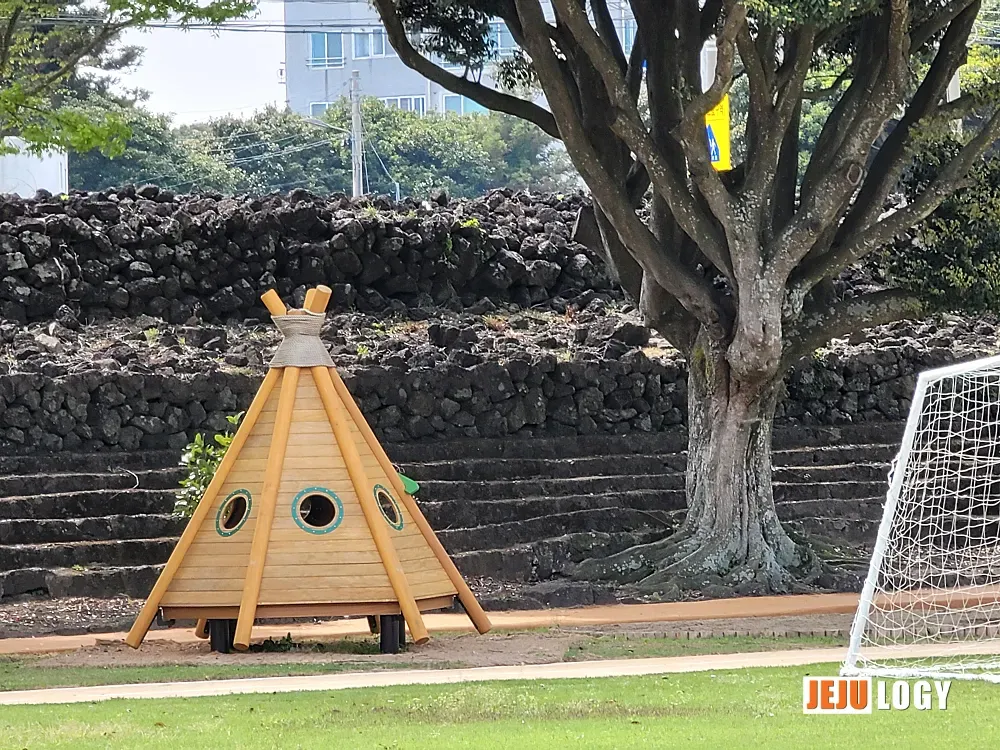
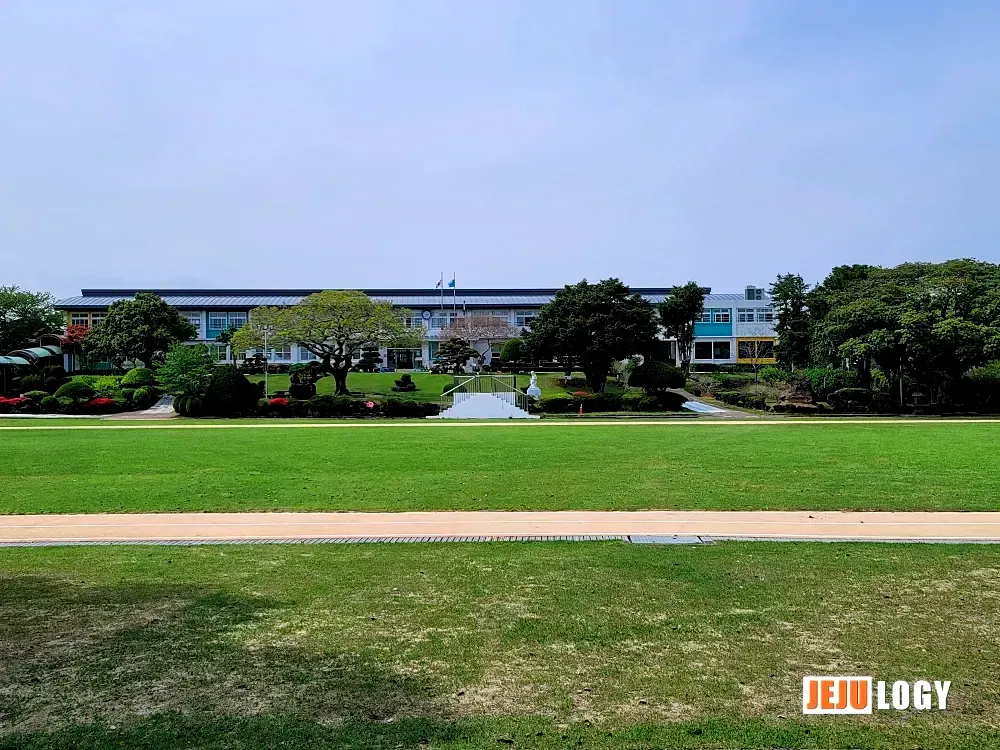
Among Jeju's extensive network of coastal defenses — three fortress complexes, nine garrison forts, twenty-five beacon stations, and thirty-eight signal posts — Susan Jinseong stands out as one of the best-preserved. The reason, perhaps, is hiding in plain sight: an elementary school has been operating within its walls for nearly eighty years, with the ancient fortifications serving as the school fence.
This is not the only case of a Jeju garrison wall finding a second life. The grounds of Hwabuk Youth Cultural Center were once Hwabuk Jinseong, whose walls partially framed a schoolyard until Hwabuk Elementary School relocated in 1971. Similarly, at Aewol Jinseong on the island's northwest coast, sections of the original fortress wall still stand as the boundary fence of Aewol Elementary School.
But Susan Jinseong is different. Unlike these partial survivals, the entire circuit of its walls remains intact — completely enclosing the school grounds within. That makes it something genuinely rare.
Jeju's Defensive Heritage: The History of Susan Jinseong
Susan Jinseong is located in Susan-ri, Seongsan-eup, in the eastern part of Jeju Island. It was built in 1439, the twenty-first year of King Sejong's reign, by Jeju Governor Han Seung-sun, and was one of nine garrison forts constructed across the island to defend against coastal raids.
In the same year, Chagwi Jinseong was built to guard the waters off Chagwido island to the west, and Seogwi Jinseong was established near what is now Seogwipo. The three forts formed part of a coordinated defensive system around the island's coastline.
Susan Jinseong was specifically positioned to guard against Japanese pirates who regularly raided Jeju's eastern waters. Unusually for a coastal garrison, it sits more than three kilometers inland — a strategic choice that remains something of a historical curiosity. During the Japanese invasions of 1592, Governor Yi Gyeong-rok temporarily relocated the garrison's operations to the wider Seongsan area. After the war, Governor Seong Yun-mun restored the fort to its original site in 1599.
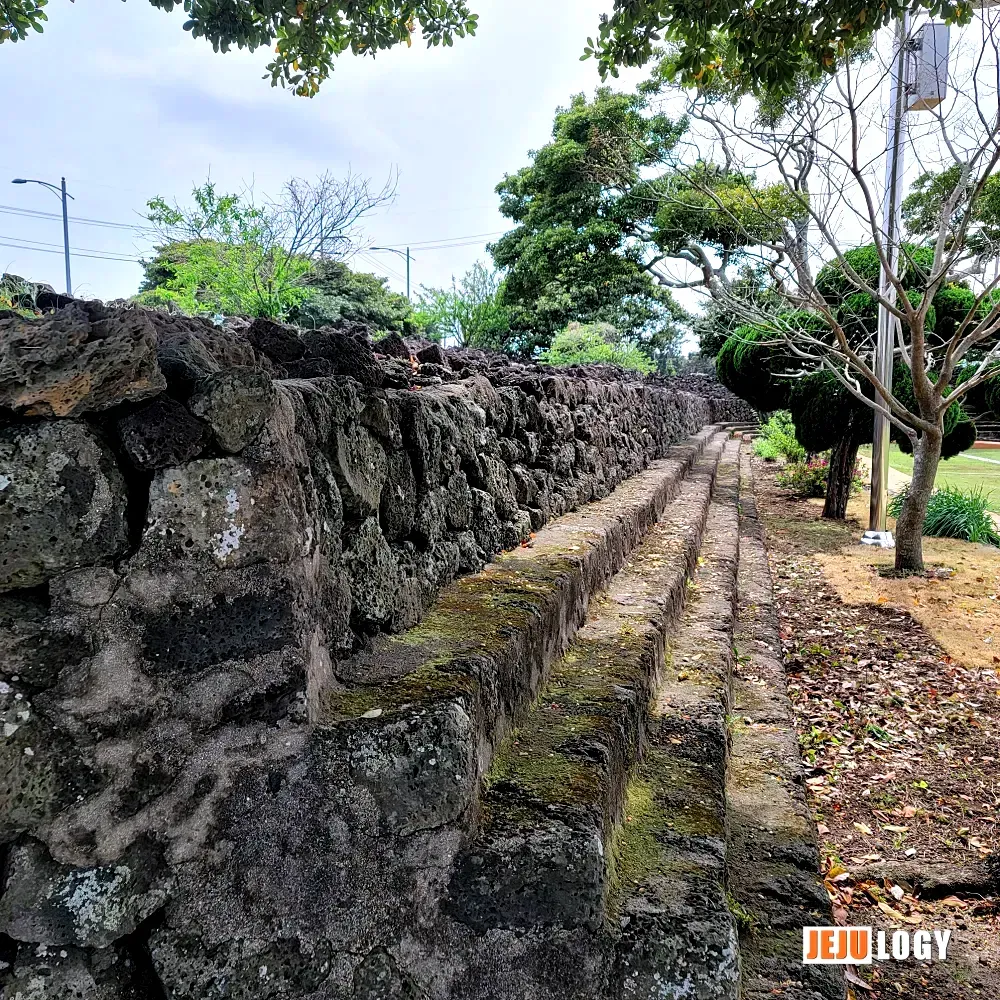
Historical records tell us the original walls ran 1,164 cheok in circumference and stood 16 cheok tall — roughly 350 meters around and 4.8 meters high in today's measurements. The walls were built from Jeju's characteristic basalt stone, dark and dense, quarried from the volcanic landscape that defines the island.
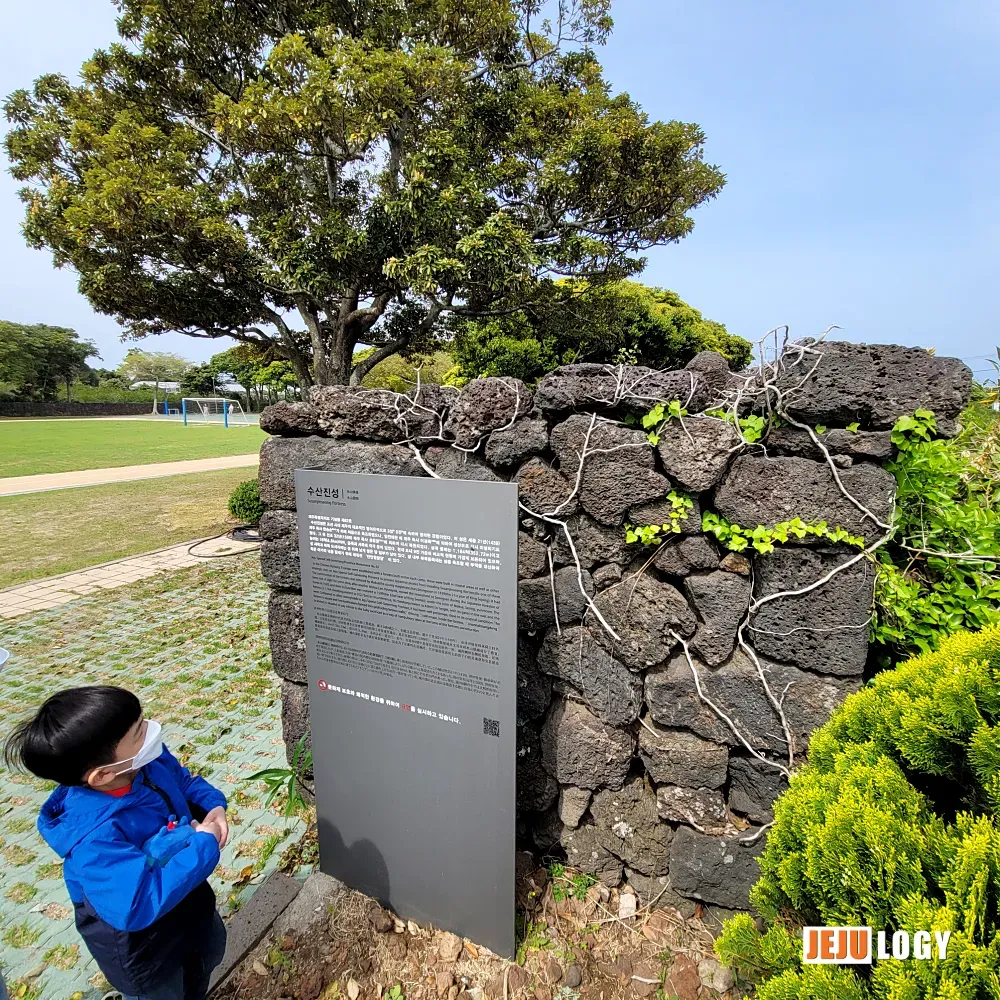
Like most of Jeju's historic sites, Susan Jinseong suffered damage during the Japanese colonial period. The gates and battlements were demolished, but the main circuit of walls survived largely intact — making it the best-preserved of Jeju's nine garrison forts. It is difficult not to conclude that the school saved the fortress: had the grounds been left vacant, development pressures and competing interests would likely have erased what remained. In recognition of its historical and academic value, Susan Jinseong was designated Jeju Special Self-Governing Province Monument No. 62 on October 5, 2005.
A School Inside the Walls: Yesterday and Today
Susan Elementary School opened on December 1, 1946, just over a year after Korea's liberation from Japanese colonial rule. Founded by local residents in the immediate postwar period, the school took the old fortress as its home — its walls becoming the school fence, its interior becoming classrooms and a playground.
One distinctive feature worth noting: while most of Jeju's garrison forts are oval in plan, Susan Jinseong has unusually straight walls, giving it a roughly rectangular footprint. This geometric regularity, visible clearly from aerial maps, happens to make it an exceptionally practical school enclosure.
Visit in person and the fortress announces itself immediately. The school is ringed by tall, thick walls of dark basalt — and once you know what you're looking at, the 600-year history of the place becomes palpable. Along the inner face of the walls, stone terraced seating has been installed, where children and local residents sit with their backs to the ancient battlements to watch sports days and football matches. It is an unusual and quietly moving sight.
The school has educated several generations of children from the surrounding villages, and classes continue to this day. But it has not always been easy. Rural school populations across Jeju have declined sharply over the decades, and by 2012 total enrollment had fallen to just 25 students — bringing the school to the brink of closure.
The community responded. The village association built new rental housing to attract young families, and worked with the Jeju Provincial Office of Education to improve the school's facilities and programs. Enrollment began to recover, reaching 68 students by 2020. As of 2026, the school's website lists 45 students.
The fortress has changed its purpose, but it is still very much alive.
The walls that once kept out invaders now shelter the children of the village. Some things, it turns out, are built to last.